Pages

Wednesday, September 30, 2009

List of Popes

Last week Candy wrote:

In AD 610 they set up their first pope - Pope Boniface III. Until then, there were NO POPES. This is pure history. For more information on this, and many other dates, click here.


So for true history buffs here is the complete list of popes and the dates of their pontificate- starting with St. Peter all the way to our beloved St. Benedict XVI!

Will Candy refute it? I doubt it. The link she gave is dead, but no doubt she won't try to refute this list.

CATHOLIC ENCYCLOPEDIA: List of Popes: "
# St. Peter (32-67)
# St. Linus (67-76)
# St. Anacletus (Cletus) (76-88)
# St. Clement I (88-97)
# St. Evaristus (97-105)
# St. Alexander I (105-115)
# St. Sixtus I (115-125) Also called Xystus I
# St. Telesphorus (125-136)
# St. Hyginus (136-140)
# St. Pius I (140-155)
# St. Anicetus (155-166)
# St. Soter (166-175)
# St. Eleutherius (175-189)
# St. Victor I (189-199)
# St. Zephyrinus (199-217)
# St. Callistus I (217-22) Callistus and the following three popes were opposed by St. Hippolytus, antipope (217-236)
# St. Urban I (222-30)
# St. Pontain (230-35)
# St. Anterus (235-36)
# St. Fabian (236-50)
# St. Cornelius (251-53) Opposed by Novatian, antipope (251)
# St. Lucius I (253-54)
# St. Stephen I (254-257)
# St. Sixtus II (257-258)
# St. Dionysius (260-268)
# St. Felix I (269-274)
# St. Eutychian (275-283)
# St. Caius (283-296) Also called Gaius
# St. Marcellinus (296-304)
# St. Marcellus I (308-309)
# St. Eusebius (309 or 310)
# St. Miltiades (311-14)
# St. Sylvester I (314-35)
# St. Marcus (336)
# St. Julius I (337-52)
# Liberius (352-66) Opposed by Felix II, antipope (355-365)
# St. Damasus I (366-83) Opposed by Ursicinus, antipope (366-367)
# St. Siricius (384-99)
# St. Anastasius I (399-401)
# St. Innocent I (401-17)
# St. Zosimus (417-18)
# St. Boniface I (418-22) Opposed by Eulalius, antipope (418-419)
# St. Celestine I (422-32)
# St. Sixtus III (432-40)
# St. Leo I (the Great) (440-61)
# St. Hilarius (461-68)
# St. Simplicius (468-83)
# St. Felix III (II) (483-92)
# St. Gelasius I (492-96)
# Anastasius II (496-98)
# St. Symmachus (498-514) Opposed by Laurentius, antipope (498-501)
# St. Hormisdas (514-23)
# St. John I (523-26)
# St. Felix IV (III) (526-30)
# Boniface II (530-32) Opposed by Dioscorus, antipope (530)
# John II (533-35)
# St. Agapetus I (535-36) Also called Agapitus I
# St. Silverius (536-37)
# Vigilius (537-55)
# Pelagius I (556-61)
# John III (561-74)
# Benedict I (575-79)
# Pelagius II (579-90)
# St. Gregory I (the Great) (590-604)
# Sabinian (604-606)
# Boniface III (607)
# St. Boniface IV (608-15)
# St. Deusdedit (Adeodatus I) (615-18)
# Boniface V (619-25)
# Honorius I (625-38)
# Severinus (640)
# John IV (640-42)
# Theodore I (642-49)
# St. Martin I (649-55)
# St. Eugene I (655-57)
# St. Vitalian (657-72)
# Adeodatus (II) (672-76)
# Donus (676-78)
# St. Agatho (678-81)
# St. Leo II (682-83)
# St. Benedict II (684-85)
# John V (685-86)
# Conon (686-87)
# St. Sergius I (687-701) Opposed by Theodore and Paschal, antipopes (687)
# John VI (701-05)
# John VII (705-07)
# Sisinnius (708)
# Constantine (708-15)
# St. Gregory II (715-31)
# St. Gregory III (731-41)
# St. Zachary (741-52)
# Stephen II (752) Because he died before being consecrated, many authoritative lists omit him
# Stephen III (752-57)
# St. Paul I (757-67)
# Stephen IV (767-72) Opposed by Constantine II (767) and Philip (768), antipopes (767)
# Adrian I (772-95)
# St. Leo III (795-816)
# Stephen V (816-17)
# St. Paschal I (817-24)
# Eugene II (824-27)
# Valentine (827)
# Gregory IV (827-44)
# Sergius II (844-47) Opposed by John, antipope (855)
# St. Leo IV (847-55)
# Benedict III (855-58) Opposed by Anastasius, antipope (855)
# St. Nicholas I (the Great) (858-67)
# Adrian II (867-72)
# John VIII (872-82)
# Marinus I (882-84)
# St. Adrian III (884-85)
# Stephen VI (885-91)
# Formosus (891-96)
# Boniface VI (896)
# Stephen VII (896-97)
# Romanus (897)
# Theodore II (897)
# John IX (898-900)
# Benedict IV (900-03)
# Leo V (903) Opposed by Christopher, antipope (903-904)
# Sergius III (904-11)
# Anastasius III (911-13)
# Lando (913-14)
# John X (914-28)
# Leo VI (928)
# Stephen VIII (929-31)
# John XI (931-35)
# Leo VII (936-39)
# Stephen IX (939-42)
# Marinus II (942-46)
# Agapetus II (946-55)
# John XII (955-63)
# Leo VIII (963-64)
# Benedict V (964)
# John XIII (965-72)
# Benedict VI (973-74)
# Benedict VII (974-83) Benedict and John XIV were opposed by Boniface VII, antipope (974; 984-985)
# John XIV (983-84)
# John XV (985-96)
# Gregory V (996-99) Opposed by John XVI, antipope (997-998)
# Sylvester II (999-1003)
# John XVII (1003)
# John XVIII (1003-09)
# Sergius IV (1009-12)
# Benedict VIII (1012-24) Opposed by Gregory, antipope (1012)
# John XIX (1024-32)
# Benedict IX (1032-45) He appears on this list three separate times, because he was twice deposed and restored
# Sylvester III (1045) Considered by some to be an antipope
# Benedict IX (1045)
# Gregory VI (1045-46)
# Clement II (1046-47)
# Benedict IX (1047-48)
# Damasus II (1048)
# St. Leo IX (1049-54)
# Victor II (1055-57)
# Stephen X (1057-58)
# Nicholas II (1058-61) Opposed by Benedict X, antipope (1058)
# Alexander II (1061-73) Opposed by Honorius II, antipope (1061-1072)
# St. Gregory VII (1073-85) Gregory and the following three popes were opposed by Guibert ('Clement III'), antipope (1080-1100)
# Blessed Victor III (1086-87)
# Blessed Urban II (1088-99)
# Paschal II (1099-1118) Opposed by Theodoric (1100), Aleric (1102) and Maginulf ('Sylvester IV', 1105-1111), antipopes (1100)
# Gelasius II (1118-19) Opposed by Burdin ('Gregory VIII'), antipope (1118)
# Callistus II (1119-24)
# Honorius II (1124-30) Opposed by Celestine II, antipope (1124)
# Innocent II (1130-43) Opposed by Anacletus II (1130-1138) and Gregory Conti ('Victor IV') (1138), antipopes (1138)
# Celestine II (1143-44)
# Lucius II (1144-45)
# Blessed Eugene III (1145-53)
# Anastasius IV (1153-54)
# Adrian IV (1154-59)
# Alexander III (1159-81) Opposed by Octavius ('Victor IV') (1159-1164), Pascal III (1165-1168), Callistus III (1168-1177) and Innocent III (1178-1180), antipopes
# Lucius III (1181-85)
# Urban III (1185-87)
# Gregory VIII (1187)
# Clement III (1187-91)
# Celestine III (1191-98)
# Innocent III (1198-1216)
# Honorius III (1216-27)
# Gregory IX (1227-41)
# Celestine IV (1241)
# Innocent IV (1243-54)
# Alexander IV (1254-61)
# Urban IV (1261-64)
# Clement IV (1265-68)
# Blessed Gregory X (1271-76)
# Blessed Innocent V (1276)
# Adrian V (1276)
# John XXI (1276-77)
# Nicholas III (1277-80)
# Martin IV (1281-85)
# Honorius IV (1285-87)
# Nicholas IV (1288-92)
# St. Celestine V (1294)
# Boniface VIII (1294-1303)
# Blessed Benedict XI (1303-04)
# Clement V (1305-14)
# John XXII (1316-34) Opposed by Nicholas V, antipope (1328-1330)
# Benedict XII (1334-42)
# Clement VI (1342-52)
# Innocent VI (1352-62)
# Blessed Urban V (1362-70)
# Gregory XI (1370-78)
# Urban VI (1378-89) Opposed by Robert of Geneva ('Clement VII'), antipope (1378-1394)
# Boniface IX (1389-1404) Opposed by Robert of Geneva ('Clement VII') (1378-1394), Pedro de Luna ('Benedict XIII') (1394-1417) and Baldassare Cossa ('John XXIII') (1400-1415), antipopes
# Innocent VII (1404-06) Opposed by Pedro de Luna ('Benedict XIII') (1394-1417) and Baldassare Cossa ('John XXIII') (1400-1415), antipopes
# Gregory XII (1406-15) Opposed by Pedro de Luna ('Benedict XIII') (1394-1417), Baldassare Cossa ('John XXIII') (1400-1415), and Pietro Philarghi ('Alexander V') (1409-1410), antipopes
# Martin V (1417-31)
# Eugene IV (1431-47) Opposed by Amadeus of Savoy ('Felix V'), antipope (1439-1449)
# Nicholas V (1447-55)
# Callistus III (1455-58)
# Pius II (1458-64)
# Paul II (1464-71)
# Sixtus IV (1471-84)
# Innocent VIII (1484-92)
# Alexander VI (1492-1503)
# Pius III (1503)
# Julius II (1503-13)
# Leo X (1513-21)
# Adrian VI (1522-23)
# Clement VII (1523-34)
# Paul III (1534-49)
# Julius III (1550-55)
# Marcellus II (1555)
# Paul IV (1555-59)
# Pius IV (1559-65)
# St. Pius V (1566-72)
# Gregory XIII (1572-85)
# Sixtus V (1585-90)
# Urban VII (1590)
# Gregory XIV (1590-91)
# Innocent IX (1591)
# Clement VIII (1592-1605)
# Leo XI (1605)
# Paul V (1605-21)
# Gregory XV (1621-23)
# Urban VIII (1623-44)
# Innocent X (1644-55)
# Alexander VII (1655-67)
# Clement IX (1667-69)
# Clement X (1670-76)
# Blessed Innocent XI (1676-89)
# Alexander VIII (1689-91)
# Innocent XII (1691-1700)
# Clement XI (1700-21)
# Innocent XIII (1721-24)
# Benedict XIII (1724-30)
# Clement XII (1730-40)
# Benedict XIV (1740-58)
# Clement XIII (1758-69)
# Clement XIV (1769-74)
# Pius VI (1775-99)
# Pius VII (1800-23)
# Leo XII (1823-29)
# Pius VIII (1829-30)
# Gregory XVI (1831-46)
# Blessed Pius IX (1846-78)
# Leo XIII (1878-1903)
# St. Pius X (1903-14)
# Benedict XV (1914-22) Biographies of Benedict XV and his successors will be added at a later date
# Pius XI (1922-39)
# Pius XII (1939-58)
# Blessed John XXIII (1958-63)
# Paul VI (1963-78)
# John Paul I (1978)
# John Paul II (1978-2005)
# Benedict XVI (2005—)"


Add to Technorati Favorites


Please browse my eBay items!
Visit my new Amazon Store!

Tuesday, September 29, 2009

More nun fun!

AddThis Social Bookmark Button

Thursday, September 24, 2009

Reasonable Resources

Well, the new (recycled) series is at an end, and the big reveal was no surprise. The same ol' list of comic books and frauds is what Candy provides for her deep historical research:

Photobucket

Here at Visits To Candyland, we have spent quite a lot of time researching Candy's research. We provide a defense against her accusations, and we take the time to provide respected resources, often non-Catholic ones. This list provides a platform for a Greatest Hits of our Anti-Catholic Writers label.

Candy's Vatican vs. God- No less than 15 posts touched on this one, with seven in the VVG label

Answers To My Catholic Friends/Babylon Religion (Jack Chick)

Mystery Babylon the Great

Bible Study Charts

50 Years In the Church of Rome (Charles Chiniquy)

A Woman Rides the Beast- Must be an annual May event for Candy, we posted this in May of 2008 and 2009!

Did the Catholic Church Give Us the Bible?- Another stellar illustrated history. I think my idea of a good illustrated Biblical read is a bit different.


So, if anyone was wanting more information on Candy's resources, now you have plenty to get you started. And if you'd like a sneak peek of what she might run next, check out the Anti-Catholic Writers label. Perhaps she's veer back into female territory with Sister Charlotte or Mary Anne Collins!

AddThis Social Bookmark Button

Art History for Dummies

 Hopefully we've seen the end of Candy's Catholic rant for a while.  I personally think she decided to rerun all of her Catholic stuff because the attention going over to Jennie's blog and DOW started to bother her, especially since her Google rank has dropped from a 4/10 to a 3/10 and doesn't seem to be springing back easily.

Anyway,Candy went to a lot of trouble today to put images on her blog comparing Mary to the Egyptian Goddess Isis.   Apparently her readers aren't versed in art appreciation and had a hard time telling the two apart!  So here are some tips in discerning Mary from Isis.

First of all Isis started out in Egypt and then her lore moved to Greece and elsewhere in the ancient world.   So any statue that looks distinctly Egyptian is most likely Isis.  Also, Marian art would be more recent and you really wouldn't expect to see much before the 2nd century AD.

Also, Isis is frequently depicted with wings.  Mary be may be depicted with 12 stars. I would hope bible readers would be able to figure our the significance of the #12.   Big differences.

One of the most idiotic things Candy posted was a picture of Michelangelo's Pieta.  I have no idea if the majority of Candy's readers are illiterate enough not to know this piece, but it is very famous and a renowned piece of art, and it was Michelangelo's first piece that brought him attention as an artist. You can see the wounds of Christ clearly in the figures hands and feet.

For more information please see the links below.

Early Christian Art

Ancient Egyptian Art. 


AddThis Social Bookmark Button

Wednesday, September 23, 2009

A Catholic Bibliography

Candy gives us her bibliography for her friends to study Catholicism. But not one of them is a Catholic source. That should be troublesome for a discerning reader. Luckily for Candy most of her readers don't seem to be.

But I think we should put up our own Catholic bibliography:

First of all, we wrote a number of articles rebutting her so called "Vatican vs. God" screed a few years back. Those are saved in del.icio.us and are also available on the side bar. To date, Candy has not rebutted anything we wrote. She won't because she can't.

Of course anyone who really wants to understand Catholicism should have the Catechism of the Catholic Church: Second Edition Amazingly some on this blog have stated that they want to learn about Catholicism but they don't even own a copy! At $10, it's not like it's an expensive inaccessible research tool, know what I mean?

Scott and Kimberly Hahn were instrumental in my reconversion to my Catholic Faith. Their books are excellent including:
Rome Sweet Home: Our Journey to Catholicism
which would blow folks who say the Catholic faith isn't scriptural out of the water! as would -
The Lamb's Supper: The Mass as Heaven on Earth
A Father Who Keeps His Promises: God's Covenant Love in Scripture and
Hail, Holy Queen: The Mother of God in the Word of God which I used quite a bit on my series on Mary back in May 2008.

Also the Surprised by the Truth Series:
Surprised by Truth: 11 Converts Give the Biblical and Historical Reasons for Becoming Catholic
Surprised By Truth 2: 15 Men and Women Give the Biblical and Historical Reasons For Becoming Catholic. (v. 2)

Surprised by Truth 3: 10 More Converts Explain the Biblical and Historical Reason for Becoming Catholic (v. 3)

Of course Dave Armstrong has some great books available for download.
I use them quite frequently.


Hahn has also compiled his own bibliography of worthwhile books.


Don't forget Envoy magazine or This Rock and Catholic Answers.

Also EWTN and Catholic Radio.


Feel free to add more (There must be hundreds!) in the comment section!


AddThis Social Bookmark Button

Bible Chart

The last time Candy posted this link was after someone left it in her comments section back in June 2008. Oh, what fun! This stuff is hysterical!

A repost from back then:

I'm not going to comment too much on this Catholic Church timeline, because we've already touched on several of the topics, and Erika is doing a good job already. But I couldn't resist poking one or two holes in some of the claims.

The Latin language, as the language of prayer and worship in churches, was also imposed by Pope Gregory I, 600 years after Christ.

The Word of God forbids praying and teaching in an unknown tongue. (600)

I'm not sure the thought occurred to the authors, but Latin was actually the common language at this time, so quite the opposite of unknown.

The Papacy is of pagan origin. The title of pope or universal bishop, was first given to the bishop of Rome by the wicked emperor Phocas. (610)

I'd like to submit some evidence that these distinctively Catholic beliefs were held long before the dates they use.

"The church of God which sojourns at Rome to the church of God which sojourns at Corinth ... But if any disobey the words spoken by him through us, let them know that they will involve themselves in transgression and in no small danger." Clement of Rome, Pope, 1st Epistle to the Corinthians, 1,59:1 (c. A.D. 96).

"And he says to him again after the resurrection, 'Feed my sheep.' It is on him that he builds the Church, and to him that he entrusts the sheep to feed. And although he assigns a like power to all the apostles, yet he founded a single Chair, thus establishing by his own authority the source and hallmark of the (Church's) oneness. No doubt the others were all that Peter was, but a primacy is given to Peter, and it is (thus) made clear that there is but one flock which is to be fed by all the apostles in common accord. If a man does not hold fast to this oneness of Peter, does he imagine that he still holds the faith? If he deserts the Chair of Peter upon whom the Church was built, has he still confidence that he is in the Church? This unity firmly should we hold and maintain, especially we bishops, presiding in the Church, in order that we may approve the episcopate itself to be the one and undivided." Cyprian, The Unity of the Church, 4-5 (A.D. 251-256).

"After such things as these, moreover, they still dare--a false bishop having been appointed for them by, heretics--to set sail and to bear letters from schismatic and profane persons to the throne of Peter, and to the chief church whence priestly unity takes its source; and not to consider that these were the Romans whose faith was praised in the preaching of the apostle, to whom faithlessness could have no access." Cyprian, To Cornelius, Epistle 54/59:14 (A.D. 252).

”The reason for your absence was both honorable and imperative, that the schismatic wolves might not rob and plunder by stealth nor the heretical dogs bark madly in the rapid fury nor the very serpent, the devil, discharge his blasphemous venom. So it seems to us right and altogether fitting that priests of the Lord from each and every province should report to their head, that is, to the See of Peter, the Apostle." Council of Sardica, To Pope Julius (A.D. 342).

Note: Clement, 3rd bishop of Rome, remarks "that there is no real 1st century evidence that Peter ever was in Rome."

That would be an awfully strange thing to remark, seeing as how Clement lived in the 1st century.

Holy Water, mixed with a pinch of salt and blessed by the priest, was authorized.

As milehimama pointed out, this comes from Scripture, though I'm not sure of the date for the book of Kings:

2 Kings 2:19-21
19 The men of the city said to Elisha, "Look, our lord, this town is well situated, as you can see, but the water is bad and the land is unproductive."

20 "Bring me a new bowl," he said, "and put salt in it." So they brought it to him.

21 Then he went out to the spring and threw the salt into it, saying, "This is what the LORD says: 'I have healed this water. Never again will it cause death or make the land unproductive.' " 22 And the water has remained wholesome to this day, according to the word Elisha had spoken.


The Mass was developed gradually as a sacrifice; attendance made obligatory in the 11th century.

"It is good and beneficial to communicate every day, and to partake of the holy body and blood of Christ. For He distinctly says, 'He that eateth my flesh and drinketh my blood hath eternal life.' And who doubts that to share frequently in life, is the same thing as to have manifold life. I, indeed, communicate four times a week, on the Lord's day, on Wednesday, on Friday, and on the Sabbath, and on the other days if there is a commemoration of any Saint.” Basil, To Patrician Caesaria, Epistle 93 (A.D. 372).

"Dearly-beloved, utter this confession with all your heart and reject the wicked lies of heretics, that your fasting and almsgiving may not be polluted by any contagion with error: for then is our offering of the sacrifice clean and oar gifts of mercy holy, when those who perform them understand that which they do. For when the Lord says, "unless ye have eaten the flesh of the Son of Man, and drunk His blood, ye will not have life in you,' you ought so to be partakers at the Holy Table, as to have no doubt whatever concerning the reality of Christ's Body and Blood. For that is taken in the mouth which is believed in Faith, and it is vain for them to respond Amend who dispute that which is taken." Pope Leo the Great, Sermon, 91:3 (ante A.D. 461).

The dogma of Transubstantiation was decreed by Pope Innocent III, in th year 1215.

"For not as common bread and common drink do we receive these; but in like manner as Jesus Christ our Saviour, having been made flesh and blood for our salvation, so likewise have we been taught that the food which is blessed by the prayer of His word, and from which our blood and flesh by transmutation are nourished, is the flesh and blood of that Jesus who was made flesh." Justin Martyr, First Apology, 66 (A.D. 110-165).

"They abstain from the Eucharist and from prayer, because they confess not the Eucharist to be the flesh of our Saviour Jesus Christ, which suffered for our sins, and which the Father, of His goodness, raised up again." Ignatius of Antioch, Epistle to Smyrnaeans, 7,1 (c. A.D. 110).

"For the blood of the grape--that is, the Word--desired to be mixed with water, as His blood is mingled with salvation. And the blood of the Lord is twofold. For there is the blood of His flesh, by which we are redeemed from corruption; and the spiritual, that by which we are anointed. And to drink the blood of Jesus, is to become partaker of the Lord's immortality; the Spirit being the energetic principle of the Word, as blood is of flesh. Accordingly, as wine is blended with water, so is the Spirit with man. And the one, the mixture of wine and water, nourishes to faith; while the other, the Spirit, conducts to immortality. And the mixture of both--of the water and of the Word--is called Eucharist, renowned and glorious grace; and they who by faith partake of it are sanctified both in body and soul." Clement of Alexandria, The Instructor, 2 (ante A.D. 202).


"He once in Cana of Galilee, turned the water into wine, akin to blood, and is it incredible that He should have turned wine into blood?" Cyril of Jerusalem, Catechetical Lectures, XXII:4 (c. A.D. 350).

"Having learn these things, and been fully assured that the seeming bread is not bread, though sensible to taste, but the Body of Christ; and that the seeming wine is not wine, though the taste will have it so, but the Blood of Christ; and that of this David sung of old, saying, And bread strengtheneth man's heart, to make his face to shine with oil, 'strengthen thou thine heart,' by partaking thereof as spiritual, and "make the face of thy soul to shine."" Cyril of Jerusalem, Catechetical Lectures, XXII:8 (c. A.D. 350).

"Then having sanctified ourselves by these spiritual Hymns, we beseech the merciful God to send forth His Holy Spirit upon the gifts lying before Him; that He may make the Bread the Body of Christ, and the Wine the Blood of Christ; for whatsoever the Holy Ghost has touched, is surely sanctified and changed." Cyril of Jerusalem, Catechetical Lectures, XXIII:7 (c. A.D. 350).

Confession of sin to the priest at least once a year was instituted by Pope Innocent III, in the Lateran Council. (1215)

“In church confess your sins, and do not come to your prayer with a guilt conscience. Such is the Way of Life...On the Lord's own day, assemble in common to break bread and offer thanks; but first confess your sins, so that your sacrifice may be pure." Didache, 4:14,14:1 (c. A.D. 90).

"Father who knowest the hearts of all grant upon this Thy servant whom Thou hast chosen for the episcopate to feed Thy holy flock and serve as Thine high priest, that he may minister blamelessly by night and day, that he may unceasingly behold and appropriate Thy countenance and offer to Thee the gifts of Thy holy Church. And that by the high priestly Spirit he may have authority to forgive sins..." Hippolytus, Apostolic Tradition, 3 (A.D. 215).

"In addition to these there is also a seventh, albeit hard and laborious: the remission of sins through penance...when he does not shrink from declaring his sin to a priest of the Lord." Origen, Homilies on Leviticus, 2:4 (A.D. 248).

"For although in smaller sins sinners may do penance for a set time, and according to the rules of discipline come to public confession, and by imposition of the hand of the bishop and clergy receive the right of communion: now with their time still unfulfilled, while persecution is still raging, while the peace of the Church itself is not vet restored, they are admitted to communion, and their name is presented; and while the penitence is not yet performed, confession is not yet made, the hands Of the bishop and clergy are not yet laid upon them, the eucharist is given to them; although it is written, 'Whosoever shall eat the bread and drink the cup of the Lord unworthily, shall be guilty of the body and blood of the Lord.'" Cyprian, To the Clergy, 9 (16):2 (A.D. 250).

Actually, these all seem to come from Loraine Boettner’s book, Roman Catholicism. You can read an article debunking several of these points on the Catholic Answers site:

Item: "Bible forbidden to laymen, placed on the Index of Forbidden Books by the Council of Valencia . . . [A.D.] 1229."

This looks rather damaging, but Boettner has his history completely wrong. The first thing to note is that the Index of Forbidden Books was established in 1559, so a council held in 1229 could hardly have listed a book on it.

The second point is that there apparently has never been any Church council in Valencia, Spain. If there had been one, it could not have taken place in 1229 because Muslim Moors then controlled the city. It is inconceivable that Muslims, who were at war with Spanish Christians, and had been off and on for five centuries, would allow Catholic bishops to hold a council in one of their cities. The Christian armies did not liberate Valencia from Moorish rule until nine years later, 1238. So Valencia is out.

Let's not forget the pagan innovation of candles used in Catholic Churches!

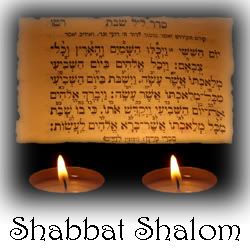
An example of "pagan" Jews using wax candles in worship. Perhaps they would be surprised that the Catholic Church gets credit for this "innovation."

Shabbot Pictures, Images and Photos

I think this also begs the question as to what should be used an alternative for church lighting. If electric lights are the Christian thing to use, then I think you'd be showing a pretty recent founding for your church.

Besides, these pagans are using electric lights AND candles in their worship:

Hindu procession


Actually, I visited a Hindu temple once on a field trip, and all of the statues were decorated with electric lights, similar to this:

Hindu Festival

I'm not really sure what lighting alternative we would have left if we ruled out everything that pagans use. After all, they can sit around in the sunlight and moonlight, too.

AddThis Social Bookmark Button

Tuesday, September 22, 2009

Candy - Geography not her biggest forte.

Today Candy Brauer at Keeping the home.com writes:

Welcome to Keeping The Home:

"Another point to mention, is that the whore that rides the beast is a city that sits atop seven hills. The only city in the world that houses a HUGE religious entity is Rome. Rome sits on top of seven hills."


The Vatican, the Holy See, is located on its very own hill, across the Tiber river.

The Vatican City State is the smallest sovereign state in the world, occupying an area of little less than ½ km2 in the centre of Rome. It covers St. Peter's Square, the Basilica of St. Peter, the Vatican Museums and adjacent buildings, and the garden behind all this. A number of major churches in Rome and the Papal palace in Castel Gandolfo have extraterritorial status and are under the jurisdiction of the Holy See.


Candy tends to hae a very limited repertoire and must constantly recirculate thigns she ahs already posted because the boundaries of her knowledge base on Catholicism are definitely finite.

As it turns out, we already did a post on this in September of 2007. Thanks Candy for making it so easy for us to just keep rebutting you!

Whore of Babylon written by Colin Donovan, STL

(Colin B. Donovan, STL is Vice President for Theology at EWTN. A layman, he has the Licentiate in Sacred Theology)


Judging by the criteria of biblical fundamentalism (literal words literally
understood) it is certain that there is no mention of the Catholic Church in the
book of Revelation as the Whore of Babylon. By contortions of interpretation
(not biblical literalism) some groups and individuals equate the Whore in
Revelation 17:9 with the Catholic Church since Rome is the famous city of seven
hills and the Church's principal See is Rome. This position is untenable, both
factually and from the only words of Scripture which tell us of the actual
doctrine of the Antichrist, those of the apostle John in his letters.


There would seem to be two choices, either interpret Rev 17:9 absolutely literally or according to some interpretive key that is metaphorical, allegorical or otherwise non-literal. Lets look first at literal interpretation.

"The seven heads represent seven hills on which the woman sits." First of all, no Pope has ever lived or had his "seat" (cathedra or cathedral) on any of the seven hills of Rome. These hills are small hillocks (Capitoline, Palatine, Esquiline, Aventine and three lesser "bumps" in central Rome) where the religion and government of pagan Rome was situated. The Catholic Church's headquarters at the Lateran (the cathedral) and at the Vatican (where the Pope lives) does not coincide with them. At the time that John wrote Revelation the Christians of Rome lived mostly in Trastevere (trans Tiber), a district "across the Tiber" from the City and adjacent to the Vatican hill where St. Peter was crucified and buried. The Vatican is on top of that burial site and is today its own city-state distinct from Rome and Italy.


So, of what was St. John

speaking when he wrote Revelation on the island of Patmos around 96 AD?

Obviously of the pagan imperial system situated on the Seven Hills, especially
the Capitoline (the religious and political center) and the Palatine (the imperial palace). This pagan power persecuted the Church of Rome in Nero's day (64-67 AD), and in the mid-90s under Domitian was persecuting Christians throughout the Roman world. Domitian was considered by the people a re-incarnation of the evil, but well-liked, Nero (the head that lives again).

While the antichrist Nero persecuted only the Christians of Rome, Domitian extended that persecution throughout the empire. Both are thus types of the final persecutor, the Antichrist.


Why the cryptic name Babylon? First, the historical Babylon was the pagan power which persecuted the People of God, the Jews, between 610 and 538 BC, destroying the Temple and dispersing the people. The Romans inherited that mantle of infamy when they destroyed the Temple in 70 AD, and, more importantly, persecuted the new People of God, the Church. Thus, St. Peter, writing from Rome refers to as "Babylon" (1 Pt. 5:13) - a name any Jew or Christian familiar with the Old Testament would know.


How does this relate to the Antichrist? The future Antichrist will be a world-wide power, essentially pagan, which will persecute the Catholic Church (and orthodox Christians in general) everywhere, as the Babylonians persecuted the Jews and 1st century Rome the Church. These are biblical types! The Babylon of John's day, Rome, stands for the kingdom of the future Antichrist and is no more likely to be situated in Italy than Rome needed to be situated in Babylonia (modern Iraq). John was informing his readers of these prophetic types by drawing their attention to the contemporary fulfillment they found in pagan Rome. The Antichrist will come out of the Christian world (Greco-Roman civilization) to be sure (1 John 2:19), but America is as much an inheritor of that civilization as Europe and just as likely to be the source of the Antichrist.

Finally, after distorting the text and history to read what they want into the Bible, and thereby obtaining God's "blessing" on their hatred of the Catholic Church, some "Christians" ignore the only texts of Scripture which tells us about the religious leanings of the Antichrist. The Catholic faith being a religion you would think they would see what it teaches on the only criteria the Bible actually gives about the Antichrist. In St. John's letters (1 John 4, 2 John 1), he tells us that the spirit of the Antichrist denies the Incarnation (the Son of God becoming man) and thereby also the Trinity (the Father and the Spirit, too). This is the spirit of the Antichrist.

There is not a single text in 2000 years, including the new Catechism of the
Catholic Church, where the Catholic Church, her popes, her bishops, her official
teachings, her saints, or her acknowledged ecclesiastical authors, deny the
Word-made-flesh or the Blessed Trinity. Instead, all of Christianity owes the
preservation of these Truths to the Catholic Church, whose great Councils
formulated them and whose saints and popes have defended them to this day, often
at the cost of martyrdom. The present pope, John Paul II, has written three great encyclical (circular) letters on the Trinity, one for each Divine Person,and he has without a doubt preached Jesus Christ to more people than any other person in human history. The Catholic Church does not have the spirit of the Antichrist but of God, since no one without the Spirit can say "Jesus is Lord" (1 Cor. 12:3), something the Church and Catholics always have done and continue to do!

Sunday, September 20, 2009

Candy and the Rosary

Welcome to Keeping The Home: "This false virgin and child cult started up strange practices, such as the rosary. In fact, some statues of Diana (who was the same as Ashtoreth/Semiramis, but in a different tongue) wore rosary beads around the neck."


Candy is nothing if not consistent - consistently wrong.

We already handled how the rosary is scriptural by linking to this wonderful article here. The first part of the Hail Mary prayer is directly from the words spoken to Mary by the Angel Gabriel You can read more about the scriptures that go with saying the Rosary in the article.

The origins of the rosary are not as clear cut as Candy likes to think.

Father Sanders has this informative article:

The origins of the rosary are "sketchy" at best. The use of "prayer beads" and the repeated recitation of prayers to aid in meditation stem from the earliest days of the Church and has roots in pre-Christian times. Evidence exists from the Middle Ages that strings of beads were used to count Our Fathers and Hail Marys. Actually, these strings of beads became known as "Paternosters," the Latin for "Our Father."

The structure of the rosary gradually evolved between the 12th and 15th centuries. Eventually 50 Hail Marys were recited and linked with verses of psalms or other phrases evoking the lives of Jesus and Mary. During this time, this prayer form became known as the rosarium ("rose garden"), actually a common term to designate a collection of similar material, such as an anthology of stories on the same subject or theme. During the 16th century, the structure of the five-decade rosary based on the three sets of mysteries prevailed.

Tradition does hold that St. Dominic (d. 1221) devised the rosary as we know it. Moved by a vision of our Blessed Mother, he preached the use of the rosary in his missionary work among the Albigensians, who had denied the mystery of Christ. Some scholars take exception to St. Dominic's role in forming the rosary. The earliest accounts of his life do not mention it, the Dominican constitutions do not link him with it and contemporaneous portraits do not include it as a symbol to identify the saint.


It occurred to me that Candy et al may not even know what a Rosary looks like!

Here are some links to some beautiful rosaries- note that they all have crucifixes - crosses with the crucified Christ on them - something Candy never mentions in any of her screeds.
Garden of Grace Rosaries
Catholic Company
Clearly Catholic
Rope Rosaries

Incidentally, the early Asian, Mesopotamian, African and European cultures weren't the only ones to make and wear beads- so did the ancient North and South American Indians - beads certainly aren't reserved just for Catholics!!


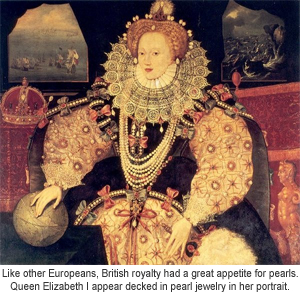
Incidentally- famous Protestant ladies also wore beads!
queen_elizabethI

Saturday, September 19, 2009

You can add the Liturgical Calendar to your Google Calendar!

This is kind of neat! The Universalis: Calendar for 2009 is available, and down at the bottom is a button for adding the liturgical year to your Google Calendar! How convenient!!


AddThis Social Bookmark Button

How alone is faith alone?

I'm waiting until Candy has doled out a few more installments in The Birth of Both Churches to add comments. As Elena has mentioned, if you really can't wait, we've written about it plenty already.

I did want to talk a bit about what Candy wrote in the comments section, because it ties into a point we have made repeatedly here at VTC. I'll reproduce Candy's comments in their entirety so that they will be preserved, in case we need them again in the future.

Marie asks: Interesting, but there is something I don't understand. As long as you accept Jesus Christ as your Savior and the only way to the Father, does it matter what rituals/practices you follow? Why do the origins matter at all? Isn't this just form over substance?

Candy replies:
Marie, that is a fabulous question. Yes, it matters very much to God. You see, Solomon conitnued to believe in Jehovah, but he also ~added~ practices, such as rituals that were used for Baal, Molech, and Milcom worship.

Solomon still believed in Jehovah, but he was including practices that weren't of Jehovah into his religious zeal. The Bible tells us how severely God disproved of it. This led to Solormon's son ripping apart Israel, and it led to the division of 12 tribes into the House of Israel and the House of Judah, and these two houses faught against each other for YEARS, up until the captivity.

Sincereity will never save us. Faith in Christ, and in Him ALONE is what saves us. If one is practicing non-biblical traditions, rites, and rituals, then they are practicing Jesus AND... And even if they are sincere in that practice, they are sincerely wrong, and damned, because God's Word is right there in front of them, but they refused to read and believe it. They chose man's word over God's Word. We are saved by Faith in Christ alone, and NOTHING else.

God gave us the Holy Bible so that we could read it and know how HE wants us to worship Him.

How horrible it is, when people choose to ~not~ read the Bible, but instead follow what man teaches them.

For example, what if you had to leave your children, but you left them a letter that you wrote from your heart. What if your kids didn't bother reading your letter, and they appeared to revere what their friends said about you, instead of reading the letter YOU left them? Wouldn't that just break your heart?

That was a weak example, but hopefully it makes my point clear.

FAITH in Christ means that we live the way Christ wants us to. Christ told us how He wants us to live - in the Bible. Christ specifically spoke out against traditions of men, and He clearly abhorred them.

Friend, we are in a serious famine of the Word of God. I can't think of more than a handful of Christians that I know IRL who have read the Bible! :-(

Shame on us for not seeking God and His Word. Shame on us for following man instead of God.

We need to repent of this, and turn to the Heavenly Father.
She then writes a follow-up comment:

Marie, I'm glad my example was clear.

Yes, we all make mistakes, and that's why God gave us 1 John 1:9. However, the Christian walk also includes growth and spirutual education. This means what when a Christian finds they were doing a practice that is not biblical, they need to stop.

If a Chrsitian was doing a practice they completely, 100%, honestly thought was biblical, but it was not, then that sin will not be imputed to them, ~if~ they are a saved person. It is only imputed to that person as sin, if they find out what they were doing was at enmity with the Word of God, but they continue to follow that ritual anyhow:

"Therefore to him that knoweth to do good, and doeth it not, to him it is sin." James 4:17

Also, don't fall for the Interpretation Game. The Bible is very clear, if we just READ it for ~ourselves~ and not let our mind get cluttered by critics who have twisted the Word and therefore confuse us.

For example, what's hard to understand about the Scripture I just quoted? Does it not say, as clear as the nose on our face, that if one knows to do good, but doesn't do so, then they are sinning?

Yet, a textual critic can twist that little Scripture around to mean a myriad of fables. If you take the Word of God at ~face value~ and just read it for what it says, then you'll see there are no "interpretations" needed. This is why God gives us this beautiful promise:

"Thy word is a lamp unto my feet, and a light unto my path." -Pslam 119:105

How can the Bible guide us, if we can't understand it? LOL

PS - There are some deep meanings in the Scriptures that one won't understand when they first read the Bible. Yet God promises us that if we seek, we will find. Every time I re-read the Bible, I learn more than I did the previous time. It is the Word of God. No one can ever know all of the lessons of the Word, because to our finite minds the Word is infinite. Yet - it never contradicts.
Finally (as of right now) she writes:

Kind of... The basic gist is that if one seeks God - truly Seeks Him, then they will find Jesus Christ and get saved. As a baby Christian, they will still be learning about how God wants to lead them. God will help them grow and learn. The main way a Christian gains knowledge is via the Bible.

If a Christian brother or sister sees their fellow Christian go astray, then the Word says that it's that person's job to tell their friend, to help them get back on track.

Yet, we should be like the Bereans, and test ~everything~ with the Word of God.

If someone tells you that you need to pray to Mary, for example, then search the Scriptures first. You'll find that prayer to anyone except God is something God hates. Therefore, with the knowledge that you are NOT supposed to pray to Mary - if you do so anyway, then you are sinning against God.

On the other hand, if you were raised Catholic, for example, and then a friend led you to Christ, but you continue practicing Cathlic rituals, it is not sin if you continue to seek God, and as soon as you learn (which you will, if you seek) that all of those rituals are not biblical, you should choose to follow God, not man.

Candy has some major contradictions going on here. First, she says that sincerity will not save you. She and Erik have said this many times before. If you are Catholic, but not saved, then you will go to hell. However, if you are somehow a saved Catholic but are still attending Mass and doing other Catholic abominations then that is okay, because you don't know it is wrong.

If you sincerely think you are a Christian, then it doesn't count. If you are a Christian, but sincerely don't understand what it takes to be a Christian, then that's okay. Until you learn that it isn't okay, and then it's not. If you don't know because you refuse to read the Bible, then that's bad, but if you don't know because you haven't yet read the Bible, then that okay, but who knows for how long until it counts as refusing to read the Bible. Clear as mud?

The other, bigger issue, is that Candy feels Catholic practices indicate a belief that we are saved by faith AND (Mass, praying to saints, sacrificing babies to Molech, and other Catholic doctrines) rather than by faith ALONE.

Candy has written previously: You are saved (not "being saved") by faith, not by Mary, rites, Eucharist, mass, works ("good deeds"), rituals, or traditions. Jesus hates the traditions of the Roman Catholic church. We know this because of how much He hated the traditions of the religious people who were around at His time on this earth, the Pharisees.

As I've said before, if being saved means believing that we are saved though God's grace, through our faith in Jesus Christ, as is manifest by our works, then Candy need not fear for the salvation of Catholics. However, if being saved means believing that PLUS rejecting the Catholic Church, then it isn't really being saved by faith ALONE, is it?

Let us look at some of Candy's criteria for being really saved. Because you can claim to be saved, but there are indications if you are not REALLY saved.

Candy's list of what you need to attain salvation:
  1. Pray the Sinner's Prayer.
  2. Produce good works automatically.
  3. Have a "feeling" of assurance of salvation.
  4. Will study Bible intensively every day, reading a King James Bible from front to back.
  5. Have feelings of revulsion towards ungodly parts of your previous life (i.e., nauseated when you listen to rock music.)
  6. Will reject the Catholic Church. If you do not "come out of her" then you are not really saved.
That is a lot of faith AND. In order to REALLY be a Christian, you must have faith in Jesus AND really feel saved, and reject the Catholic Church, and read the Bible, and and and . . . .

The problem that I see in all of this, is that most of it relies on interior motivation. What is the difference between a Christian automatically producing good works in order to store of crowns in Heaven, and an unsaved Catholic doing good works allegedly in order to earn their salvation? You can't tell by looking at two women ladling out soup in the soup kitchen which is the true Christian.

Similarly, how can we tell by looking at Candy that she isn't trying to earn her salvation by wearing only flowing dresses, studying her Bible, homeschooling her children, not allowing her children to participate in Children's Church, preparing healthy meals for her family (listed on a video as what a Christian homemaker does), and trying to pass out tracts? She assures us that she is not being legalistic, because she does not do these things in order to earn her salvation, but because she is a Christian.

Candy always assumes the worst of Catholics. They must be going to Mass in order to be saved. They must be doing good works in order to be saved. But we aren't. We believe we are saved by God's grace. We do these "rituals" because we believe they bring us closer to God, because we are led to do them by the Holy Spirit, and because we are trying to be obedient to God.

Sincerity won't save us. But God's grace will.

AddThis Social Bookmark Button

Friday, September 18, 2009

This World according to Candy

Iwondered how long Candy was going to go without throwing some rocks at the Catholic church. I actually thought she would have put something up sooner.

Today she presents us with part 1 of her version of ancient history. From experience, I know just were this is going. You can read the Catholic rebuttal in:Did the Catholic Church Have Its Origin in Paganism? (This Rock: May-June 2005)

Kelly also wrote extensively about this topic back in Januaryand February.


Add to Technorati Favorites


Please browse my eBay items!
Visit my new Amazon Store!

Wednesday, September 16, 2009

Catholic Encyclicals on the Bible

I recently found a blog run by Catholic professors of Scripture and Theology called The Sacred Page. I see that Moonshadow is ahead of me on this one.

Contrary to what Candy and others assert, the Bible is not banned for Catholics. Bible study is encouraged, and it has been the subject of several papal writings.

The three papal encyclicals on the Bible.

These are:
1. Pope Leo XIII,
Encyclical Letter On the Study of Sacred Scripture,
2. Pope Benedict XV,
Encyclical Letter Commemorating the Fifteenth Centenary of the Death of St. Jerome,
3. Pope Pius XII,
Encyclical Letter Promoting Biblical Studies,
As I'm reading through these encyclicals again, I'm struck by what a treasure trove of teaching they are on a whole host of issues: inspiration, inerrancy, interpretation, the literal and spiritual senses of Scripture, the role of the Scripture in the spiritual life and mission of the Church, and on and on.

As you can see by the dates, this Catholic interest in the Bible even pre-dates Vatican II. Perhaps some of you would be interested in giving Mary and the Pope a rest, and discussing our commonalities and differences in views on the Bible.

Some previous topics of interest from VTC:
The Catholic Bible
Bible Catholics
The Catholic View of Scripture

AddThis Social Bookmark Button

Monday, September 14, 2009

Exaltation of the Cross

Protestants here often comment that Catholics are so interested in Mary and "obscuring doctrines" that we miss the gospel message. I wanted to point out that throughout the liturgical year we are always pointed towards Christ and today's feast is a good example. Today is the feast of the Exaltation of the Cross and we remember Christ's sacrifice and death on the cross as well as his resurrection and triumph. You can read more about this interesting day in the link below.

Exaltation of the Cross


Add to Technorati Favorites


Please browse my eBay items!
Visit my new Amazon Store!

Friday, September 11, 2009

Open Line Friday!

Ya'll seem to want to talk about whatever it is YOU want to talk about - so have at it!!

Here's a conversation starter - Scott Hahn has been instrumental in helping many convert to Catholicism.  He is also a convert to the faith.  Here is some of his work on the Papacy - an issue that divides us which seems to be what ya'll want to focus on.  Hahn's scholarship was also called into question yesterday by Paul.  Enjoy!
AddThis Social Bookmark Button

Wednesday, September 9, 2009

What's not on the table.

Interestingly, some things kept popping into the discussion about the scriptures that had no place being there - as if our separated brethren were trying to teach us about Christianity!  So I thought I'd bring up a few of the strawmen and assure folks that Catholics already know this - there is no need to keep bringing it up into every discussion.

1.  Scripture always points to Jesus Christ because its purpose is to reveal Him as our Savior, from beginning to end.

2.  Christ's death and resurrection and ascension to the Father are essential and central to the gospel and ARE the only gospel.

3.  The Holy Spirit always points to Christ as our gate, our way, our life, our hope, our High Priest, our sacrifice, our mediator, our Bridegroom.

4.  The gospels and the whole NT reveal that Jesus is fully human and fully divine. He is shown to be the Son of God and the Son of Man foretold by prophecy and Gabriel the archangel.

5.  The Old Testament is scripture too, and Jesus and the Apostles used it to show the plan of God prophesied and brought about from the beginning.

6.  If people couldn't read or have their own copies (of scripture), they could hear it read in their churches.


OK That's enough for now , but the above 6 points are all things that we agree on!  So I for one would appreciate not having them brought up as a debate point all the time. 
AddThis Social Bookmark Button

Sunday, September 6, 2009

Assumption talk

Really guys! It is helpful if you keep comments on the blog topic so that when people are looking for information on the Assumption, they can find it!

I'm going to try and gather several of the comments together here, so that those who wish to continue discussing may do so.

Elena pasted from this article:

The Assumption is the oldest feast day of Our Lady, but we don't know how it first came to be celebrated.

Its origin is lost in those days when Jerusalem was restored as a sacred city, at the time of the Roman Emperor Constantine (c. 285-337). By then it had been a pagan city for two centuries, ever since Emperor Hadrian (76-138) had leveled it around the year 135 and rebuilt it as Aelia Capitolina in honor of Jupiter.

For 200 years, every memory of Jesus was obliterated from the city, and the sites made holy by His life, death and Resurrection became pagan temples.

After the building of the Church of the Holy Sepulchre in 336, the sacred sites began to be restored and memories of the life of Our Lord began to be celebrated by the people of Jerusalem. One of the memories about his mother centered around the "Tomb of Mary," close to Mount Zion, where the early Christian community had lived.

On the hill itself was the "Place of Dormition," the spot of Mary's "falling asleep," where she had died. The "Tomb of Mary" was where she was buried.

At this time, the "Memory of Mary" was being celebrated. Later it was to become our feast of the Assumption.

For a time, the "Memory of Mary" was marked only in Palestine, but then it was extended by the emperor to all the churches of the East. In the seventh century, it began to be celebrated in Rome under the title of the "Falling Asleep" ("Dormitio") of the Mother of God.
I said to Jennie:

Well, I hope you don't celebrate Christmas, or worship on Sunday, or use grape juice instead of wine for the Lord's Supper. Because that all sounds good, but none of it is from Scripture.

Jennie replied:

I don't consider Christmas as a part of church doctrine. It's a tradition that some celebrate as part of church worship and some celebrate as just a family and cultural tradition. It's certainly not something that was commanded in scripture or done in the early church.

As to the other things, they are not major doctrines pertaining to salvation, but would be considered matters of freedom and conscience, as to what day to worship, and whether to use alcoholic wine for communion. There is not agreement on them, so we should do as conscience dictates. We don't believe traditions are bad, just that they must be in line with scripture.

The RC doctrines of Mary are not taught in scripture AND are in contradiction to it. They are myths with no historical support and, in protestant eyes, should not be believed and certainly should not be dogmas that everyone must believe. In the firm belief of many Christians, they take away from the supremacy of Christ and the gospel message, and point people to Mary instead.

I then wrote:

I get very frustrated that things non-Catholic Christians do which are traditions are always okay, even though they aren't Scriptural. Anything Catholics do which smack of tradition (such as pray the rosary) is met with the accusation that it isn't in the Bible, and therefore shouldn't be done.

How does the Assumption contradict Scripture, which is silent on what happened to Mary. Elijah and Enoch were assumed into heaven.

I would also disagree that there is no historical support. In my blog entry which I linked to earlier, you can see that the church which holds Mary's empty tomb is still around. Historical accounts always refer to an empty tomb.

It isn't as if there are accounts of the body being there, and then at a certain point they change to describing an empty tomb, as it would if the body were stolen.

Jennie's response:

I haven't heard of Mary's empty tomb. When does history speak of it? I've heard of many people going to the Holy Land to see Jesus' empty tomb, but not Mary's. I'll go back and look at your earlier blog entry.

The Bible records Jesus' resurrection and ascension, and earlier as you said it records Elijah and Enoch being taken up into heaven alive, so if Mary was assumed and it's so important to Christianity, why is it not recorded in scripture and testified to by early believers by many eyewitnesses as Jesus' death and resurrection and ascension were?

It looks like all the documents that refer to the assumption are from the 5th century or later. That's not the same as the eyewitness accounts of Christ and the historical accounts from the same period as Christ that speak of the events of the time. It still looks like the Mary stories came in later as myths.

Clare chimed in with:

It is a little bit intriguing to observe the lack of relics of Mary. No 'true bones' or anything.

The early church ( and this habit persists) tended to treat the mortal remains of saints with great care and reverence.


Daughter of Wisdom wrote this (in response to Clare):

I can shed a little light on why the body of Mary was not found.

The burial practices of 1st century Jews were markedly different from the modern burial practices of today, or of our culture. In first century Jewry, bodies were not embalmed or preserved. The body was anointed with special herbs such as myrrh or aloes to mask the stench as the body decomposed. Once the body had decomposed, the bones were taken and placed in a box called an ossuary, which contained all the bones of a particular family. These ossuaries were then stored in special burial caves where they could be retrieved at any time so that new bones from newly deceased family members could be added. For more information see Ossuary.

Another thing: The name Mary was very common back then. It would have been difficult to next to impossible for a devout Catholic who came along hundreds of years later (as there were no Roman Catholics in the first century) to to determine which bones belonged to Mary of Nazareth. The destruction of familial records by the then Roman empire, and the Jewish diaspora of 70 A.D would also make it virtually impossible for people to identify remains.

Conclusion: No body of Mary because the body had rotted away, and the documentation to identify the bones were destroyed.

Finally, Barbara wrote:

Much of what is known about Mary is found in the NT apocrypha. While some of these books were rejected from the official canon as heretical, others were rejected because their authorship was questioned, not their validity. Other things were passed down in oral tradition.

The reason that many doctrines about Mary were officially declared was in response to those questioning Jesus' humanity. Jesus was fully human because his mother was fully human. Would you not agree that a central tenent is that Christ was both human and divine.
---------------

Now, let us try to get back to the original question. How does the doctrine of the Assumption contradict Scripture?

The only response I've heard is that it would have been an important enough event that it should have been in Scripture. That is not proof of contradiction, folks.

Can God assume bodies into Heaven? Yes, there is Biblical proof of this.
Is Mary's death recorded in Scripture? No, it is not.
Therefore, this doctrine does not explicitly contradict Scripture.

Going back to Jennie's other original assertion, that traditions practiced by non-Catholic Christians are not major doctrines, but matters of personal choice in minor matters, I would point out the the doctrine of the Trinity is a major cornerstone of Christianity which was not explicitly mentioned in Scripture. It was also not agreed upon by the early Christians for this reason. The early church was nearly torn apart by this controversy, but eventually Arianism was declared a heresy.

So yes, Jennie, it is possible for major doctrines to not be explicitly found in Scripture.


As to the history of Mary. At the crucifixion of Jesus, Jesus gave Mary into the care of the apostle John. It is widely believed that Mary went to live with John in the city of Ephesus. The place where the house stood is a place of pilgrimage for both Christians and Muslims today. While the upper part of the house is newer, the foundations date back to the 1st century.

While Mary lived there, it is reasonable to assume that the disciples of Jesus came to visit her there. Luke does not name his "eyewitnesses" but from whom else would he have heard of the circumstances of the birth of Jesus? Was elderly Elizabeth still around to tell how John the Baptist leaped in her womb when Mary came to visit her?

St. John died and was buried in Ephesus, where a church was erected over his grave. The remains of it are still there. Similarly, the location of the tomb of Mary is still remembered with a church, which was built over the site of 1st century burial caves.

These people were very important to the early Christians. They began collecting "relics" from them. In Acts 19:11-12 it is recorded that people were healed of illness and possession by being touched by aprons or handkerchiefs which had touched Paul. That proved so successful, they kept track of Paul when he died.

The early Christians visited tombs of the martyrs and of significant Christians regularly. There exists ample historical evidence of this in the form of 1st century graffiti on the tombs. The Christians honored and remembered their dead. They made pilgrimage to their tombs. And when the persecution was over, churches were erected on these sites.

Consider the most significant example of this, the tomb of St. Peter in Rome. No, we can't prove that the DNA on the bones matches that of St. Peter. But it is becoming clear that with so many of these sites, they do date back to the earliest times. Christians honored and remembered their dead.


AddThis Social Bookmark Button

Wednesday, September 2, 2009

Where we got the bible

Where we got the bible

On the church settling the canon of the bible:

(i) Before the collection of New Testament books was finally settled at the Council of Carthage, 397, we find that there were three distinct classes into which the Christian writings were divided. This we know (and every scholar admits it) from the works of early Christian writers like Eusebius, Jerome, Epiphanius, and a whole host of others that we could name. These classes were (I) the books 'acknowledged' as Canonical, (2) books 'disputed' or 'controverted', (3) books declared 'spurious' or false. Now in class (I) i.e., those acknowledged by Christians everywhere to be genuine and authentic, and to have been written by Apostolic men, we find such books as the Four Gospels, 13 Epistles of St Paul, Acts of the Apostles. These were recognised east and west as 'Canonical', genuinely the works of the Apostles and Evangelists whose names they bore, worthy of being in the 'Canon' or sacred collection of inspired writings of the Church, and read aloud at Holy Mass. But there was (2) a class�and Protestants should particularly take notice of the fact, as it utterly undermines their Rule of Faith �the Bible and the Bible only'�of books that were disputed, controverted, in some places acknowledged, in others rejected; and among these we actually find the Epistle of St James, Epistle of St Jude, 2nd Epistle of St Peter; 2nd and 3rd of St John, Epistle to the Hebrews, and the Apocalypse of St John. There were doubts about these works; perhaps, it was said, they were not really written by Apostles, or Apostolic men, or by the men whose names they carried; in some parts of the Christian world they were suspected, though in others unhesitatingly received as genuine. There is no getting out of this fact, then: some of the books of our Bible which we, Catholic and Protestant alike, now recognise as inspired and as the written Word of God, were at one time, and indeed for long, viewed with suspicion, doubted, disputed, as not possessing the same authority as the others. (I am speaking only of the New Testament books; the same could be proved, if there were space, of the Old Testament; but the New Testament suffices abundantly for the argument.) But further still�what is even more striking, and is equally fatal to the Protestant theory�in this (2) class of 'controverted' and doubtful books some were to be found which are not now in our New Testament at all, but which were by many then considered to be inspired and Apostolic, or were actually read at the public worship of the Christians, or were used for instructions to the newly-converted; in short, ranked in some places as equal to the works of St James or St Peter or St Jude. Among these we may mention specially the 'Shepherd' of Hermas, Epistle of Barnabas, the Doctrine of the Twelve Apostles, Apostolic Constitutions, Gospel according to the Hebrews, St Paul's Epistle to the Laodiceans, Epistle of St Clement, and others. Why are these not in our Bible today? We shall see in a minute. Lastly (3) there was a class of books floating about before 397 A.D., which were never acknowledged as of any value in the Church, nor treated as having Apostolic authority, seeing that they were obviously spurious and false, full of absurd fables, superstitions, puerilities, and stories and miracles of Our Lord and His Apostles which made them a laughing-stock to the world. Of these some have survived, and we have them today, to let us see what stamp of writing they were; most have perished. But we know the names of about 50 Gospels (such as the Gospel of James, the Gospel of Thomas, and the like), about 22 Acts (like the Acts of Pilate, Acts of Paul and Thecla, and others), and a smaller number of Epistles and Apocalypses. These were condemned and rejected wholesale as 'Apocrypha'�that is, false, spurious, uncanonical.

(ii) This then being the state of matters, you can see at once what perplexity arose for the poor Christians in days of persecution, when they were required to surrender their sacred books. The Emperor Diocletian, for example, who inaugurated a terrible war against the Christians, issued an edict in 303 A.D. that all the churches should be razed to the ground and the Sacred Scriptures should be delivered up to the Pagan authorities to be burned. Well, the question was what was Sacred Scripture? If a Christian gave up an inspired writing to the Pagans to save his life, he thereby became an apostate: he denied his faith, he betrayed his Lord and God; he saved his life, indeed, but he lost his soul. Some did this and were called 'traditores', traitors, betrayers, 'deliverers up' (of the Scriptures). Most, however, preferred martyrdom, and refusing to surrender the inspired writings, suffered the death. But it was a most perplexing and harrowing question they had to decide�what really was Sacred Scripture? I am not bound to go to the stake for refusing to give up some 'spurious' Gospel or Epistle. Could I, then, safely give up some of the 'controverted' or disputed books, like the Epistle of St James, or the Hebrews, or the Shepherd of Hermas, or the Epistle of St Barnabas, or of St Clement? There is no need to be a martyr by mistake. And so the stress of persecution had the effect of making still more urgent the necessity of deciding once and for all what was to form the New Testament. What, definitely and precisely, were to be the books for which a Christian would be bound to lay down his life on pain of losing his soul?

(iii) Here, as I said before, comes in the Council of Carthage, 397 A.D., confirming and approving the decrees of a previous Council (Hippo, 393 A.D.) declaring, for all time to come, what was the exact collection of sacred writings thenceforth to be reckoned, to the exclusion of all others, as the inspired Scripture of the New Testament. That collection is precisely that which Catholics possess at this day in their Douai Bible. That decree of Carthage was never changed. It was sent to Rome for confirmation. As I have already remarked, a Council, even though not a general Council of the whole Catholic Church, may yet have its decrees made binding on the whole Church by the approval and will of the Pope. A second Council of Carthage over which St Augustine presided, in 419 A.D., renewed the decrees of the former one, and declared that its act was to be notified to Boniface, Bishop of Rome, for the purpose of confirming it. From that date all doubt ceased as to what was, and what was not 'spurious', or 'genuine', or 'doubtful' among the Christian writings then known. Rome had spoken. A Council of the Roman Catholic Church had settled it. You might hear a voice here or there, in East or West, in subsequent times, raking up some old doubt, or raising a question as to whether this or that book of the New Testament is really what it claims to be, or should be where it is. But it is a voice in the wilderness.

Rome had fixed the 'Canon' of the New Testa�ment. There are henceforward but two classes of books�inspired and not inspired. Within the covers of the New Testament all is inspired; all without, known or unknown, is uninspired. Under the guidance of the Holy Ghost the Council declared 'This is genuine, that is false'; 'this is Apostolic, that is not Apostolic'. She sifted, weighed, discussed, selected, rejected, and finally decided what was what. Here she rejected a writing that was once very popular and reckoned by many as inspired, and was actually read as Scripture at public service; there, again, she accepted another that was very much disputed and viewed with suspicion, and said: 'This is to go into the New Testament.' She had the evidence before her; she had tradition to help her; and above all she had the assistance of the Holy Spirit, to enable her to come to a right conclusion on so momentous a matter. And in fact, her con�clusion was received by all Christendom until the sixteenth century, when as we shall see, men arose rebelling against her decision and altering the Sacred Volume. But, at all events in regard to the New Testament, the Reformers left the books as they found them, and today their Testament contains exactly the same books as ours; and what I wish to drive home, is that they got these books from Rome, that without the Roman Catholic Church they would not have got them, and that the decrees of Carthage, 397 and 419 A.D., when all Christianity was Roman Catholic�reaffirmed by the Council of Florence, 1442, under Pope Eugenius IV, and the Council of Trent, 1546�these decrees of the Roman Church, and these only are the means and the channel and the authority which Almighty God has used to hand down to us His written Word. Who can deny it? The Church existed before the Bible; she made the Bible; she selected its books, and she preserved it. She handed it down; through her we know what is the Word of God, and what the word of man; and hence to try at this time of day, as many do, to overthrow the Church by means of this very Bible, and to put it above the Church, and to revile her for destroying it and corrupting it�what is this but to strike the mother that reared them; to curse the hand that fed them; to turn against their best friend and benefactor; and to repay with ingratitude and slander the very guide and protector who has led them to drink of the water out of the Saviour's fountains?

Tuesday, September 1, 2009

The charges:

 Jennie writes:

There are centuries of history, from well before the Reformation, of people objecting to doctrines and practices of the Roman Catholic church. The objections of the Reformers have never been resolved. How can we resolve them here, when the magisterium has not changed anything since then except to add more objectionable doctrines? I believe the Reformers were right; and the differences still remain today.

There were centuries of people objecting to doctrines and practices of the Roman Catholic Church.  We call these heresies.

But in the interest of education and mutual understanding  here is some information on the Catholic Counter-Reformation

AddThis Social Bookmark Button