I just have a few quick thoughts on Candy Brauer's new e-book about birth and childcare, "Christian Homebirth and Happy Babies: How I Did It Ages pre-birth to 4."
1. I wish she had not put Christian in the title. I think that is going to be off putting to women who choose hospital birth, birth centers, or midwives at home. There is nothing in the scriptures to say those choices are wrong and in fact midwives are mentioned throughout the scriptures!
2. I think a couple has to be very prepared to do an unassisted birth, particularly the husband! If the baby needs help and the mom needs help too (like baby struggling to breathe and mom bleeding out) the husband will have to handle both of these things. Another set of hands would certainly be useful. I had a cord prolapse at home. My skilled birth professional found it. I am not sure Mr. Pete would have known what he was feeling if he had to do a vaginal exam on his own. I also witnessed a very scary shoulder dystocia at home with a midwife. The midwife worked for several minutes to free the baby and she almost died. Couples attempting an unassisted birth I'm sure are aware of these things, but living through them myself, I would never opt for an unassisted home birth.
3. Candy has some breastfeeding issues. In fact she stated that it repulsed her to nurse an older baby and that she stops nursing when the standard 6-month-old nursing strike stuff starts to happen. I'm concerned that this will influence young inexperienced moms to wean their babies early, or not even attempt to nurse at all. I notice that in Candy's preview, she makes no mention of breastfeeding.
4. I wonder if her chapter on the strong-swilled child will include her brush with CPS last spring as she deleted all of that from her blog. She could do her readers a big service by including it and also mentioning the protection and services of the Home School Legal Defense Association. I am a member because someone threatened my family a year ago. It's money well spent every month in my opinion.
5. Candy uses 100 Easy Lessons to Teach Your Child to Read at age 4. She does reading readiness at age 3. I used the very same book for all of my five reading children. Three of them took to it like fish to water. Two of them did not and in fact had problems that made it very difficult for them to learn to read. My oldest did not read until he was 12 and that was after we started taking him to a reading specialist.
Learning to read is like learning to walk, talk, potty training, riding a bike and every other skill. Some kids get it, some don't right a way and there has to be some allowances for the variants. The late Raymond Moore suggested "wait until eight" for little boys because he did not think they were developmentally ready to learn to read until then.
Also while I enjoyed 100 Easy Lessons around Lesson 50 it starts to move a little too fast. None of my kids have finished that book. I usually put them into Pathway readers around that time. Those are delightful stories about kids in universal situations. My kids loved them. The new/old Dick and Jane books are a delight too!
Well that's it for me today. I am taking my cord-prolapse, 8-year-old daughter to an eyes pecialist today because she is a struggling reader. (she only made it to lesson 25 in 100 Easy Lessons. After that she will need to see the reading specialist again. Back later tonight.
Sunday, September 30, 2007


The Catholic Mass
Candy wrote here in one of her famous Q and A's:
Q Have you ever attended a Catholic mass?
A Yes. It was so sad and gut wrenching that it almost brought me to tears. I was the only one attending, that I could see, that brought a Bible, and even bothered looking up scriptures. The Bible ignorance in that crowd was astounding me as well. Most of them don't seem to read their Bible, they just follow what "the church" teaches them. Everyone there looked to me like they were wearing masks with no eyes. :-( I suspect that there might have been more true reverence (as opposed to ritual) in a black mass (however they'd be worshiping the wrong guy, of course). I also found it quite disturbing how everyone was basically handed a "script" as they walked in the door. - Kneel at this time, say this with the congregation at this time, sing this at that time, kneel again at this time, say such and such prayer at that time, repeat this phrase three times, etc. Where is the worship of God in that? No, I'd much prefer to follow the worship manual - The Bible.
I never had the opportunity to comment to this on Candy's blog and that was one of the main reasons I started the boycott of her e-book product(s).
So I'd like to take the opportunity here.
First of all, if you look over on the sidebar you will see a little box that says Catholic Content.com. This site gives all of the readings for the day that will be read at mass all over the world. (I might add also not in just Catholic churches but Orthodox, Anglican, Lutheran, Presbyterian etc.) So Catholics know what the readings are going to be at mass before we even attend. My family and I can prepare for mass by reading the readings ahead of time so that we are better prepared when we attend mass. I find that this works particularly well for school aged children so that they have a chance to really concentrate when they get to church.


Today's readings were from the book of Amos, 1 Timothy and the Gospel of Luke. If one were to carefully read these scriptures, I'm sure the central theme would come out.
Because the church knows years in advance what readings are going to be read, companies pre-print out missalettes for the worshipers to use when reading along with the lector or the priest. Some folks buy mass missals that also have the readings for that day's mass.
So although I suppose someone could bring a bible to church and flip back and forth through the pages to look at the scripture, there is really no need to do so because you can get all of the scripture for that day in one place.
Now, I wonder how Candy could possibly determine who was biblically ignorant and who was not from just being a member of the congregation. I imagine if she sat next to our family she would think we were dreadfully ignorant hicks what with two lanky teenage sons, a squirmy toddler, and three elementary kids in between with various stages of day dreams and thoughtless movement. My husband does not own a suit, so perhaps she would judge him to be uneducated. I try to look nice for church but I have a toddler. Sometimes I end up with food and/or snot smeared on places by a little funny face and chubby hands that I was not aware of. Sometimes I'm so busy trying to make her sit still or shooting glaring glances over to my older boys that it may seem that there's not a rock in my head either. And we're not the only ones. Our Catholic church is filled with all kinds of people who act like - well regular folks.

She might be surprised then that someone like my husband (I call him Mr. Pete when I'm blogging) has been teaching the Old Testament to sixth graders for six years now at Sunday School. She might be surprised that my kids and I read the readings for the day every morning before we start school, or that I teach them not only their bible stories, but how to look up a chapter and verse on their own, just like I suppose her kids do.
She might also be surprised that our 8th grade Sunday school teacher, who holds a day job as a Federal Prosecutor, starts his syllabus off right after the Resurrection through the Acts of the Apostles. I think she'd be surprised with how many regular daily mass goers in our church could quote scripture back to her. But how could you possibly know that by simply looking at them?

Everyone there looked to me like they were wearing masks with no eyes.

Well... if she attended a 6:00 a.m. mass, that could be. Or if it was a teen mass I could see it too. Teens seem to be perpetually missing enough sleep. Other than that I wonder what she means by that statement. In our parish we greet each other before mass, and of course the sign of peace is always a warm part ofthe mass to meet and connect with each other. Did anyone offer her the sign of peace at mass? I think at a usual Sunday mass you see all kinds of people. People who really want to be there, and people just going through the motions. I'll bet its the same at non-Catholic churches too. But other than that I truly do not understand that statement.
The reference to satan worship and black mass was a blatant ad homineum remark that betrays her true hatred for Catholics and the Catholic church and does not deserve comment. It speaks for itself.
As for worship postures, those are described in the GIRM, General Instructions of the Roman Missal.
The idea is that we come together as the body of Christ and when we worship, we worshop as one body. That is why prayers are said in unison and specific postures are given during certain parts of the mass.
Now Candy asks where in the bible is that? I would refer her to Professor Scott Hahn's book The Lamb's Supper: The Mass as Heaven on Earth
Holy Spirit Interactive: The Explanatory Mass - The Holy Mass explained
Sample Pages from the Mass Explained to Children by Maria Montessori
Q Have you ever attended a Catholic mass?
A Yes. It was so sad and gut wrenching that it almost brought me to tears. I was the only one attending, that I could see, that brought a Bible, and even bothered looking up scriptures. The Bible ignorance in that crowd was astounding me as well. Most of them don't seem to read their Bible, they just follow what "the church" teaches them. Everyone there looked to me like they were wearing masks with no eyes. :-( I suspect that there might have been more true reverence (as opposed to ritual) in a black mass (however they'd be worshiping the wrong guy, of course). I also found it quite disturbing how everyone was basically handed a "script" as they walked in the door. - Kneel at this time, say this with the congregation at this time, sing this at that time, kneel again at this time, say such and such prayer at that time, repeat this phrase three times, etc. Where is the worship of God in that? No, I'd much prefer to follow the worship manual - The Bible.
I never had the opportunity to comment to this on Candy's blog and that was one of the main reasons I started the boycott of her e-book product(s).
So I'd like to take the opportunity here.
First of all, if you look over on the sidebar you will see a little box that says Catholic Content.com. This site gives all of the readings for the day that will be read at mass all over the world. (I might add also not in just Catholic churches but Orthodox, Anglican, Lutheran, Presbyterian etc.) So Catholics know what the readings are going to be at mass before we even attend. My family and I can prepare for mass by reading the readings ahead of time so that we are better prepared when we attend mass. I find that this works particularly well for school aged children so that they have a chance to really concentrate when they get to church.

Today's readings were from the book of Amos, 1 Timothy and the Gospel of Luke. If one were to carefully read these scriptures, I'm sure the central theme would come out.
Because the church knows years in advance what readings are going to be read, companies pre-print out missalettes for the worshipers to use when reading along with the lector or the priest. Some folks buy mass missals that also have the readings for that day's mass.
So although I suppose someone could bring a bible to church and flip back and forth through the pages to look at the scripture, there is really no need to do so because you can get all of the scripture for that day in one place.
Now, I wonder how Candy could possibly determine who was biblically ignorant and who was not from just being a member of the congregation. I imagine if she sat next to our family she would think we were dreadfully ignorant hicks what with two lanky teenage sons, a squirmy toddler, and three elementary kids in between with various stages of day dreams and thoughtless movement. My husband does not own a suit, so perhaps she would judge him to be uneducated. I try to look nice for church but I have a toddler. Sometimes I end up with food and/or snot smeared on places by a little funny face and chubby hands that I was not aware of. Sometimes I'm so busy trying to make her sit still or shooting glaring glances over to my older boys that it may seem that there's not a rock in my head either. And we're not the only ones. Our Catholic church is filled with all kinds of people who act like - well regular folks.

She might be surprised then that someone like my husband (I call him Mr. Pete when I'm blogging) has been teaching the Old Testament to sixth graders for six years now at Sunday School. She might be surprised that my kids and I read the readings for the day every morning before we start school, or that I teach them not only their bible stories, but how to look up a chapter and verse on their own, just like I suppose her kids do.
She might also be surprised that our 8th grade Sunday school teacher, who holds a day job as a Federal Prosecutor, starts his syllabus off right after the Resurrection through the Acts of the Apostles. I think she'd be surprised with how many regular daily mass goers in our church could quote scripture back to her. But how could you possibly know that by simply looking at them?

Everyone there looked to me like they were wearing masks with no eyes.

Well... if she attended a 6:00 a.m. mass, that could be. Or if it was a teen mass I could see it too. Teens seem to be perpetually missing enough sleep. Other than that I wonder what she means by that statement. In our parish we greet each other before mass, and of course the sign of peace is always a warm part ofthe mass to meet and connect with each other. Did anyone offer her the sign of peace at mass? I think at a usual Sunday mass you see all kinds of people. People who really want to be there, and people just going through the motions. I'll bet its the same at non-Catholic churches too. But other than that I truly do not understand that statement.
The reference to satan worship and black mass was a blatant ad homineum remark that betrays her true hatred for Catholics and the Catholic church and does not deserve comment. It speaks for itself.
As for worship postures, those are described in the GIRM, General Instructions of the Roman Missal.
The idea is that we come together as the body of Christ and when we worship, we worshop as one body. That is why prayers are said in unison and specific postures are given during certain parts of the mass.
Now Candy asks where in the bible is that? I would refer her to Professor Scott Hahn's book The Lamb's Supper: The Mass as Heaven on Earth
Holy Spirit Interactive: The Explanatory Mass - The Holy Mass explained
Sample Pages from the Mass Explained to Children by Maria Montessori
Saturday, September 29, 2007
www.keepingthehome.com
Today Candy writes:
www.keepingthehome.com: "Mental Gossip - what is that? Do you ever spend your thinking time fuming over blogs that you read and disagree with? Do you spend your thinking time frustrated over how your neighbor smokes and cusses and looks at you strangely? Do you fume over menial things like that?"
I think we are getting into a new type of Candyland vernacular.
Gossip means:
What we are doing on this blog is not gossip, although I think Candy is trying to plant the seed that perhaps it is. There is nothing wrong with being indignant over mistreatment of others, or of our faith being misrepresented. In fact that's a good thing.
Psalm 33:5The LORD loves righteousness and justice; the earth is full of his unfailing love.
Psalm 106:3 Blessed are they who maintain justice
What we are attempting on this blog, is to keep the truth about the Catholic church available to anyone who comes here after reading Candy's information. We are attempting to present our faith through a time honored practice of apologetics.
Proverbs 9: 9 Instruct a wise man and he will be wiser still;
teach a righteous man and he will add to his learning.
www.keepingthehome.com: "Mental Gossip - what is that? Do you ever spend your thinking time fuming over blogs that you read and disagree with? Do you spend your thinking time frustrated over how your neighbor smokes and cusses and looks at you strangely? Do you fume over menial things like that?"
I think we are getting into a new type of Candyland vernacular.
Gossip means:
- Rumor or talk of a personal, sensational, or intimate nature.
- A person who habitually spreads intimate or private rumors or facts.
What we are doing on this blog is not gossip, although I think Candy is trying to plant the seed that perhaps it is. There is nothing wrong with being indignant over mistreatment of others, or of our faith being misrepresented. In fact that's a good thing.
Psalm 33:5The LORD loves righteousness and justice; the earth is full of his unfailing love.
Psalm 106:3 Blessed are they who maintain justice
What we are attempting on this blog, is to keep the truth about the Catholic church available to anyone who comes here after reading Candy's information. We are attempting to present our faith through a time honored practice of apologetics.
Proverbs 9: 9 Instruct a wise man and he will be wiser still;
teach a righteous man and he will add to his learning.
Thursday, September 27, 2007
Home birth
www.keepingthehome.com: It's almost done!
Candy doesn't know this about me because, frankly, she never took the time to know anything about me. My first two very innocent comments on her blog she refused to publish at all. In fact the first communication she ever had with me were harsh words on the front page of her blog. I think that was the "Elena and her minions" post.
Not a very warm welcome.
Nonetheless I am quite experienced with home births. I had two very successful homebirths in my living room of two very healthy little baby boys. (They weren't really that little - one was over nine pounds and one was over ten pounds!) I also had a birth where I labored at home but at the last minute had to transfer to the hospital because of a cord prolapse. That is a true obstetrical emergency as the baby's air supply is pinched off when the cord presents before the baby in the birth canal. Lastly, almost five years ago my husband and I discovered that our fifth son had died in utero and we delivered him at home alone by ourselves.
In addition to my own personal experiences I have also attended four homebirths as a doula, one of which was a severe shoulder dystocia that also required a hospital transport.
Candy is preparing to publish and offer an e-book once more through her blog. I don't know if her home management binder business has felt the effects of the boycott or not, but with all of the free resources readily available it probably has.
I will have no qualms and no problems about gathering similar resources for homebirth and early child care as well as an alternative to Candy's book when it's available. In fact, I am working on it now.
Candy doesn't know this about me because, frankly, she never took the time to know anything about me. My first two very innocent comments on her blog she refused to publish at all. In fact the first communication she ever had with me were harsh words on the front page of her blog. I think that was the "Elena and her minions" post.
Not a very warm welcome.
Nonetheless I am quite experienced with home births. I had two very successful homebirths in my living room of two very healthy little baby boys. (They weren't really that little - one was over nine pounds and one was over ten pounds!) I also had a birth where I labored at home but at the last minute had to transfer to the hospital because of a cord prolapse. That is a true obstetrical emergency as the baby's air supply is pinched off when the cord presents before the baby in the birth canal. Lastly, almost five years ago my husband and I discovered that our fifth son had died in utero and we delivered him at home alone by ourselves.
In addition to my own personal experiences I have also attended four homebirths as a doula, one of which was a severe shoulder dystocia that also required a hospital transport.
Candy is preparing to publish and offer an e-book once more through her blog. I don't know if her home management binder business has felt the effects of the boycott or not, but with all of the free resources readily available it probably has.
I will have no qualms and no problems about gathering similar resources for homebirth and early child care as well as an alternative to Candy's book when it's available. In fact, I am working on it now.
Wednesday, September 26, 2007
Tip #9 of how not to witness to Catholic Christians
Blessed Motherhood: "Let me also give a historical example. The German Nazi Party was responsible for the Holocaust. However this does not mean that all Germans were evil by nature. We do hear of testimonies which contain accounts of Germans who risked their lives to save thousands of Jews from the clutches of the Nazi Party. A more recent example is the underground Christian church in Afghanistan. These Afghan Christians have little choice but to practice their faith in secret, professing themselves to be Muslims in order to escape death. There are probably some more examples that I can highlight, which would showcase the disparity between the teachings of an organization or system and the actual beliefs of its people. Hence, it would be reasonable to conclude that not all who outwardly profess to be members of the Roman Catholic Church would automatically adhere to its teachings."
Motherofmany aka Amy has a post up now with this analogy - Catholics are to the Catholic church as good Germans were to the Nazi Party.
nice huh?
Tip #9, of how not to witness to Catholic Christians - don't compare our church to the Nazis!
Motherofmany aka Amy has a post up now with this analogy - Catholics are to the Catholic church as good Germans were to the Nazi Party.
nice huh?
Tip #9, of how not to witness to Catholic Christians - don't compare our church to the Nazis!
Welcome to new visitors
We've had a few new folks join us today.
First of all welcome. Please take a few minutes to tell us a bit about yourself here and how you found Visits to Candyland.
First of all welcome. Please take a few minutes to tell us a bit about yourself here and how you found Visits to Candyland.
The Practical problems with sola scriptura
I didn't think I was going to have to post this so soon, but it seems appropriate to this afternoon's discussions. This was first posted on My Domestic Church a few years ago.
I was going to present more problems with that pillar of Protestantism, but then I found this article by Jim Atkin and so no reason to re-invent the wheel!
Here are his 7 basic problems with it!
1. Requires ability to [print!)
Thus the universal application of sola scriptura presupposes the mass manufacturing of books, and of the Bible in particular.
2. Requires mass distribution of bibles!
Second, besides the printing press, sola scriptura also presupposes the universal distribution of books and of the Bible in particular. For it is no good if enough copies of the Bible exist but they can't be gotten into the hands of the average believer. There thus must be a distribution network capable of delivering affordable copies of the Bible to the average Christian.
3. Requires Christians be able to read!
Third, if the average Christian is going to read the Scriptures and decide for himself what they mean then he obviously must be able to read. Having someone read them to him simply is not sufficient, not only because the person would only be able to do it occasionally (what with a bunch of illiterates to read to), but also because the person needs to be able to go over the passage multiple times, looking at its exact wording and grammatical structure, to be able to quickly flip to other passages bearing on the topic to formulate the different aspects of a doctrine as he is thinking about it, and finally to be able to record his insights so he doesn't forget them and he can keep the evidence straight in his mind. He therefore must be literate and able to read for himself. Thus sola scriptura presupposes universal literacy.
4. Must have scholarly materials available.
He must also have these scholarly support works (commentaries and such) to suggest to him possible alternate interpretations to evaluate, for no one person is going to be able to think of every interpretive option on every passage of Scripture that is relevant to every major Christian doctrine. No Protestant pastor (at least no pastors who are not in extreme anti-intellectual circles) would dream of formulating his views without such support materials, and he thus cannot expect the average Christian to do so either. Indeed! The average Christian is going to need such support materials even more than a trained pastor. Thus sola scriptura also presupposes the possession-not just the existence-of adequate support materials.
5.Need time to study!
Fifth, if the average Christian is to do a thorough study of the Bible for himself, then he obviously must have adequate time in which to do this study. If he is working in the fields or a home (or, later, in the factory) for ten, twelve, fifteen, or eighteen hours a day, he obviously doesn't have time to do this, especially not in addition to the care and raising of his family and his own need to eat and sleep and recreate. Not even a Sunday rest will provide him with the adequate time, for nobody becomes adept in the Bible just by reading the Bible on Sundays-as Protestants stress to their own members when encouraging daily Bible reading. Thus sola scriptura presupposes the universal possession of adequate leisure time in which to make a thorough study the Bible for oneself.
6.Sola scriptura pre supposes universal adequate nutrition
7.Must be skilled in evaluating arguments
Christianity survived 1500 years without the doctrine of sola scriptura- 400 of those even without a bible as we know it today! So to my mind it's clear that historically sola scriptura is unsupported!
I was going to present more problems with that pillar of Protestantism, but then I found this article by Jim Atkin and so no reason to re-invent the wheel!
The disintegration of Protestantism into so many competing factions, teaching different doctrines on key theological issues (What kind of faith saves? Is baptism necessary? Needed? Is baptism for infants? Must baptism be by immersion only? Can one lose salvation? How? Can it be gotten back? How? Is the Real Presence true? Are spiritual gifts like tongues and healing for today? For everyone? What about predestination? What about free will? What about church government?) is itself an important indicator of the practical failure of the doctrine of private judgment, and thus the doctrine of sola scriptura.
However, there is a whole set of practical presuppositions that the doctrine of sola scriptura makes, every one of which provides not just an argument against the doctrine, but a fatal blow to it. Sola scriptura simply cannot be God's plan for Christian theology.
Here are his 7 basic problems with it!
1. Requires ability to [print!)
Thus the universal application of sola scriptura presupposes the mass manufacturing of books, and of the Bible in particular.
2. Requires mass distribution of bibles!
Second, besides the printing press, sola scriptura also presupposes the universal distribution of books and of the Bible in particular. For it is no good if enough copies of the Bible exist but they can't be gotten into the hands of the average believer. There thus must be a distribution network capable of delivering affordable copies of the Bible to the average Christian.
3. Requires Christians be able to read!
Third, if the average Christian is going to read the Scriptures and decide for himself what they mean then he obviously must be able to read. Having someone read them to him simply is not sufficient, not only because the person would only be able to do it occasionally (what with a bunch of illiterates to read to), but also because the person needs to be able to go over the passage multiple times, looking at its exact wording and grammatical structure, to be able to quickly flip to other passages bearing on the topic to formulate the different aspects of a doctrine as he is thinking about it, and finally to be able to record his insights so he doesn't forget them and he can keep the evidence straight in his mind. He therefore must be literate and able to read for himself. Thus sola scriptura presupposes universal literacy.
4. Must have scholarly materials available.
He must also have these scholarly support works (commentaries and such) to suggest to him possible alternate interpretations to evaluate, for no one person is going to be able to think of every interpretive option on every passage of Scripture that is relevant to every major Christian doctrine. No Protestant pastor (at least no pastors who are not in extreme anti-intellectual circles) would dream of formulating his views without such support materials, and he thus cannot expect the average Christian to do so either. Indeed! The average Christian is going to need such support materials even more than a trained pastor. Thus sola scriptura also presupposes the possession-not just the existence-of adequate support materials.
5.Need time to study!
Fifth, if the average Christian is to do a thorough study of the Bible for himself, then he obviously must have adequate time in which to do this study. If he is working in the fields or a home (or, later, in the factory) for ten, twelve, fifteen, or eighteen hours a day, he obviously doesn't have time to do this, especially not in addition to the care and raising of his family and his own need to eat and sleep and recreate. Not even a Sunday rest will provide him with the adequate time, for nobody becomes adept in the Bible just by reading the Bible on Sundays-as Protestants stress to their own members when encouraging daily Bible reading. Thus sola scriptura presupposes the universal possession of adequate leisure time in which to make a thorough study the Bible for oneself.
6.Sola scriptura pre supposes universal adequate nutrition
7.Must be skilled in evaluating arguments
that level of critical thinking does not exist in the average, literate, well-nourished, modern college senior, much less the average, illiterate, malnourished, Medieval peasant. This is especially true when it comes to the abstract concepts and truth claims involved in philosophy and theology. Thus sola scriptura also presupposes a high level of universal education in critical thinking skills (a level which does not even exist today).
Christianity survived 1500 years without the doctrine of sola scriptura- 400 of those even without a bible as we know it today! So to my mind it's clear that historically sola scriptura is unsupported!
Vain repetition?
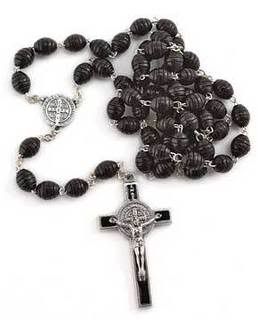
On Candy's God versus the Vatican page, she criticizes a number of issues with the Catholic church. The issue of "vain repetition" is very familiar to Catholics.
Vatican says - After a short pause for reflection, recite the "Our Father", ten "Hail Marys" and the "Glory be to the Father".
God says - But when ye pray, use not vain repetitions, as the heathen do: for they think that they shall be heard for their much speaking. -Matthew 6:7
If you read the entire chapter of Matthew 6, you can see in context that it is opposing men who seek to make themselves look superior in piety through their prayer practices. Focusing on the "repetitious" in verse 7 overlooks the word "vain" which is the true point.
I don't think that repetitious prayer in and of itself is forbidden or bad. We know from Revelation 4:8 that the angels in heaven "rest not day and night, saying, Holy, holy, holy, LORD God Almighty, which was, and is, and is to come." I think praying the same words eternally is definitely repetitious!
Matthew 26:44 tells us that Jesus prayed three times in the garden, using the same words each time.
In Luke 18:13 the tax collector kept beating his breast and praying "God be merciful to me, a sinner." This prayer was pleasing to God, though he said the same words over and over.
Have you only prayed the Lord's Prayer once in your life, because the words would become meaningless if you said them again?
Another good example is Psalm 136, where "or his mercy endureth for ever" acts as a refrain. This is the Word of God, and it is very similar to the rosary in its repetition.
Often, the rosary is held up as the example of vain repetition. Praying the rosary, which is a devotion which is not required for Catholics, is a particular kind of prayer technique. The repetition of the "Hail Mary" prayer is supposed to keep one side of your brain busy, so that you can meditation on a Biblical "mystery" such as the crucifixion of Our Lord, without distraction. The repetition of the words is supposed to keep your mind from wandering, so that you can more fully meditate on the event from scripture.
Not only Catholics, and our familiar friends the Lutherans and Anglicans pray the rosary. The practice can be found among Methodists. John Wesley himself prayed the rosary, and one of his rosaries can be viewed at The Leys School, Cambridge. There are also several websites which feature protestant versions of the rosary.
6 tips on how not to to witness to Catholic Christians
now with two bonus tips!
(This is a repost from my other blog back in July)
As I travel about the Protestant Christian blogosphere certain phrases and ideas keep popping up from our separated bretheren that just are not helpful in furthering the discussion! Sure, it's easy to persuade and compel an almost-ex-Catholic-wanna-be who has one foot outside of the church and the other on a banana peel to leave the Catholic faith! But where's the fun in that!
So for all of you Christian apologists who wish to enter into discussion and debate with catechized Catholics, here are some tips that will help keep both sides in the discussion!
1. Don't use terms like "whore of Babylon" or "come out of her." "Papist is a word you should probably retire too. First of all, it tips your hand. When you use those buzz words, we catechized Catholics then know EXACTLY where you are coming from and that gives us the advantage.
2. Don't link to sites like this or this. Any catechized Catholic who has ever been challenged in his/her faith has seen these and they don't come across as compelling or persuasive. They come off as being ridiculous and melodramatic.
3. Don't dump all of your problems with Catholicism out there at one time. Yea, we know you have problems with Mary, and the priesthood, and the Eucharist, and purgatory and the saints. However, dumping it all out there at once is overwhelming for the novice and time consuming for the experienced. A much better approach is to take one objection at a time and deal with it.
4. Don't say something like, "If you would only read the bible for yourself, your eyes would be opened!!" First of all, that assumes that we have not read the bible for ourselves. For many Catholics, it is reading the scriptures that has kept us in the Catholic Church. Many of the great converts to Catholicism, have been scripture scholars. Secondly, it's not a reading thing; it's a paradigm shift. Catholics can read John chapter 6 and see the formation of the Eucharist, and many Protestants don't see that at all, even if we're reading the same translation and the same words. It's the reader's paradigm that guides the interpretation, not the reader's reading comprehension skills.
5. Don't expect the first answer to your objections to be totally satisfactory. For examples there are libraries full of books on Mary, The Blessed Mother. It's very difficult to boil all of that down into one page or paragraph that will be totally understandable and acceptable. Which leads me to my last point...
6. Expect to dialogue for a while. Nothing is more frustrating than spending time answering objections to Catholicism, posting them or sending them in, and then getting a reply like, "This isn't up for debate," or "I'm done with you!" The Reformation is over 500 years old. You're not going to solve it in five hours of 500 words or less.
and as a bonus tip! Lots of times during debates I get comments like, "Well, it's not very Christian for both of you to go back and forth like that. If that's Christianity, then count me out!"
My response to that is, "we'll miss you!!"
Because discussion and debate are very much a part of Christian history and tradition. Be sure to read the introduction of Dave Armstrong's new e-book- Bible Conversations!
The word dialogue appears in the Bible. The Greek dialegomai occurs 13 times in the New Testament, and refers to reason, rational argument, discussion, discourse, debate, dispute and so forth. Particularly, we often see it applied to the Apostle Paul as he reasoned and argued with Jews in the synagogues (Acts 17:2,17, 18:4,19, 19:8) and Greeks and other Gentiles in the marketplaces and academies of the time, where the exchange of ideas took place (Acts 17:17, 18:4, 19:9-10).
St. Paul’s evangelistic preaching wasn’t simply thrilling oratory and edifying, “homiletic” exposition; it involved in-depth reasoning; even – at times, such as on Mars Hill (Acts 17:22-34) --, literally philosophical discourse.
Our Lord Jesus, too, often engaged in vigorous, rational, scriptural argument, especially with the Pharisees, much in the spirit of the ancient rabbis. One example of this among many occurs in Mark 12:18-27, where He is said to be “disputing” (Greek, suzeteo) with the Sadducees (cf. Acts 9:29, where the same word is used).
Rational argument, thinking, or open-minded discourse and dialogue is altogether permissible; indeed, required of all Christians who wish to have a robust, confident, reasonable faith amidst the competing ideas and faiths of the world and academia. Our Lord instructs us to love God with our minds as well as with all our hearts, souls, and strength (Luke 10:27).
The word apologetics; that is, the defense of Christianity (or Catholicism in particular, in the present instance) is derived etymologically from the Greek apologia, which term was used by Plato as a title of one of his many classic dialogues, in description of the philosopher Socrates’ lengthy and elaborate defense or justification of himself against trumped-up, politically-motivated charges in Athens, in 399 B.C.
Apologia is also a biblical word, and appears much in the same sense as with Socrates, with regard to St. Paul’s defense of himself during his lengthy trial (Acts 22:1, 25:16). It is also used with reference to Paul’s defense and confirmation of the gospel (Philippians 1:7,16 -- rendered defense in the RSV in all four instances).
The use of apologia in the imperative verse 1 Peter 3:15, with regard to the explanation of the hope of the gospel which resides in the heart of every Christian believer, makes apologetics a duty of every Christian, to some extent. But of course, people have different God-granted gifts and abilities, and the Christian or Catholic apologist is specifically called to that task as a matter of vocation and life’s work.
I'll add a new bonus tip as well! Don't challenge a Catholic with, "where does it say..." We're NOT SOLA SCRIPTURA CHRISTIANS. I realize that if we are trying to convince non-Catholic, sola scriptura Christians we are limited to the scriptures themselves, but the reverse is not true for Catholics and Catholic apologists should refuse to be handcuffed that way. The scriptures are not solely authoritative and so we are not bound to only what is in scripture; therefore, being challenged to find it in scripture, i.e. "where does it say" doesn't work for us.
(This is a repost from my other blog back in July)
As I travel about the Protestant Christian blogosphere certain phrases and ideas keep popping up from our separated bretheren that just are not helpful in furthering the discussion! Sure, it's easy to persuade and compel an almost-ex-Catholic-wanna-be who has one foot outside of the church and the other on a banana peel to leave the Catholic faith! But where's the fun in that!
So for all of you Christian apologists who wish to enter into discussion and debate with catechized Catholics, here are some tips that will help keep both sides in the discussion!
1. Don't use terms like "whore of Babylon" or "come out of her." "Papist is a word you should probably retire too. First of all, it tips your hand. When you use those buzz words, we catechized Catholics then know EXACTLY where you are coming from and that gives us the advantage.
2. Don't link to sites like this or this. Any catechized Catholic who has ever been challenged in his/her faith has seen these and they don't come across as compelling or persuasive. They come off as being ridiculous and melodramatic.
3. Don't dump all of your problems with Catholicism out there at one time. Yea, we know you have problems with Mary, and the priesthood, and the Eucharist, and purgatory and the saints. However, dumping it all out there at once is overwhelming for the novice and time consuming for the experienced. A much better approach is to take one objection at a time and deal with it.
4. Don't say something like, "If you would only read the bible for yourself, your eyes would be opened!!" First of all, that assumes that we have not read the bible for ourselves. For many Catholics, it is reading the scriptures that has kept us in the Catholic Church. Many of the great converts to Catholicism, have been scripture scholars. Secondly, it's not a reading thing; it's a paradigm shift. Catholics can read John chapter 6 and see the formation of the Eucharist, and many Protestants don't see that at all, even if we're reading the same translation and the same words. It's the reader's paradigm that guides the interpretation, not the reader's reading comprehension skills.
5. Don't expect the first answer to your objections to be totally satisfactory. For examples there are libraries full of books on Mary, The Blessed Mother. It's very difficult to boil all of that down into one page or paragraph that will be totally understandable and acceptable. Which leads me to my last point...
6. Expect to dialogue for a while. Nothing is more frustrating than spending time answering objections to Catholicism, posting them or sending them in, and then getting a reply like, "This isn't up for debate," or "I'm done with you!" The Reformation is over 500 years old. You're not going to solve it in five hours of 500 words or less.
and as a bonus tip! Lots of times during debates I get comments like, "Well, it's not very Christian for both of you to go back and forth like that. If that's Christianity, then count me out!"
My response to that is, "we'll miss you!!"
Because discussion and debate are very much a part of Christian history and tradition. Be sure to read the introduction of Dave Armstrong's new e-book- Bible Conversations!
The word dialogue appears in the Bible. The Greek dialegomai occurs 13 times in the New Testament, and refers to reason, rational argument, discussion, discourse, debate, dispute and so forth. Particularly, we often see it applied to the Apostle Paul as he reasoned and argued with Jews in the synagogues (Acts 17:2,17, 18:4,19, 19:8) and Greeks and other Gentiles in the marketplaces and academies of the time, where the exchange of ideas took place (Acts 17:17, 18:4, 19:9-10).
St. Paul’s evangelistic preaching wasn’t simply thrilling oratory and edifying, “homiletic” exposition; it involved in-depth reasoning; even – at times, such as on Mars Hill (Acts 17:22-34) --, literally philosophical discourse.
Our Lord Jesus, too, often engaged in vigorous, rational, scriptural argument, especially with the Pharisees, much in the spirit of the ancient rabbis. One example of this among many occurs in Mark 12:18-27, where He is said to be “disputing” (Greek, suzeteo) with the Sadducees (cf. Acts 9:29, where the same word is used).
Rational argument, thinking, or open-minded discourse and dialogue is altogether permissible; indeed, required of all Christians who wish to have a robust, confident, reasonable faith amidst the competing ideas and faiths of the world and academia. Our Lord instructs us to love God with our minds as well as with all our hearts, souls, and strength (Luke 10:27).
The word apologetics; that is, the defense of Christianity (or Catholicism in particular, in the present instance) is derived etymologically from the Greek apologia, which term was used by Plato as a title of one of his many classic dialogues, in description of the philosopher Socrates’ lengthy and elaborate defense or justification of himself against trumped-up, politically-motivated charges in Athens, in 399 B.C.
Apologia is also a biblical word, and appears much in the same sense as with Socrates, with regard to St. Paul’s defense of himself during his lengthy trial (Acts 22:1, 25:16). It is also used with reference to Paul’s defense and confirmation of the gospel (Philippians 1:7,16 -- rendered defense in the RSV in all four instances).
The use of apologia in the imperative verse 1 Peter 3:15, with regard to the explanation of the hope of the gospel which resides in the heart of every Christian believer, makes apologetics a duty of every Christian, to some extent. But of course, people have different God-granted gifts and abilities, and the Christian or Catholic apologist is specifically called to that task as a matter of vocation and life’s work.
I'll add a new bonus tip as well! Don't challenge a Catholic with, "where does it say..." We're NOT SOLA SCRIPTURA CHRISTIANS. I realize that if we are trying to convince non-Catholic, sola scriptura Christians we are limited to the scriptures themselves, but the reverse is not true for Catholics and Catholic apologists should refuse to be handcuffed that way. The scriptures are not solely authoritative and so we are not bound to only what is in scripture; therefore, being challenged to find it in scripture, i.e. "where does it say" doesn't work for us.
Tuesday, September 25, 2007
Here's something all of us can agree on
although I'm sure there are some party poops out there who would disagree...but doesn't everyone like the Veggie Tales?!!!
So this week's Catholic Carnival is up at Domestic Vocation: Catholic Carnival 138 arranged around a Veggie Tale Theme! I post it here once more so that our non-Catholic friends can see how real Catholics live, love and pray throughout their real lives.
On another note, there are some great apologetics discussions going on this blog right now and I think that's great. Our gain is Candy's loss!
But I want to remind everyone that the purpose isn't for us to make converts to Catholicism, but rather to show that our faith is not a false, man made one, but that it has deep roots in the scriptures and in the history of the church. If we accomplish that, our mission will be accomplished!
So this week's Catholic Carnival is up at Domestic Vocation: Catholic Carnival 138 arranged around a Veggie Tale Theme! I post it here once more so that our non-Catholic friends can see how real Catholics live, love and pray throughout their real lives.
On another note, there are some great apologetics discussions going on this blog right now and I think that's great. Our gain is Candy's loss!
But I want to remind everyone that the purpose isn't for us to make converts to Catholicism, but rather to show that our faith is not a false, man made one, but that it has deep roots in the scriptures and in the history of the church. If we accomplish that, our mission will be accomplished!
Monday, September 24, 2007
A Defense of Sacred Tradition
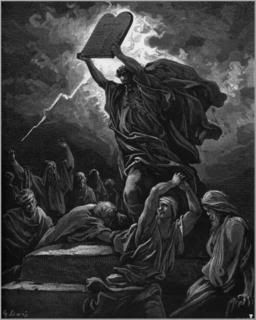
I originally wrote this for Amy at Blessed Motherhood, but it seems to be a good time to post it here.
Catholics believe that the Bible is the inspired Word of God. We believe that the Bible is authoritative, but that Sacred Tradition is also authoritative, and can help us to interpret (not contradict) scripture, in cases where the words of scripture may be able to have more than one meaning.
Let us journey back to the first time God gave his Word to his people. God gave the Law to Moses. But God gave Moses the Law in two forms, both written and oral. The oral Law was eventually written down, as the Talmud, in the two parts of the Mishna and Gemara.
Jews consider both the oral and the written Law as authoritative. From Judaism 101:
"When did the Jewish People receive the "Oral Torah?" They received it at Sinai, along with the Written Torah. What else do you think Moshe Rabbeinu, Moses our Teacher, was doing up there for forty days and forty nights, neither "eating bread nor drinking water" according to the testimony of the Bible. If not studying the "Oral" Part of the Torah from the Master Teacher, G-d Himself? The Oral Torah is required because without it, its counterpart, the Written Torah, would be incomprehensible."
This is why Jews interpret a prohibition on cooking a calf in its mother's milk to refer to a prohibition on any mixing of meat and dairy products.
Jesus studied the Talmud with the Rabbis in the Temple. The Jews of his time, as the Jews today, would have considered Sacred Tradition as authoritative as the written Scripture. To say that the Bible alone (Sola Scriptura) was authoritative is a serious breech with Judaism.
Now, Christianity departs from Judaism in many ways. But we see in the New Testament that any serious changes are discussed. We read in the New Testament that we are no longer bound to obey the Law, including the dietary restrictions. Men are no longer bound to be circumcised. But no where in the New Testament is it written that ONLY the written Scripture is to be considered authoritative.
On the contrary Paul writes in 2 Thess. 2:15 that we are to stand firm and hold to the traditions which we were taught, either by word of mouth or letter. If Paul wants us to stand fast to traditions which we have been taught, then clearly not all traditions are "traditions of men."
If Jesus meant to build a foundation on Scripture alone, then why did he not command his apostles to immediately write down his Word, as Moses did upon leaving the mountain? Over and over you read in the New Testament that Jesus commanded his apostles to preach, and preach they did. Only three apostles wrote any scripture. Most were written by disciples of the apostles, which means that they were writing down oral tradition, not the words that they heard from Jesus himself.
Thus, the authority of the written New Testament is based on oral tradition. Sacred Tradition is not reliance on the words of others or the traditions of men, but on the Word of God, and the traditions left to us by the apostles, who certainly did not leave an abundance of written words behind.
The New Testament does not claim to be complete of itself. John 20:30; 21:25 writes that Jesus did many other things not written in the Scriptures.
Sola Scriptura claims that the Bible is complete, and that every man can interpret scripture for himself. There is to be no other authority, including oral tradition, to help in interpreting scripture. If that were the case, then why would you have so many books published to help you to understand scripture? Why do you have sermons at Church to help you to interpret scripture? Shouldn't Church then consist of one person reading aloud from scripture, then everyone adjoining to share a meal because everyone exactly agrees on what that scripture meant?
If the Holy Spirit will help us all to interpret Scripture correctly, then why is there not one united protestant church against the Catholic and Orthodox churches? The early reformers could not even achieve unity, but quickly broke into groups, which have broken into more and more groups with each generation.
Acts 8:30-31: And Philip ran thither to him, and heard him read the prophet Esaias, and said, Understandest thou what thou readest? And he said, How can I, except some man should guide me? And he desired Philip that he would come up and sit with him.
Why didn't Philip explain to the Eunuch that all he had to do was pray to the Holy Spirit to help him interpret the Bible, and he would receive the correct meaning?
1 Tim 3:15 says that the Church is "the pillar and ground of the truth," not scripture.
Col. 4:16 shows that a prior letter written to Laodicea is equally authoritative but not part of the New Testament canon.
There are many, many places in the New Testament that show that Sacred Tradition exists, and that we should not rely on the Bible alone. I have quoted several, but I strongly suggest you go to http://www.scripturecatholic.com/ and read through the sections on Scripture Alone and Oral Tradition to read them all.
Another great resource for understanding that the Catholic Church really teaches about Sacred Tradition is Mark Shea's What is Sacred Tradition?
Of course, Catholic Answers is always a good read, too.
Sunday, September 23, 2007
Erika's Corner

I got this from Father Francis J. Peffley site. I thought it was very interesting and decided to share. Enjoy.
One last purgatory quote
"Purgatory is not, as Tertullian thought, some kind of supra-worldly concentration camp where one is forced to undergo punishments in a more or less arbitrary fashion. Rather it is the inwardly necessary process of transformation in which a person becomes capable of Christ, capable of God [i.e., capable of full unity with Christ and God] and thus capable of unity with the whole communion of saints. Simply to look at people with any degree of realism at all is to grasp the necessity of such a process. It does not replace grace by works, but allows the former to achieve its full victory precisely as grace. What actually saves is the full assent of faith. But in most of us, that basic option is buried under a great deal of wood, hay and straw. Only with difficulty can it peer out from behind the latticework of an egoism we are powerless to pull down with our own hands. Man is the recipient of the divine mercy, yet this does not exonerate him from the need to be transformed. Encounter with the Lord is this transformation. It is the fire that burns away our dross and re-forms us to be vessels of eternal joy."
--Joseph Cardinal Ratzinger, now Pope Benedict XVI
--Joseph Cardinal Ratzinger, now Pope Benedict XVI
Erika's Corner
Here is a link to Scripture Catholic 's info about confession. It is a pretty good read. I feel that the Sacrament of Reconciliation is so important and am glad it see it will begin to be emphasized more.
Saturday, September 22, 2007
Homemanagement binders can be simple and almost free!!
Large Family Mothering: REALLY frugal home binder:
"By the way, if you don't have the time or inclination to create anything like the binders that everyone is raving about, I will let you in on a little secret; my 'binder' for years has been nothing more than a spiral notebook (you can find these for as little as 10 cents) that I separated into sections by using mini-sticky notes as tabs. I have used this system successfully for many years, while I managed a houseful of children and homeschooled. I have stacks of these filled books in my file cabinet that I have saved for posterity--complete with my computations that I did at the grocery store as I was filling my cart with goods. With these little notebooks I have successfully kept an organized kitchen and my house is almost always clean and tidy. We have a system that we follow everyday, it just changes so often that it is a waste to type and print out something permanent. Writing down a few notes so that I don't forget from day-to-day is much more efficient."
Candy aka Prayzgod puts a comment in under this one.
"By the way, if you don't have the time or inclination to create anything like the binders that everyone is raving about, I will let you in on a little secret; my 'binder' for years has been nothing more than a spiral notebook (you can find these for as little as 10 cents) that I separated into sections by using mini-sticky notes as tabs. I have used this system successfully for many years, while I managed a houseful of children and homeschooled. I have stacks of these filled books in my file cabinet that I have saved for posterity--complete with my computations that I did at the grocery store as I was filling my cart with goods. With these little notebooks I have successfully kept an organized kitchen and my house is almost always clean and tidy. We have a system that we follow everyday, it just changes so often that it is a waste to type and print out something permanent. Writing down a few notes so that I don't forget from day-to-day is much more efficient."
Candy aka Prayzgod puts a comment in under this one.
Confession Makes a Comeback - WSJ.com
Confession Makes a Comeback - WSJ.com: "This February at the Vatican, Pope Benedict XVI instructed priests to make confession a top priority. U.S. bishops have begun promoting it in diocesan newspapers, mass mailings and even billboard ads. And in a dramatic turnaround, some Protestant churches are following suit. This summer, the second-largest North American branch of the Lutheran Church passed a resolution supporting the rite, which it had all but ignored for more than 100 years."
A Catholic Converts Story
Abigail at Abigail's Alcove writes: "How I became Pro-Life." It's the story of her journey into the Catholic Church but also her journey to embracing the Pro-Life/Openness to Life style of life. It brought me to tears!
Is Purgatory Biblical?
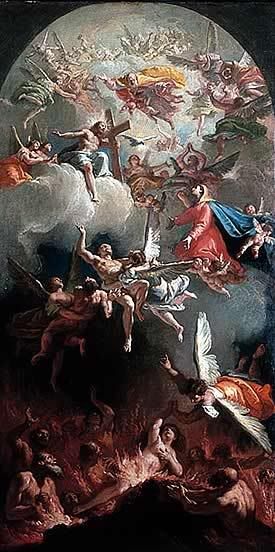
For many, whether purgatory is Biblical is something of a no-brainer. After all, the word "purgatory" appears nowhere in the Bible. Which puts it in the company of other words, such as "Trinity,""Incarnation," or even, that curious belief known as "the Rapture."
Although the word purgatory does not appear in the Bible, it refers to a concept that is Biblical. The Bible refers to a time where our works will be tested by fire. It is a time of purification, where our sins will be purged from our souls, so that we will enter heaven purified. Over time, this time of "purging" became known as "purgatory."
1 Cor 3:13-15: Every man's work shall be made manifest: for the day shall declare it, because it shall be revealed by fire; and the fire shall try every man's work of what sort it is.
If any man's work abide which he hath built thereupon, he shall receive a reward.
If any man's work shall be burned, he shall suffer loss: but he himself shall be saved; yet so as by fire.
This indicates that even though a man's work was burned and he suffered loss, he was saved. This is not the all or nothing of heaven or hell, but a purification before entering heaven.1 Peter 1:7: That the trial of your faith, being much more precious than of gold that perisheth, though it be tried with fire, might be found unto praise and honour and glory at the appearing of Jesus Christ
Jude 23: And others save with fear, pulling them out of the fire; hating even the garment spotted by the flesh.
So, if purgatory is Biblical, does it follow that our prayers make any difference to those are being purified?
2 Tim. 1:16-18 is an example of Paul praying for the dead, in this case, a man named Onesiphorus.
Praying for the dead was common practice among the Jews at that time. It has been the practice at least as long as the time of the Maccabees. 2 Maccabees 12:43–45 states "In doing this he acted in a very excellent and noble way, inasmuch as he had the resurrection of the dead in view; for if he were not expecting the dead to rise again, it would have been useless and foolish to pray for them in death. But if he did this with a view to the splendid reward that awaits those who had gone to rest in godliness, it was a holy and pious thought. Thus he made atonement for the dead that they might be freed from this sin." These verses are the primary reason that the deuterocanonical books were removed from the Old Testament. They justified praying for the dead.
Praying for the dead remains the Jewish practice today. Orthodox Jews recite the Kaddish for eleven months after the death of a parent, to pray for their purification. Judaism 101 says "According to Jewish tradition, the soul must spend some time purifying itself before it can enter the World to Come."
While many contend that purgatory and praying for the dead was a medieval Roman Catholic invention, there is ample evidence that this was a belief of the early Christians. Visit the catacombs, and you find prayers for the dead scrawled on the wall in examples of graffiti dating to the first three centuries of Christianity.
Other writings of that era such as Acts of Paul and Thecla and the Martyrdom of Perpetua and Felicity also attest to this belief.
The Early Church Fathers, who, being "early" predated Medieval times by quite a bit, also wrote on this topic. Tertullian, writes in the second century, "We offer sacrifices for the dead on their birthday anniversaries [the date of death—birth into eternal life]."
Gregory of Nyssa, writing in the late third century, says ""If a man distinguish in himself what is peculiarly human from that which is irrational, and if he be on the watch for a life of greater urbanity for himself, in this present life he will purify himself of any evil contracted, overcoming the irrational by reason. If he has inclined to the irrational pressure of the passions, using for the passions the cooperating hide of things irrational, he may afterward in a quite different manner be very much interested in what is better, when, after his departure out of the body, he gains knowledge of the difference between virtue and vice and finds that he is not able to partake of divinity until he has been purged of the filthy contagion in his soul by the purifying fire."
You can read more excerpts of these early Christian writers here.
So, to summarize Catholic teaching on purgatory in a Biblical way:
We must be spotless and pure in God's presence.
Rev 21:27
Matt 5:8
Christ promised there was punishment that exacted what was due but wasn't endless. (And Paul supported this teaching.)
Matt 5: 20-26
Matt 12:32
Matt 18:21-35
Matt 25:31-46
Luke 12:58-59
Heb 9:27
Psalm 99:8
This punishment isn't in Hell because you can't be saved through hellfire. Also, there's no punishment in Heaven.
1 Corinthians 3:10-16
2 Corinthians 5:9-11
Hebrews 12:6, 11
Those who are alive can pray for those who are dead (and vice versa).
1 John 5:16-17
Luke 16:19-31
2 Maccabees 12:38-46
Sirach 7:33
To end, I think a quotation from C.S. Lewis from Letters To Malcolm is in order.
"Of course I pray for the dead. The action is so spontaneous, so all but inevitable, that only the most compulsive theological case against it would deter me. And I hardly know how the rest of my prayers would survive if those for the dead were forbidden. At our age, the majority of those we love best are dead. What sort of intercourse with God could I have if what I love best were unmentionable to him?
I believe in Purgatory.
Mind you, the Reformers had good reasons for throwing doubt on the 'Romish doctrine concerning Purgatory' as that Romish doctrine had then become.....
The right view returns magnificently in Newman's DREAM. There, if I remember it rightly, the saved soul, at the very foot of the throne, begs to be taken away and cleansed. It cannot bear for a moment longer 'With its darkness to affront that light'. Religion has claimed Purgatory.
Our souls demand Purgatory, don't they? Would it not break the heart if God said to us, 'It is true, my son, that your breath smells and your rags drip with mud and slime, but we are charitable here and no one will upbraid you with these things, nor draw away from you. Enter into the joy'? Should we not reply, 'With submission, sir, and if there is no objection, I'd rather be cleaned first.' 'It may hurt, you know' - 'Even so, sir.'
I assume that the process of purification will normally involve suffering. Partly from tradition; partly because most real good that has been done me in this life has involved it. But I don't think the suffering is the purpose of the purgation. I can well believe that people neither much worse nor much better than I will suffer less than I or more. . . . The treatment given will be the one required, whether it hurts little or much.
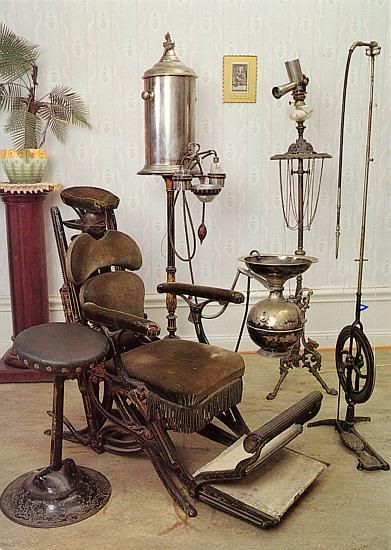
My favourite image on this matter comes from the dentist's chair. I hope that when the tooth of life is drawn and I am 'coming round',' a voice will say, 'Rinse your mouth out with this.' This will be Purgatory. The rinsing may take longer than I can now imagine. The taste of this may be more fiery and astringent than my present sensibility could endure. But . . . it will [not] be disgusting and unhallowed."
Tackling some Candyland Blasts from the past
In one of Candy's articles from this past summer entitled,Roman-catholic-or-christian.html she writes:
The new Pope (Vicar of Christ - the Greek roots of 'vicar' is "ante", AKA Greek Vicar of Christ = antichrist) proclaimed the other day that you are saved ONLY by being a member of the Roman Catholic church. Of course, anyone who has read his or her Bible knows that that is not true.
A couple of things. First of all, Catholics are Christians. We believe in Jesus Christ as the son of God. We say the Nicene Creed at mass.
If Candy still denies then that Catholics are Christians she probably has equal issues with Eastern Orthodox, Anglicans, Lutherans, Calvinists, and many other Christian groups. In other words, pretty much any group that does not conform to her particular flavor of Christianity.
Secondly a five minute search on Google was able to clarify the origins of the word "vicar."
vicar -- Britannica Online Encyclopedia
(from Latin vicarius, “substitute”), an official acting in some special way for a superior, primarily an ecclesiastical title in the Christian Church.
Merriam Webster Dictionary
Main Entry: vic·ar
Pronunciation: 'vi-k&r
Function: noun
Etymology: Middle English, from Anglo-French, from Latin vicarius, from vicarius vicarious
1 : one serving as a substitute or agent; specifically : an administrative deputy
2 : an ecclesiastical agent:
Candy doesn't mention where her definition comes from but I would guess probably the Jack Chick online dictionary. None of the sources I checked had a Greek root for Vicar.
Lastly, some have said that the Catholic Church is a false church because, "It is false teaching to place a man in the role of head of the church. Christ is head."
The Catholic church does indeed believe that Christ is the head of the church and because of that, the Catholic church is organized based on Christ's design for His church.
From the Catechism of the Catholic Church
874 Christ is himself the source of ministry in the Church. He instituted the Church. He gave her authority and mission, orientation and goal:
In order to shepherd the People of God and to increase its numbers without cease, Christ the Lord set up in his Church a variety of offices which aim at the good of the whole body. The holders of office, who are invested with a sacred power, are, in fact, dedicated to promoting the interests of their brethren, so that all who belong to the People of God . . . may attain to salvation.389
875 "How are they to believe in him of whom they have never heard? And how are they to hear without a preacher? And how can men preach unless they are sent?"390 No one - no individual and no community - can proclaim the Gospel to himself: "Faith comes from what is heard."391 No one can give himself the mandate and the mission to proclaim the Gospel. The one sent by the Lord does not speak and act on his own authority, but by virtue of Christ's authority; not as a member of the community, but speaking to it in the name of Christ. No one can bestow grace on himself; it must be given and offered. This fact presupposes ministers of grace, authorized and empowered by Christ. From him, bishops and priests receive the mission and faculty ("the sacred power") to act in persona Christi Capitis; deacons receive the strength to serve the people of God in the diaconia of liturgy, word and charity, in communion with the bishop and his presbyterate. The ministry in which Christ's emissaries do and give by God's grace what they cannot do and give by their own powers, is called a "sacrament" by the Church's tradition. Indeed, the ministry of the Church is conferred by a special sacrament.
880 When Christ instituted the Twelve, "he constituted [them] in the form of a college or permanent assembly, at the head of which he placed Peter, chosen from among them."398 Just as "by the Lord's institution, St. Peter and the rest of the apostles constitute a single apostolic college, so in like fashion the Roman Pontiff, Peter's successor, and the bishops, the successors of the apostles, are related with and united to one another."399
881 The Lord made Simon alone, whom he named Peter, the "rock" of his Church. He gave him the keys of his Church and instituted him shepherd of the whole flock.400 "The office of binding and loosing which was given to Peter was also assigned to the college of apostles united to its head."401 This pastoral office of Peter and the other apostles belongs to the Church's very foundation and is continued by the bishops under the primacy of the Pope.
882 The Pope, Bishop of Rome and Peter's successor, "is the perpetual and visible source and foundation of the unity both of the bishops and of the whole company of the faithful."402 "For the Roman Pontiff, by reason of his office as Vicar of Christ, and as pastor of the entire Church has full, supreme, and universal power over the whole Church, a power which he can always exercise unhindered."403
To summarize, the Catholic Church is a Christian church, organized and run on a biblical model as indicated by Jesus Christ himself. The word "Vicar" merely means a substitute, who stands in as an earthly agent.

The new Pope (Vicar of Christ - the Greek roots of 'vicar' is "ante", AKA Greek Vicar of Christ = antichrist) proclaimed the other day that you are saved ONLY by being a member of the Roman Catholic church. Of course, anyone who has read his or her Bible knows that that is not true.
A couple of things. First of all, Catholics are Christians. We believe in Jesus Christ as the son of God. We say the Nicene Creed at mass.
If Candy still denies then that Catholics are Christians she probably has equal issues with Eastern Orthodox, Anglicans, Lutherans, Calvinists, and many other Christian groups. In other words, pretty much any group that does not conform to her particular flavor of Christianity.
Secondly a five minute search on Google was able to clarify the origins of the word "vicar."
vicar -- Britannica Online Encyclopedia
(from Latin vicarius, “substitute”), an official acting in some special way for a superior, primarily an ecclesiastical title in the Christian Church.
Merriam Webster Dictionary
Main Entry: vic·ar
Pronunciation: 'vi-k&r
Function: noun
Etymology: Middle English, from Anglo-French, from Latin vicarius, from vicarius vicarious
1 : one serving as a substitute or agent; specifically : an administrative deputy
2 : an ecclesiastical agent:
Candy doesn't mention where her definition comes from but I would guess probably the Jack Chick online dictionary. None of the sources I checked had a Greek root for Vicar.
Lastly, some have said that the Catholic Church is a false church because, "It is false teaching to place a man in the role of head of the church. Christ is head."
The Catholic church does indeed believe that Christ is the head of the church and because of that, the Catholic church is organized based on Christ's design for His church.
From the Catechism of the Catholic Church
874 Christ is himself the source of ministry in the Church. He instituted the Church. He gave her authority and mission, orientation and goal:
In order to shepherd the People of God and to increase its numbers without cease, Christ the Lord set up in his Church a variety of offices which aim at the good of the whole body. The holders of office, who are invested with a sacred power, are, in fact, dedicated to promoting the interests of their brethren, so that all who belong to the People of God . . . may attain to salvation.389
875 "How are they to believe in him of whom they have never heard? And how are they to hear without a preacher? And how can men preach unless they are sent?"390 No one - no individual and no community - can proclaim the Gospel to himself: "Faith comes from what is heard."391 No one can give himself the mandate and the mission to proclaim the Gospel. The one sent by the Lord does not speak and act on his own authority, but by virtue of Christ's authority; not as a member of the community, but speaking to it in the name of Christ. No one can bestow grace on himself; it must be given and offered. This fact presupposes ministers of grace, authorized and empowered by Christ. From him, bishops and priests receive the mission and faculty ("the sacred power") to act in persona Christi Capitis; deacons receive the strength to serve the people of God in the diaconia of liturgy, word and charity, in communion with the bishop and his presbyterate. The ministry in which Christ's emissaries do and give by God's grace what they cannot do and give by their own powers, is called a "sacrament" by the Church's tradition. Indeed, the ministry of the Church is conferred by a special sacrament.
880 When Christ instituted the Twelve, "he constituted [them] in the form of a college or permanent assembly, at the head of which he placed Peter, chosen from among them."398 Just as "by the Lord's institution, St. Peter and the rest of the apostles constitute a single apostolic college, so in like fashion the Roman Pontiff, Peter's successor, and the bishops, the successors of the apostles, are related with and united to one another."399
881 The Lord made Simon alone, whom he named Peter, the "rock" of his Church. He gave him the keys of his Church and instituted him shepherd of the whole flock.400 "The office of binding and loosing which was given to Peter was also assigned to the college of apostles united to its head."401 This pastoral office of Peter and the other apostles belongs to the Church's very foundation and is continued by the bishops under the primacy of the Pope.
882 The Pope, Bishop of Rome and Peter's successor, "is the perpetual and visible source and foundation of the unity both of the bishops and of the whole company of the faithful."402 "For the Roman Pontiff, by reason of his office as Vicar of Christ, and as pastor of the entire Church has full, supreme, and universal power over the whole Church, a power which he can always exercise unhindered."403
To summarize, the Catholic Church is a Christian church, organized and run on a biblical model as indicated by Jesus Christ himself. The word "Vicar" merely means a substitute, who stands in as an earthly agent.
Friday, September 21, 2007
KitKat's Corner: My Favorite "Binder"
KitKat - a frequent commenter and member of the blog roll gives us another site that offers a home management binder - for FREE!
KitKat's Corner: My Favorite "Binder"
KitKat's Corner: My Favorite "Binder"
Visits to Candyland - is getting the word out!
A new commenter, Sue Bee wrote:
I think this comment is significant for a number of reasons:
1. To those nay sayers who think there were just a few Catholics lying about the way Candy handled her visitors in her comment section and on her blog, here is yet one more witness to say, "it happened to me to!"
2. And since Candy seems to favor the "abused victim coming forward" type of story when it suits her purposes, I enjoy it when they come out of the woodwork against her.
3. Candy wrote that she has me handled and she no longer has to be concerned with opposing thoughts on her blog. Yet the search engine is a powerful tool and in just a few clicks the other side of the story is easily accessible.
4. This blog really has grown to be more than just Elena vs. Candy. With the addition of new bloggers and a growing blog roll it's clear that Candy's tactics are offensive to a lot more people than you would ever guess by reading her heavily censored comments.
About a year ago I disagreed with Candy on a few things (KJV-only, comma Johanneum and the ten commandments) and found it frustrating that my well-thought-out comments (or diatribes) went unpublished or were edited to her advantage in Q&A sessions. I quit going to her site, but a few weeks ago I thought I'd stop by and see if she was still there. And wouldn't you know it, it was the day after the Sister Charlotte story. I wondered if the RCs were fighting back and a few mouse clicks later I found this site.
I think this comment is significant for a number of reasons:
1. To those nay sayers who think there were just a few Catholics lying about the way Candy handled her visitors in her comment section and on her blog, here is yet one more witness to say, "it happened to me to!"
2. And since Candy seems to favor the "abused victim coming forward" type of story when it suits her purposes, I enjoy it when they come out of the woodwork against her.
3. Candy wrote that she has me handled and she no longer has to be concerned with opposing thoughts on her blog. Yet the search engine is a powerful tool and in just a few clicks the other side of the story is easily accessible.
4. This blog really has grown to be more than just Elena vs. Candy. With the addition of new bloggers and a growing blog roll it's clear that Candy's tactics are offensive to a lot more people than you would ever guess by reading her heavily censored comments.
Thursday, September 20, 2007
An article on Catholic Indulgences
written by a convert to the Catholic Church written by a former Evangelical.
Historical Christian: For Daily Growth in Holiness, the Beautiful Spiritual Practice of . . . Indulgences
Historical Christian: For Daily Growth in Holiness, the Beautiful Spiritual Practice of . . . Indulgences
Wednesday, September 19, 2007
By Their Fruits You will know them.
I had this discussion on another friend-of-Candy blog. The blogger basically quoted Matthew 7:15-16 in her argument that the Catholic Church cannot be true.
I countered this by mentioning the Catholic Church was one of the largest providers of charity, medical care, education, disaster relief in the world, and was accused of introducing a strawman into the discussion!
It turns out that by "fruits" the blogger meant "fruits of the Holy Spirit." Now I think that's a stretch considering the context of this chapter. Nonetheless, for the sake of argument let's examine this.
The fruits of the Holy Spirit are:
The gist of the blogger's argument against the church was that since the Catholic Church teaches that people cannot truly know that they are saved and that they will have to be punished for their sins we Catholics cannot possibly have peace. Therefore, the Catholic church must be a false church.
I kid you not.
We could debate the theology of this position and we probably will; however, I am interested in hearing from Catholics about how much peace you feel in your lives as a practicing Catholic.
******

I guess then since I'm introducing the topic, I should go first. Personally I have found much peace and joy in my walk as a Catholic Christian. I find joy and peace in the sacraments, in the mass, in the prayers of the church, in the teachings of the church and the strength of the Magisterium and her teachings.

(My friend Joann- devout Catholic who died this month from stage 4 breast cancer - joyful to the end!)
I find joy in every day of the liturgical year and with our cycles of feasting and fasting. Whats more, in the fruits that I may be lacking, I find abundantly in other Catholic Christians who are older, wiser, or are just more mature in their walk with Christ as they practice their Catholic Faith.
Anyone else?

(St. Maximilian Kolbe- Catholic Priest who gave up his life for another in Nazi Concentration Camp)
Matthew 7:15-16 "Beware of false prophets, which come to you in sheep's
clothing, but inwardly they are ravening wolves. Ye shall know them by their
fruits. Do men gather grapes of thorns, or figs of thistles?"
I countered this by mentioning the Catholic Church was one of the largest providers of charity, medical care, education, disaster relief in the world, and was accused of introducing a strawman into the discussion!
It turns out that by "fruits" the blogger meant "fruits of the Holy Spirit." Now I think that's a stretch considering the context of this chapter. Nonetheless, for the sake of argument let's examine this.
The fruits of the Holy Spirit are:
Gal 5:22-23 love, joy, peace, patience, kindness, generosity, faithfulness,
23 gentleness and, self-control.
The gist of the blogger's argument against the church was that since the Catholic Church teaches that people cannot truly know that they are saved and that they will have to be punished for their sins we Catholics cannot possibly have peace. Therefore, the Catholic church must be a false church.
I kid you not.
We could debate the theology of this position and we probably will; however, I am interested in hearing from Catholics about how much peace you feel in your lives as a practicing Catholic.
******
I guess then since I'm introducing the topic, I should go first. Personally I have found much peace and joy in my walk as a Catholic Christian. I find joy and peace in the sacraments, in the mass, in the prayers of the church, in the teachings of the church and the strength of the Magisterium and her teachings.
(My friend Joann- devout Catholic who died this month from stage 4 breast cancer - joyful to the end!)
I find joy in every day of the liturgical year and with our cycles of feasting and fasting. Whats more, in the fruits that I may be lacking, I find abundantly in other Catholic Christians who are older, wiser, or are just more mature in their walk with Christ as they practice their Catholic Faith.
Anyone else?
(St. Maximilian Kolbe- Catholic Priest who gave up his life for another in Nazi Concentration Camp)
Tuesday, September 18, 2007
Is Priestly Celibacy Biblical?
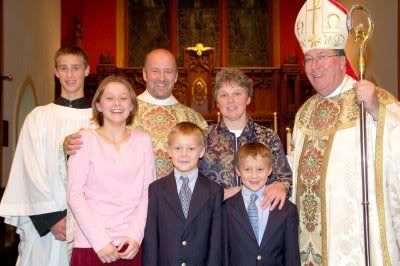
Most people are well aware that in the Catholic Church, priests do not marry. (For the record, celibate means "unmarried" in Catholic terminology.)
However, many are unaware that this is not considered a matter of doctrine, but of tradition (with a little t). The Church finds this the best practice for now, but it could change. Although there were both married and celibate (unmarried) priests in the early centuries, the church adopted celibacy as the practice because it made certain things easier at the time, mostly due to inheritance issues. We keep it because we still find it convenient for other reasons.
Actually, there are already married priests within the church. In what is known as the Eastern Rites (think Orthodox, but in union with Rome) if men are married when they are ordained, they will be married priests. If they are unmarried when they are ordained, then they must remain so. Also, former Orthodox or Anglican priests who convert, can request to be priests in the Roman Rite. These men, such as Dwight Longenecker, pictured above with his family, will also be married Catholic priests.
Protestants often point to this practice and say that it isn't Biblical. Yet, there are many verses which point favorably to remaining unmarried:
Matt 19:12For there are some eunuchs, which were so born from their mother's womb: and there are some eunuchs, which were made eunuchs of men: and there be eunuchs, which have made themselves eunuchs for the kingdom of heaven's sake. He that is able to receive it, let him receive it.
Matt 19:29And every one that hath forsaken houses, or brethren, or sisters, or father, or mother, or wife, or children, or lands, for my name's sake, shall receive an hundredfold, and shall inherit everlasting life.
1 Cor 7:1Now concerning the things whereof ye wrote unto me: It is good for a man not to touch a woman.
And you might notice that Paul then goes on to say that everyone should marry, to avoid fornication. But the line after that is:
1 Cor 7:6But I speak this by permission, and not of commandment.
7For I would that all men were even as I myself.
He is giving permission for verses 2 though 5. It is not a commandment, because it is better to be as he is, himself. Further down, he writes:
1 Cor 7:27Art thou bound unto a wife? seek not to be loosed. Art thou loosed from a wife? seek not a wife.
32But I would have you without carefulness. He that is unmarried careth for the things that belong to the Lord, how he may please the Lord:
33But he that is married careth for the things that are of the world, how he may please his wife.
One of the advantages for a celibate priest, is that he can devote himself full time to prayer and ministry, without caring for things of the world, and pleasing his wife.
1 Cor 7:38So then he that giveth her in marriage doeth well; but he that giveth her not in marriage doeth better.
Some might point out the importance of marriage in the Old Testament. The figures of the Old Testament were very much concerned with building the Israelites as God's Chosen People. The New Testament is concerned with building the Kingdom of God.
Who is the central figure who precedes Jesus in the New Testament? John the Baptist, who appears to have been the first monk in the desert.
I don't think that we need to stack the verses speaking favorably of marriage and those speaking favorably of celibacy and measure the two. I think that the New Testament makes it clear that there is now a new choice available. Now some will be called to give themselves entirely to God, and this is a valid choice.
If you look at the history of the Church, it is clear that from the very first years of the Church, people listened to the parable of the rich young man, and took it to apply to themselves. Young widows gathered together in a house and devoted themselves to prayer instead of marrying again. Young men sold all of their possessions and went to pray in the desert. This all happened immediately, not starting in the Middle Ages.
From my point of view, it is the protestant churches which do not allow a person to chose this as an option. If a young man who had graduated from seminary openly said that he had no intention of marrying because he wanted to devote himself to prayer and his work for the church, would he really be able to find a job? On the other hand, the Catholic church has a position of deacon, which is an ordained position available for married men.
Our seminary process is long, and with ample opportunity for the men to discern if this is truly their calling. I know someone who got married recently, who spent two years in a Catholic seminary. He discerned that he was not called to the priesthood after all. That is not looked down upon at all in our church, but on the other hand, an indication that the process works.
Priests are certainly not unhappy with the state of affairs.
"Job satisfaction is not a problem for U.S. priests, nearly 100 percent of whom either "strongly agree" or "somewhat agree" with the statement: "Overall, I am satisfied with my life as a priest." That was among the findings of the Center for Applied Research in the Apostolate, CARA, in a telephone poll of 1,212 priests released Sept. 9."
A 2007 University of Chicago job satisfaction survey found eighty-seven percent of clergy said they were "very satisfied" with their work. This was all clergy lumped together, which suggests that while protestant clergy are very satisfied with their jobs, that Catholic clergy might be a little happier.
So again, while this is a tradition of the church, there are verses that speak approvingly of celibacy, indicating that it is a Biblically based practice.
The Catholic church isn't the only church with this practice, either. The Orthodox churches ordain both married and unmarried men, but if they are unmarried when ordained, then they must remain so. Bishops are chosen only from the celibate priests.
Orthodox, Anglican, and Catholic churches all have a monastic traditions, as well, where monks and nun devote themselves full time to prayer.
John 6, The Eucharist, and Protestant Objections
Rachel, (the aforementioned commenter on Candy's blog) further wrote:
I found a good defense for this article:
John 6, The Eucharist, and Protestant Objections
I thought this paragraph might be of particular interest to bible literalists who deny the Eucharist:
The mass is a Catholic blasphemy in which they pretend to turn a cracker into God on their altars. They bow, worship, and talk to their cracker before eating it. Then they lock the leftover God in a little house made to keep Him safe. The Lord Jesus Christ died once for His elect, and He has never been on the altar of any Catholic Church. He is coming soon to vaporize it with the breath of His mouth (II Thes 2:3-12; I Tim 2:5; Heb 10:10-14).
I found a good defense for this article:
John 6, The Eucharist, and Protestant Objections
I thought this paragraph might be of particular interest to bible literalists who deny the Eucharist:
Also, in regards to eating flesh and drinking blood the word used in v. 54 to eat (and three other places) is trogo. It is not the normal word used for eating. It literally means to gnaw or chew, thus emphasizing the literalness of the chewing. To those Protestants who mock the implications of us chewing Jesus I will throw out a challenge to those mocking Protestants. Show me one time where the word (to eat or chew, trogo) in the Greek is used symbolically anywhere in the New Testament, the Old Testament, the Septuagint, or even in ancient secular literature. If every time it is used in the bible and ancient literature it is used in a literal sense, we must use it that way in exegeting John 6. If it has never been used in the way that Protestants impose on John 6, then the figurative sense of eating flesh can not be possible.
A quick thought about blogging and commenting
It's great to see all of the discussions and exchange of ideas going back and forth on the different articles posted on the blog.
This really is one of the great things about blogging - posting ideas and getting to know and learn from other people all over the world! And I think that even though there are disagreements here, they are not disagreeable! What an opportunity would have been missed if this blog had been as heavily censored as others.
This really is one of the great things about blogging - posting ideas and getting to know and learn from other people all over the world! And I think that even though there are disagreements here, they are not disagreeable! What an opportunity would have been missed if this blog had been as heavily censored as others.
Sunday, September 16, 2007
Former Priests and Nuns
Returning to what I began in an earlier post, I would like to give my thoughts on the two books I mentioned earlier. Between the two, they give the "testimony" as it is called, of fifty former priests, and twenty former nuns, who left their calling, eventually left the Catholic Church, and became born again Christians. The purpose of the books is to lead others out of the Catholic Church.
First, I will say that I think a few of these stories are fabricated. Probably not more than five, which is a small number out of 75 total stories. Those of you who are Catholic will see the red flags in statements such as these:
I was forty years old and the Bible had been the forbidden book which I had never opened in my life.
No seminarian could possess or read a Bible during his first eight years.
The Bible is not prohibited in any way in the Catholic Church, and reading it is strongly encouraged.
a woman . . . who would later be godmother to my first Mass . . .
Godmother is a position used during baptism, not as described here. I will say that this was from the testimony of a Spanish priest, so I suppose it is possible that they have an honorary position such as this as a Spanish cultural tradition.
I stopped saying the breviary (the Church's official prayer for the use of the clergy) and the rosary and began to pray using parts of the Bible itself.
The breviary IS parts of the Bible. It is a way of praying the Psalms.
I celebrated Mass, observed the Sacraments, recited the rosary, paid money for indulgences and practiced acts of self-denial, but at heart I felt that I was lost.
The selling of indulgences is prohibited by the Catholic Church.
Also, in one story there is a description of a priest hearing the confession of a man who was dying, and had been away from the Church, so his confession was very long. He says that he went back the next day, and asked if he wanted to confess his life of sins again, and the priest couldn't believe it when the man didn't want to confess again.
According to Catholic doctrine, once you have confessed a sin and received absolution, you do not need to confess it again. A priest might have asked if he wanted to discuss his life again, but he would not have asked if he wanted to confess those same sins again.
Now that I have cleared up those few points, I will move on to the next group. The second group of people were people who seem to have not really had a calling for religious life. Now, I realize that might seem like an easy way out, just as Bible Christians who become Catholic might be explained away as having "never really been saved."
However, the first years of seminary or religious life are for discernment. Not everyone who thinks that they are called to that life, really has a calling. Often, certain types of people are attracted to religious life. People who feel that they are not good enough, but that pursuing a religious vocation will turn them into a holy person. Other people might want the respect or perceived power that comes from being a priest or religious. One testimony said "I saw how much everyone respected the priest, and how much power he had. I decided I wanted that."
Those are the sorts of people who should be turned away, and helped to see that they do not have a vocation to religious life, but to another state in life. Most of people who gave testimonies were born between 1900 and 1950. They were part of the vocations boom of the time. Apparently, the vocations boom was partially because seminaries and convents were not being as selective as they should have been.
But most of the testimonies were from people who were real people, and who probably had a real vocation to religious life. For whatever reason, they began to question their calling and their religion. Often, it was during the upheaval of the 1960's. They all ended up deciding that they disagreed with the theology of the Catholic Church.
When I first received the books, I was very interested to see what theological arguments were so persuasive to priests and religious. I was disappointed that really, they were just like most anti-Catholic materials. They presented a mis-representation of Catholic doctrine, and then presented Bible verses which refuted the false doctrine. Many testimonies said something such as "I set about to store up works, so that I could earn my salvation."
I'm not sure that I think all of these people were being intentionally misleading. Most of them seem to have written their testimony ten to twenty years after having left the Church. I think that after so much time, they are probably looking back through their current theological lens. It would have been more accurate to say "I see now, that I was trying to earn my salvation."
To conclude, I thought I would offer some additional testimonies. Those of protestant pastors of various denominations who became Catholic. There are many at the Coming Home Network, which was established to help such ministers make the transition to Catholic life, which usually requires the loss of their job and congregation.
That isn't the case for all people, though. Dwight Longenecker, who shared his story at the link above, went from Bob Jones University, to Anglican priest, to married Catholic priest.
Longenecker says of his evangelical background "As a Catholic I regard my faith not as a negation of my Evangelical upbringing and my fifteen years within Anglicanism, but as a fulfillment of all that has gone before. I honestly and sincerely hope that I have not abandoned anything that was good, true, beautiful and loving within both of those great traditions. I try hard with Evangelicals and Anglicans to affirm what they affirm, while declining to deny what they deny."
Someone who didn't lose his congregation was Alex Jones, who brought much of his pentecostal congregation to the Catholic Church with him!
Whore of Babylon
One of Candy's more adamant Catholic -church bashers was Rachel who left this comment.
I got to thinking about the phrase "Whore of Babylon" and decided to do some reading. I found this information over at ETWN -Whore of Babylon written by Colin Donovan, STL
(Colin B. Donovan, STL is Vice President for Theology at EWTN. A layman, he has the Licentiate in Sacred Theology)
Roman Catholicism is the Great Whore. The Bible describes the church of Rome as a garishly dressed harlot with a chalice full of abominations and filthiness of her fornication, because she adopted many pagan customs to seduce her followers into spiritual adultery. This has been the near universal understanding of God's true saints for 2000 years. But she is not alone, for the churches of the Protestant Reformation are her harlot daughters by retaining many of her sacramental and liturgical corruptions (Dan 7:1-28; II Thess 2:3-12; I Tim 4:1-3; Rev 13:1-18; 17:1-18; 18:1-24; 19:1-4).
I got to thinking about the phrase "Whore of Babylon" and decided to do some reading. I found this information over at ETWN -Whore of Babylon written by Colin Donovan, STL
(Colin B. Donovan, STL is Vice President for Theology at EWTN. A layman, he has the Licentiate in Sacred Theology)
Judging by the criteria of biblical fundamentalism (literal words literally
understood) it is certain that there is no mention of the Catholic Church in the
book of Revelation as the Whore of Babylon. By contortions of interpretation
(not biblical literalism) some groups and individuals equate the Whore in
Revelation 17:9 with the Catholic Church since Rome is the famous city of seven
hills and the Church's principal See is Rome. This position is untenable, both
factually and from the only words of Scripture which tell us of the actual
doctrine of the Antichrist, those of the apostle John in his letters.
There would seem to be two choices, either interpret Rev 17:9 absolutely
literally or according to some interpretive key that is metaphorical,
allegorical or otherwise non-literal. Lets look first at literal interpretation.
"The seven heads represent seven hills on which the woman sits." First
of all, no Pope has ever lived or had his "seat" (cathedra or cathedral) on any
of the seven hills of Rome. These hills are small hillocks (Capitoline,
Palatine, Esquiline, Aventine and three lesser "bumps" in central Rome) where
the religion and government of pagan Rome was situated. The Catholic Church's
headquarters at the Lateran (the cathedral) and at the Vatican (where the Pope
lives) does not coincide with them. At the time that John wrote Revelation the
Christians of Rome lived mostly in Trastevere (trans Tiber), a district "across
the Tiber" from the City and adjacent to the Vatican hill where St. Peter was
crucified and buried. The Vatican is on top of that burial site and is today its
own city-state distinct from Rome and Italy.
So, of what was St. John
speaking when he wrote Revelation on the island of Patmos around 96 AD?
Obviously of the pagan imperial system situated on the Seven Hills, especially
the Capitoline (the religious and political center) and the Palatine (the
imperial palace). This pagan power persecuted the Church of Rome in Nero's day
(64-67 AD), and in the mid-90s under Domitian was persecuting Christians
throughout the Roman world. Domitian was considered by the people a
re-incarnation of the evil, but well-liked, Nero (the head that lives again).
While the antichrist Nero persecuted only the Christians of Rome, Domitian
extended that persecution throughout the empire. Both are thus types of the
final persecutor, the Antichrist.
Why the cryptic name Babylon? First,
the historical Babylon was the pagan power which persecuted the People of God,
the Jews, between 610 and 538 BC, destroying the Temple and dispersing the
people. The Romans inherited that mantle of infamy when they destroyed the
Temple in 70 AD, and, more importantly, persecuted the new People of God, the
Church. Thus, St. Peter, writing from Rome refers to as "Babylon" (1 Pt. 5:13) -
a name any Jew or Christian familiar with the Old Testament would know.
How does this relate to the Antichrist? The future Antichrist will be a
world-wide power, essentially pagan, which will persecute the Catholic Church
(and orthodox Christians in general) everywhere, as the Babylonians persecuted
the Jews and 1st century Rome the Church. These are biblical types! The Babylon
of John's day, Rome, stands for the kingdom of the future Antichrist and is no
more likely to be situated in Italy than Rome needed to be situated in Babylonia
(modern Iraq). John was informing his readers of these prophetic types by
drawing their attention to the contemporary fulfillment they found in pagan
Rome. The Antichrist will come out of the Christian world (Greco-Roman
civilization) to be sure (1 John 2:19), but America is as much an inheritor of
that civilization as Europe and just as likely to be the source of the
Antichrist.
Finally, after distorting the text and history to read what
they want into the Bible, and thereby obtaining God's "blessing" on their hatred of the Catholic Church, some "Christians" ignore the only texts of Scripture which tells us about the religious leanings of the Antichrist. The Catholic faith being a religion you would think they would see what it teaches on the only criteria the Bible actually gives about the Antichrist. In St. John's
letters (1 John 4, 2 John 1), he tells us that the spirit of the Antichrist
denies the Incarnation (the Son of God becoming man) and thereby also the
Trinity (the Father and the Spirit, too). This is the spirit of the Antichrist.
There is not a single text in 2000 years, including the new Catechism of the
Catholic Church, where the Catholic Church, her popes, her bishops, her official
teachings, her saints, or her acknowledged ecclesiastical authors, deny the
Word-made-flesh or the Blessed Trinity. Instead, all of Christianity owes the
preservation of these Truths to the Catholic Church, whose great Councils
formulated them and whose saints and popes have defended them to this day, often
at the cost of martyrdom. The present pope, John Paul II, has written three
great encyclical (circular) letters on the Trinity, one for each Divine Person,
and he has without a doubt preached Jesus Christ to more people than any other
person in human history. The Catholic Church does not have the spirit of the
Antichrist but of God, since no one without the Spirit can say "Jesus is Lord"
(1 Cor. 12:3), something the Church and Catholics always have done and continue
to do!
Erika's Corner-
In my quest to understand salvation from a Catholic perspective better I have found that we Catholics believe God gives us the gift of salvation by grace, by or through justification. That justification begins in one moment in a persons life (they accept Jesus) but continues on their entire life through their FAITH & WORKS not by faith alone or by works alone. Grace is a gift from God as is faith but no where does the Bible state that it is by faith alone but it does say that works are necessary-
James 2:14-26
14What good is it, my brothers, if a man claims to have faith but has no deeds? Can such faith save him? 15Suppose a brother or sister is without clothes and daily food. 16If one of you says to him, "Go, I wish you well; keep warm and well fed," but does nothing about his physical needs, what good is it? 17In the same way, faith by itself, if it is not accompanied by action, is dead.
18But someone will say, "You have faith; I have deeds."
Show me your faith without deeds, and I will show you my faith by what I do.
19You believe that there is one God. Good! Even the demons believe that—and shudder.
20You foolish man, do you want evidence that faith without deeds is useless[a]? 21Was not our ancestor Abraham considered righteous for what he did when he offered his son Isaac on the altar? 22You see that his faith and his actions were working together, and his faith was made complete by what he did. 23And the scripture was fulfilled that says, "Abraham believed God, and it was credited to him as righteousness,"[b] and he was called God's friend. 24You see that a person is justified by what he does and not by faith alone.
25In the same way, was not even Rahab the prostitute considered righteous for what she did when she gave lodging to the spies and sent them off in a different direction? 26As the body without the spirit is dead, so faith without deeds is dead
Matthew 7:24-27
24"Therefore everyone who hears these words of mine and puts them into practice is like a wise man who built his house on the rock. 25The rain came down, the streams rose, and the winds blew and beat against that house; yet it did not fall, because it had its foundation on the rock. 26But everyone who hears these words of mine and does not put them into practice is like a foolish man who built his house on sand. 27The rain came down, the streams rose, and the winds blew and beat against that house, and it fell with a great crash."
28"What do you think? There was a man who had two sons. He went to the first and said, 'Son, go and work today in the vineyard.'
29" 'I will not,' he answered, but later he changed his mind and went.
30"Then the father went to the other son and said the same thing. He answered, 'I will, sir,' but he did not go.
31"Which of the two did what his father wanted?"
"The first," they answered.
Matthew 21:28-32
Jesus said to them, "I tell you the truth, the tax collectors and the prostitutes are entering the kingdom of God ahead of you. 32For John came to you to show you the way of righteousness, and you did not believe him, but the tax collectors and the prostitutes did. And even after you saw this, you did not repent and believe him.
Matthew 7:21
21"Not everyone who says to me, 'Lord, Lord,' will enter the kingdom of heaven, but only he who does the will of my Father who is in heaven.
Romans 2:6-8
6God "will give to each person according to what he has done." 7To those who by persistence in doing good seek glory, honor and immortality, he will give eternal life. 8 But for those who are self-seeking and who reject the truth and follow evil, there will be wrath and anger.
Ephesians 2:8-10
8For it is by grace you have been saved, through faith—and this not from yourselves, it is the gift of God— 9not by works, so that no one can boast. 10For we are God's workmanship, created in Christ Jesus to do good works, which God prepared in advance for us to do.
The above verse does not say by faith alone and I agree that we are not saved through any work that we do because with out the free gift of grace form God in Jesus salvation would not be possible but just because it is made possible and we accept it through faith doesn't mean we are then justified forever from that moment on. We continue through faith to be justified through FAITH & WORKS the rest of our lives.
Please see these links for more info:
Salvation
http://www.newadvent.org/cathen/13407a.htm
http://www.catholic.com/thisrock/2005/0502sbs.asp
http://www.catholic.com/library/assurance_of_salvation.asp
http://www.catholic.com/thisrock/2003/0302fea3.asp
Justification
http://www.newadvent.org/cathen/08573a.htm
http://www.catholic.com/thisrock/1995/9501vbv.asp
http://www.catholic.com/thisrock/1991/9109chap.asp
Grace
http://www.newadvent.org/cathen/06701a.htm
http://www.catholic.com/thisrock/1994/9412vrs.asp
Works/Merit
http://www.catholic.com/thisrock/1995/9510fea3.asp
http://www.catholic.com/thisrock/1999/9901frs.asp
Good books to read about the Catholic Perspective:
Born Fundamentalist, Born Again Catholic, David Currie
Confessions & City of God, St. Augustine
Reasons to Believe: How to Understand, Explain, and Defend the Catholic Faith, Scott Hahn
In my quest to understand salvation from a Catholic perspective better I have found that we Catholics believe God gives us the gift of salvation by grace, by or through justification. That justification begins in one moment in a persons life (they accept Jesus) but continues on their entire life through their FAITH & WORKS not by faith alone or by works alone. Grace is a gift from God as is faith but no where does the Bible state that it is by faith alone but it does say that works are necessary-
James 2:14-26
14What good is it, my brothers, if a man claims to have faith but has no deeds? Can such faith save him? 15Suppose a brother or sister is without clothes and daily food. 16If one of you says to him, "Go, I wish you well; keep warm and well fed," but does nothing about his physical needs, what good is it? 17In the same way, faith by itself, if it is not accompanied by action, is dead.
18But someone will say, "You have faith; I have deeds."
Show me your faith without deeds, and I will show you my faith by what I do.
19You believe that there is one God. Good! Even the demons believe that—and shudder.
20You foolish man, do you want evidence that faith without deeds is useless[a]? 21Was not our ancestor Abraham considered righteous for what he did when he offered his son Isaac on the altar? 22You see that his faith and his actions were working together, and his faith was made complete by what he did. 23And the scripture was fulfilled that says, "Abraham believed God, and it was credited to him as righteousness,"[b] and he was called God's friend. 24You see that a person is justified by what he does and not by faith alone.
25In the same way, was not even Rahab the prostitute considered righteous for what she did when she gave lodging to the spies and sent them off in a different direction? 26As the body without the spirit is dead, so faith without deeds is dead
Matthew 7:24-27
24"Therefore everyone who hears these words of mine and puts them into practice is like a wise man who built his house on the rock. 25The rain came down, the streams rose, and the winds blew and beat against that house; yet it did not fall, because it had its foundation on the rock. 26But everyone who hears these words of mine and does not put them into practice is like a foolish man who built his house on sand. 27The rain came down, the streams rose, and the winds blew and beat against that house, and it fell with a great crash."
28"What do you think? There was a man who had two sons. He went to the first and said, 'Son, go and work today in the vineyard.'
29" 'I will not,' he answered, but later he changed his mind and went.
30"Then the father went to the other son and said the same thing. He answered, 'I will, sir,' but he did not go.
31"Which of the two did what his father wanted?"
"The first," they answered.
Matthew 21:28-32
Jesus said to them, "I tell you the truth, the tax collectors and the prostitutes are entering the kingdom of God ahead of you. 32For John came to you to show you the way of righteousness, and you did not believe him, but the tax collectors and the prostitutes did. And even after you saw this, you did not repent and believe him.
Matthew 7:21
21"Not everyone who says to me, 'Lord, Lord,' will enter the kingdom of heaven, but only he who does the will of my Father who is in heaven.
Romans 2:6-8
6God "will give to each person according to what he has done." 7To those who by persistence in doing good seek glory, honor and immortality, he will give eternal life. 8 But for those who are self-seeking and who reject the truth and follow evil, there will be wrath and anger.
Ephesians 2:8-10
8For it is by grace you have been saved, through faith—and this not from yourselves, it is the gift of God— 9not by works, so that no one can boast. 10For we are God's workmanship, created in Christ Jesus to do good works, which God prepared in advance for us to do.
The above verse does not say by faith alone and I agree that we are not saved through any work that we do because with out the free gift of grace form God in Jesus salvation would not be possible but just because it is made possible and we accept it through faith doesn't mean we are then justified forever from that moment on. We continue through faith to be justified through FAITH & WORKS the rest of our lives.
Please see these links for more info:
Salvation
http://www.newadvent.org/cathen/13407a.htm
http://www.catholic.com/thisrock/2005/0502sbs.asp
http://www.catholic.com/library/assurance_of_salvation.asp
http://www.catholic.com/thisrock/2003/0302fea3.asp
Justification
http://www.newadvent.org/cathen/08573a.htm
http://www.catholic.com/thisrock/1995/9501vbv.asp
http://www.catholic.com/thisrock/1991/9109chap.asp
Grace
http://www.newadvent.org/cathen/06701a.htm
http://www.catholic.com/thisrock/1994/9412vrs.asp
Works/Merit
http://www.catholic.com/thisrock/1995/9510fea3.asp
http://www.catholic.com/thisrock/1999/9901frs.asp
Good books to read about the Catholic Perspective:
Born Fundamentalist, Born Again Catholic, David Currie
Confessions & City of God, St. Augustine
Reasons to Believe: How to Understand, Explain, and Defend the Catholic Faith, Scott Hahn
Saturday, September 15, 2007
Welcome Erika!
Join me in welcoming Erika as co-blogger on Visits to Candyland! Thanks for accepting Erika!
Hello
Hello everyone, my name is Erika and I am going to be a new contributor to VTC. I am a "cradle" Catholic who was not taught the faith very well. I have spent the last 12 years trying to figure out what I believed and even had a crisis of faith. I have had periods of spiritual dryness and moments when I felt so close to God. I have studied the Catholic Faith for the past year in as much depth as time would allow. I enjoy apologetics and comparative religion as well as philosophy. I try as hard as I can to remain humble and pray that I come across that way when posting on this blog.
I did not join VTC to bash anyone or their faith. I have joined this team of articulate ladies to help spread the truth about the Catholic religion. I hope that I can contribute in a meaningful way while respecting everyone's faith and feelings.
Your Sister in Christ,
Erika
I did not join VTC to bash anyone or their faith. I have joined this team of articulate ladies to help spread the truth about the Catholic religion. I hope that I can contribute in a meaningful way while respecting everyone's faith and feelings.
Your Sister in Christ,
Erika
Friday, September 14, 2007
A Kelly Series
While Candy is back to writing about the domestic arts, a topic at which she excels, I also plan to write up some apologetics posts.
Amy from Blessed Motherhood, who comments here as motherofmany, was kind enough to send me two books written from the point of view of former Catholics. One is Far From Rome, Near To God and the other is The Truth Set Us Free, both published through Berean Beacon. Both books are compiled of testimonies, the former from men who used to be priests and the latter from former nuns. One would hope that priests and nuns would fully understand the Catholic faith, but apparently, that is not always the case.
In reading the stories, often they make the same points over and over. I would like to address the frequently occurring points, because they are also often the most mischaracterized aspects of the Catholic Church.
To deal with a first quick example, let's talk about paying to have a Mass said for someone who has died. People often claim that this is a reason why the Catholic Church is so rich.
First, no one is required to have a Mass said for the dead. The dead are not "held hostage" until their families can raise enough money. The Mass is a form of prayer, and so this is another form of prayer for the dead, which is a practice encouraged by the Church.
(For additional information on praying for the dead, I suggest looking here and here.)
Second, no one is required to pay for the Mass. We have what is a suggested offering, but if you can't pay, you will not be turned away.
If the Church is accumulating wealth by these Masses, how much do you think the suggested donation must be? A lot, huh? Nope. A mere $5 is the norm.
Let's do some math here. Say there is one Mass a day Monday through Friday, and two a each on Saturday and Sunday. At $5 a Mass, that would be $45 a week, or $2340 a year. I attend a small parish, and our operating budget is $5000 per WEEK. A whole year's worth of Masses at my church will pay for half of one week's budget.
In fact, it's pretty cold where I am, so we probably spend that much on heating alone. Let me tell you, those big stone churches are drafty and mighty expensive to heat. That is pretty typical of the supposed wealth of the Catholic Church. Most of it is held in things such are buildings and art, which bring in no income, but have a lot of upkeep. Restoring the Sistine Chapel was not cheap.
In fact, the operating budget of the Vatican is a mere $300 million dollars. Think that "mere" is misplaced? General Motors reported assets of $455 billion in 2003.
If anyone has any burning questions, feel free to post them in the comments section. Although there are certain topics that I definitely want to cover, I don't have a particular order in mind. So, if someone really wants to hear more about faith versus works, which is already being discussed in comments, I can start in on that.
Amy from Blessed Motherhood, who comments here as motherofmany, was kind enough to send me two books written from the point of view of former Catholics. One is Far From Rome, Near To God and the other is The Truth Set Us Free, both published through Berean Beacon. Both books are compiled of testimonies, the former from men who used to be priests and the latter from former nuns. One would hope that priests and nuns would fully understand the Catholic faith, but apparently, that is not always the case.
In reading the stories, often they make the same points over and over. I would like to address the frequently occurring points, because they are also often the most mischaracterized aspects of the Catholic Church.
To deal with a first quick example, let's talk about paying to have a Mass said for someone who has died. People often claim that this is a reason why the Catholic Church is so rich.
First, no one is required to have a Mass said for the dead. The dead are not "held hostage" until their families can raise enough money. The Mass is a form of prayer, and so this is another form of prayer for the dead, which is a practice encouraged by the Church.
(For additional information on praying for the dead, I suggest looking here and here.)
Second, no one is required to pay for the Mass. We have what is a suggested offering, but if you can't pay, you will not be turned away.
If the Church is accumulating wealth by these Masses, how much do you think the suggested donation must be? A lot, huh? Nope. A mere $5 is the norm.
Let's do some math here. Say there is one Mass a day Monday through Friday, and two a each on Saturday and Sunday. At $5 a Mass, that would be $45 a week, or $2340 a year. I attend a small parish, and our operating budget is $5000 per WEEK. A whole year's worth of Masses at my church will pay for half of one week's budget.
In fact, it's pretty cold where I am, so we probably spend that much on heating alone. Let me tell you, those big stone churches are drafty and mighty expensive to heat. That is pretty typical of the supposed wealth of the Catholic Church. Most of it is held in things such are buildings and art, which bring in no income, but have a lot of upkeep. Restoring the Sistine Chapel was not cheap.
In fact, the operating budget of the Vatican is a mere $300 million dollars. Think that "mere" is misplaced? General Motors reported assets of $455 billion in 2003.
If anyone has any burning questions, feel free to post them in the comments section. Although there are certain topics that I definitely want to cover, I don't have a particular order in mind. So, if someone really wants to hear more about faith versus works, which is already being discussed in comments, I can start in on that.
Subscribe to:
Posts (Atom)