Pages

Monday, June 30, 2008

Closed Canon

The interesting conversation in Candy's comments continued last night after I went to bed.

I would really be interested in hearing more on why you believe God gives 'special messages'to people now. The Bible warns not to 'add' to His Word nor take away from (Proverbs 30:6, Revelation 22:18-19). --K

Candy replies: K, 1 Cor. 13:8 doesn't say the canon is closed, and that there is no more prophesying.


Now, this is an interesting development. If the Bible canon isn't closed, then why is the Catholic Church wrong for having "added" the apocryphal books to the Bible?

Other Cambridge Bibles have the apocrypha in it - apocrypha means "false."


Usually, when a person refers to "the canon" being closed, they mean that no new books can be added to the Bible. However, it is possible that in this case she is referring to "new revelation" in the sense of prophesy, which would make more sense in the context of the conversation.

On the other hand, the Scriptures quoted are the ones usually used to condemn the versions of the Bible which include the deuterocanonical books (the apocrypha).

I'm finding this an interesting conversation, and I hope Candy adds to the comments later. I've found that she sometimes lets the comments drop if she doesn't have any additional Scripture to add to her position. For example, about two months ago, the topic of infant baptism came up in the comments and she promised an article on the age of accountability, as she did two days ago, and she has yet to have gotten around to it.

If you're new to the conversation, and you're wondering about these "extra" books and the Catholic Bible, you can read an article I wrote on the subject here.

AddThis Social Bookmark Button

Sunday, June 29, 2008

This High Stakes Game

From Candy's comments:

I am very curious about the prophesying you keep talking about. I was always taught that once the Old Testament ended that anything like this was of the devil. Can you share some scripture that this is from in the NT? --N.
----

Wow, N... There's more info on this in the NT, than in the OT.

A good place for you to start a study on this is to read 1 Corinthians, chapters 12-14.

Be careful. Blasphemy of the Holy Spirit is one's attributing the works and power of the Holy Spirit to the devil. --Candy


This is a reminder of why we do what we do here at Visits to Candyland. Candy says that the Catholic Church is satanic. We say it is the Church established by Jesus.

Be careful.


AddThis Social Bookmark Button

Kepha barJonah

Postscripts from the Catholic Spitfire Grill has reposted her article on Matthew 16:13-21 in honor of today's Feast of Sts. Peter and Paul. This passage was included in our Scripture reading for the day. Redneck Woman's article is really excellent, so if you've ever wondered about how we get Peter being Pope from Scripture, head on over and give it a read!

You don't just go to Caesarea Philippi from Galilee. It is a two-day journey deep in to Gentile territory. Jesus and his disciples would be considered ritually unclean because of their journey there and thus, it was not a journey to be taken lightly. In chapter 16 we see Jesus talking to the Pharisees and Saducees so He was obviously not in gentile territory right before this took place and nothing but this encounter with Peter is recorded as having taken place in Caesarea Philippi; therefore, Sacred Scripture seems to imply that Jesus went to this place expressly for the purpose of having this talk with his disciples at the foot of a huge rock.

At the top of this rock was a temple built by Herod in honor of Caesar. The rock itself was the site of the pagan worship of Pan who was the pagan god of sheep and shepherds. At the base of the rock is a huge cavern that at the time was considered bottomless. Human sacrifices were thrown into the cavern and the pagans called this place the “gates of death.” The rock is also the headwaters of the Jordan River.


AddThis Social Bookmark Button

Saturday, June 28, 2008

My Domestic Church: YEAR OF ST. PAUL


From time to time, the church will have a special year to help the faithful focus on a particular aspect of the faith. This year, starting June 28, 2008 and going until June 28, 2009, will be the Year of St. Paul!

I have a number of resources on my other blog for following the church year.


My Domestic Church: YEAR OF ST. PAUL

St. Paul is one of Candy's favorite saints, and she particularly enjoys the book of Romans.


Add this blog to my Technorati Favorites!


Please browse my eBay items!
Visit my new Amazon Store!


AddThis Social Bookmark Button

Friday, June 27, 2008

How not to witness to Catholic Christians Part 2

Since publishing my original list of How NOT to Witness to Catholic Christians I have encountered a few more and thought I would share them!

1. Don't waste my time. If you are truly interested in the Catholic perspective that's fine. I am glad to share it with you. But if you already "know what I know" and you are determined that none of my arguments will be persuasive, "no matter what" then you really are not likely to hear or read any of the words I am putting time and effort behind. It is very maddening and it makes me less likely to jump into such a discussion the next time.

2. Don't invoke the devil into it! In an honest discussion between Christians there is no place for stating that the other side has Satan in the cheering section, "twisting words" and "tearing down."

3. Use primary sources. Wikepedia, and Wiki answers, although fun and informative aren't! Also quoting from web pages with unknown authors puts does not help your credibility.

4. We aren't likely to be impressed with testimonies from lay ex-Catholics either. We know how we were catechized and it's no surprise to us when someone leaves because he never learned the Catholic Faith in the first place.

5. Don't be afraid to apologize when you are wrong. Apologies do a lot to build bonds, lighten the mood and move along the discussion.

6. At the same time do not be afraid to give your opponent props! Saying things like "I never thought of it that way'', or "Touche!" or "I see your point" build your own credibility and respect and they help us to hear YOUR points as well .


AddThis Social Bookmark Button

Candy on Infant Baptism

On Candy's most recent post, someone left a comment asking her opinion of infant baptism. (A secret reader here?)

Candy's reply:
There is no place in the Bible, at all, that says we are to baptize babies.

Under the New Testament, baptism is to occur only after a person has accept Christ as their Lord and Saviour.

A baby is under the age of accountability, and therefore can't choose Christ, meaning that their baptism is just a bath, and nothing more.

I dedicated my firstborn to the Lord, but I never baptized any of my children, as it's meaningless, and not biblical.

All babies who die go to heaven, regardless if they've been baptized or not.

Anyone under the age of accountability, or without the mental capacities to understand the Gospel is saved by default, because they can't have their sins imputed to them, because they don't know it's sin, and the Bible says that if one sins, and didn't know it was sin, then it is not imputed as sin to them.


Now, I can hardly blame Candy for not providing Scripture citations for NOT baptizing babies, because she says it isn't there. I would be curious to hear what her interpretation is of the verses which I provided in my previous article.

However, she provides a whole comprehensive theological view without any reference to Scripture. Yes, she's busy and maybe she didn't have time. I understand that, and as she is pretty independent theologically, I can't just look up an article online explaining her view. That, at least, is one point in favor of Catholicism. If we're busy here, you can find an answer pretty easy.

But returning to my point, I can guarantee you that "age of accountability" isn't found in the Bible anymore than "purgatory." I'm also pretty sure that it doesn't discuss mental capacity. Catholicism is criticized for not relying strictly on Scripture, and for using tradition, but in practice, even people who consider themselves strict "Bible Believers" will use tradition in interpreting the Bible, as Candy does here.

Joy has a good list of common non-Catholic traditions here.

I am also curious as to how this: the Bible says that if one sins, and didn't know it was sin, then it is not imputed as sin to them.

lines up with this:
Many people will fall into religions that worship the counterfeit Mary and Jesus. They will fall into these cults because of their ignorance of the Word of God, or because they are reading the new Bible versions that have been translated from extremely errant manuscripts translated by ignorant or ungodly people.

Candy also wrote at one point that "sincerity will not save you."

If Catholics are unaware that they are worshiping Baal and Semaris, or Dagon the Fish God, if they think they are really Christians, then they don't know they are sinning, so does that mean that their salvation isn't really in danger?

I think this is typical of the sort of double-standard that Candy has for Catholics. When in doubt, they're probably going to hell.

For example, Julie wrote about her husband:

Hi Candy! I have a situation that I am a bit confused on. I am not 100% sure on my DH's salvation but he does attend church with us

Candy replied: Julie, he said he's saved, so that's that. The rest is between he and God. Different Christians are in different walks in their life.

Yet, when Angie, a professed Catholic, claimed to trust in Jesus for her salvation, Candy's response was very different:

Angie, it's nice that you believe in Jesus Christ - whatever that means. I believe in Abraham Lincoln, but that's not getting me into heaven. Also, I already told you that I'm not condemning you, GOD has ALREADY done that, and I gave you scripture which proved it.


I'll keep an eye on the comments to see if any additional information is added, but for now, I'm filing this away as an instance where Candy is relying on tradition to form her interpretation of Scripture.

AddThis Social Bookmark Button

Happy Belated Birthday


Birthday Cake
Originally uploaded by PinkCakeBox
Oh, I hope I had this on my calendar right. Kelly, was yesterday your birthday?!!

Thursday, June 26, 2008

Catholic Keepers at Home

A few ladies commented a while ago that they were drawn to keepingthehome.com because of the homemaking tips because they were unsure where to find other housekeeping/homeschooling Catholic blogs.

I do find items regularly and put them on my Google Reader from other blogs and I have added that widget to the side bar. I hope that you will find them interesting and helpful!


AddThis Social Bookmark Button

Get the word out

If you enjoyed Kelly's superb article on Baptism, help us get the word out with the social bookmarks at the end of the article.

I have submitted it to Twitter, Myspace, Facebook, Stumble, Del.icio.us, Technorati, Diigo and Digg!

You can digg it here:
What the Catholic Church REALLY teaches!

read more | digg story

Please if you are signed up with any of those sites, be sure to bookmark this article. Help others find this site. Thanks!


AddThis Social Bookmark Button

Wednesday, June 25, 2008

Comment to Kim

Kim writes:
I just read through that anti-Candy blog by Elena and the others... it was truly sickening. I could not even leave a comment to their filth. I can't believe how they toss around scriptures about peace and love on a blog that is literally bashing a person and what they believe truth is.


Well Kim, that is sort of how I feel when I read the posts Candy writes about Catholicism - truly sickened. I too cannot leave a comment on her filth... no really, I literally cannot leave a comment because Candy will not allow it! But this last sentence really took the cake, because the whole point of the Tom Petty (an unlikely voice of the Envangelical Christian cause don't you think?)was to bash me for what I believe the truth is! So you can't have it both ways Kim.


I am truly sorry Candy, I guess the only light is that you are being persecuted for His name sake!
Y


This is the other baffling part. Candy acts like she is playing defense. She is not. She is playing offense. She is the persecutor not the persecuted. This latest volley was her serve.

I just think you need to keep your chronology straight.

One woman named Angie said "when you have a woman who fills her mind with anti-catholic bigotry..."blah blah and on and on about you Candy...so this Angie's response to that is "you turn the other cheek on something like that and there is no telling the damage that will be done" Well if that really is how those ladies feel then they don't know Jesus at all.


This would be the same Jesus who turned over the tables in the temple right? Perhaps you are familiar with this quote from Dorothy Sayer:

"I believe it to be a great mistake to present Christianity as something charming and popular with no offense in it....We cannot blink at the fact that gentle Jesus meek and mild was so stiff in his opinions and so inflammatory in his language that he was thrown out of church, stoned, hunted from place to place, and finally gibbeted as a firebrand and a public danger. Whatever his peace was, it was not the peace of an amiable indifference."
. I am praying that even if they can't let go of their "catholic vendetta"
I will happily let this "catholic vendetta" go. In fact I closed this blog down last summer when Candy ceased persecuting the Catholic church. If she lets it go, I most certainly will be glad to.


then they can truly begin to understand Jesus and having a true a personal relationship with Him, one that changes you so greatly that you are no longer that person that does ugly things.
Um... that presupposes that Catholics (in general) and me (in particular) do not already have a personal relationship with Jesus Christ or have not been changed by him. I can tell you that 20 years ago there is no way I would have cared much about what someone like Candy said about my Catholic faith. But I had a re-conversion experience that put my faith on fire and a very personal experience that proved to me that indeed Jesus loves me.


They say on their blog that they are not bashing or name calling just making a justified response to something "anti-catholic". But WE do not have to defend what is God given,


I can think of a few first century Christian martyrs that might disagree with that!


"vengeance is mine says the Lord, I shall repay" that being said I don't peruse the internet for "anti-christian" people/media/blogs/propoganda and then make blogs in response to them.


Just for the sake of historical accuracy, I wasn't perusing the net for an anti-Catholic blog when I found Candy's. I thought I had found a homeschooling blog as it was linked to a homeschool site. I didn't search her out, I was lured there.


I will not be visiting their blog again.
We'll see

All I can do is pray for them that Jesus' love and kindness will overwhelm them and they will come to repentance.


I come to repentance all the time Kim. But I have no reason to repent of the good work that comes from this blog. Just getting Kelly on as co-blogger and her fine articles was definitely worth any petty persecutions that come from the general direction.


AddThis Social Bookmark Button

John 4: Sanctifying grace and infant baptism

Most of the fourth chapter of St. John's gospel deals with the Samaritan woman.

In verse 10, Jesus begins speaking to the Samaritan woman about the living water. Candy interprets the water of life to be the Holy Spirit:

The living water is the Holy Spirit, which enters into each person, when they become a true believer, and this gives them eternal life after their resurrection

The notes in my Navarre Bible, which represent the Catholic view, indicate that the living water is sanctifying grace:

"Everyone knows from experience that water is absolutely necessary for human life; similarly, the grace of Christ is absolutely necessary for supernatural life. The water which can truly quench man's thirst does not come from this or any other well: it is Christ's grace, the "living water" which provides eternal life. . ."
The Catholic Catechism defines sanctifying grace in paragraph #2023:
Sanctifying grace is the gratuitous gift of his life that God makes to us; it is infused by the Holy Spirit into the soul to heal it of sin and to sanctify it.

This goes to show, once again, that Catholics do not believe we are saved by works, but by God's grace, His sanctifying grace.


For verses 13-14, Candy writes:
Once the living water is received, there is nothing more the person must do. There are no works to add to salvation. There are no rites or initiations, or ceremonies to perform. Once one receives this living water, their salvation is complete. They are saved, not "being saved," as some religions falsely teach.

There are several points to be made in this paragraph. First, is the point that I have made several times before. Candy feels that Catholicism teaches you must "earn" your salvation through "works." But she says that in order to be saved a person must accept Jesus as their Lord and Savior. Acceptance is an action. Catholics believe we are saved through God's sanctifying grace, not through our actions.

Secondly, Candy says that after you are saved, there are no more works which you must do. Yet, Candy lists in this article quite a long list of actions that a person will perform once they have been saved. She often says that you will know you are saved because you will have a radical change of life, and begin studying the Bible. If you have not performed these works, then you are probably not saved.

Finally, she feels that "are being saved" is a false teaching. The King James Version translates 2 Cor 2:15 and 1 Cor 1:18 as "are saved" while other translations, including Young's Literal Translation uses "are being saved."

It seems we must discount those verses from the KJV point of view, but I can still point you to another verse which point to salvation as a process.

Phil 2:12: "
Wherefore, my beloved, as ye have always obeyed, not as in my presence only, but now much more in my absence, work out your own salvation with fear and trembling."

You can find lots more on the Scripture Catholic website.


On verses 25-26, Candy writes:
There is a heretical teaching going around, by even recognized evangelists, purporting that Jesus never claimed to be the Messiah. That is a false wind of doctrine. Right here in these verses, Jesus plainly affirms that he is indeed the Messiah. Messias is the Greek form of Messiah.

Fortunately, that heretical belief is not compatible with Catholicism. The Catechism states (look carefully, and you'll see Scripture citations!):

453
The title "Christ" means "Anointed One" (Messiah). Jesus is the Christ, for "God anointed Jesus of Nazareth with the Holy Spirit and with power" (Acts 10:38). He was the one "who is to come" (Lk 7:19), the object of "the hope of Israel" (Acts 28:20).


For verse 34, Candy writes:
God has a job for all Christians to fulfill, and part of that job is doing the Great Commission. The Bible tells us that the Christian's meat is the Bible - the Word of God. See 1 Corinthians 3:2; Hebrews 5:12-15 How do we know the will of the Lord? By partaking of the meat of His Word (reading the Bible daily), by prayer, and by the leading of the Holy Spirit, which indwells every saved Christian.

This is remarkably similar to the notes in my Bible:
Every genuine conversion is necessarily projected towards others, in a desire to have them share in thh joy of encountering Jesus.

"The Apostles, when they were called, left their nets; this woman leaves her water jar and proclaims teh Gospel, calling not just one person but influencing the whole city" (St. John Chrysostom, Hom. on St. John, 33).

Candy does not comment on verse 53, which concerns the curing of a royal official's son:
So the father knew that it was at the same hour, in the which Jesus said unto him, Thy son liveth: and himself believed, and his whole house.

This is one of the verses which points us to infant baptism. We have already discussed in John 3, that the Catholic Church teaches that baptism is necessary for salvation. This chapter is a nice chance to give some Scriptural support for infant baptism.

Acts 16:15:
And when she was baptized, and her household, she besought us, saying, If ye have judged me to be faithful to the Lord, come into my house, and abide there. And she constrained us.

Acts 18:8: And Crispus, the chief ruler of the synagogue, believed on the Lord with all his house; and many of the Corinthians hearing believed, and were baptized.

Acts 16:33: And he took them the same hour of the night, and washed their stripes; and was baptized, he and all his, straightway.

Children are members of a household, therefore they would have been baptized, too. Some contend that this was a later innovation by the Catholic Church, but there are plenty of records showing that infant baptism was the practice of the early church.

"And they shall baptise the little children first. And if they can answer for themselves, let them answer. But if they cannot, let their parents answer or someone from their family." Hippolytus of Rome, Apostolic Tradition, 21 (c. A.D. 215).

"[T]herefore children are also baptized." Origen, Homily on Luke, XIV (A.D. 233).

"For this reason, moreover, the Church received from the apostles the tradition of baptizing infants too." Origen, Homily on Romans, V:9 (A.D. 244).

"Baptism is given for the remission of sins; and according to the usage of the Church, Baptism is given even to infants. And indeed if there were nothing in infants which required a remission of sins and nothing in them pertinent to forgiveness, the grace of baptism would seem superfluous." Origen, Homily on Leviticus, 8:3 (post A.D. 244).


Additional resources on infant baptism:
Scripture Catholic
Catholic Answers
Can infants be "born again"?

Infant baptism is not unique to the Catholic Church.
Why We Baptize Babies (Lutheran site)
Presbyterian 101: Infant Baptism


AddThis Social Bookmark Button

Stay Tuned . . .

I see that my recent post reminded Candy that she hasn't posted on her John series in a while, and she now has John Chapter 4 up.

This is actually one of my favorite series that Candy has done. I feel that it is the closest we can come to a real dialogue. She sits down with her Bible, and I sit down with mine, and we both share what we have found in Scripture.

Unfortunately, these posts do take time to write, so you will have to wait until this evening for our installment. Until then, please peruse the previous chapters.

Let's Study The Bible!
John 2
John 3
John 6


AddThis Social Bookmark Button

Tuesday, June 24, 2008

Where do they come up with this stuff?

I'm not going to comment too much on this Catholic Church timeline, because we've already touched on several of the topics, and Erika is doing a good job already. But I couldn't resist poking one or two holes in some of the claims.

The Latin language, as the language of prayer and worship in churches, was also imposed by Pope Gregory I, 600 years after Christ.

The Word of God forbids praying and teaching in an unknown tongue. (600)

I'm not sure the thought occurred to the authors, but Latin was actually the common language at this time, so quite the opposite of unknown.

The Papacy is of pagan origin. The title of pope or universal bishop, was first given to the bishop of Rome by the wicked emperor Phocas. (610)

I'd like to submit some evidence that these distinctively Catholic beliefs were held long before the dates they use.

"The church of God which sojourns at Rome to the church of God which sojourns at Corinth ... But if any disobey the words spoken by him through us, let them know that they will involve themselves in transgression and in no small danger." Clement of Rome, Pope, 1st Epistle to the Corinthians, 1,59:1 (c. A.D. 96).

"And he says to him again after the resurrection, 'Feed my sheep.' It is on him that he builds the Church, and to him that he entrusts the sheep to feed. And although he assigns a like power to all the apostles, yet he founded a single Chair, thus establishing by his own authority the source and hallmark of the (Church's) oneness. No doubt the others were all that Peter was, but a primacy is given to Peter, and it is (thus) made clear that there is but one flock which is to be fed by all the apostles in common accord. If a man does not hold fast to this oneness of Peter, does he imagine that he still holds the faith? If he deserts the Chair of Peter upon whom the Church was built, has he still confidence that he is in the Church? This unity firmly should we hold and maintain, especially we bishops, presiding in the Church, in order that we may approve the episcopate itself to be the one and undivided." Cyprian, The Unity of the Church, 4-5 (A.D. 251-256).

"After such things as these, moreover, they still dare--a false bishop having been appointed for them by, heretics--to set sail and to bear letters from schismatic and profane persons to the throne of Peter, and to the chief church whence priestly unity takes its source; and not to consider that these were the Romans whose faith was praised in the preaching of the apostle, to whom faithlessness could have no access." Cyprian, To Cornelius, Epistle 54/59:14 (A.D. 252).

”The reason for your absence was both honorable and imperative, that the schismatic wolves might not rob and plunder by stealth nor the heretical dogs bark madly in the rapid fury nor the very serpent, the devil, discharge his blasphemous venom. So it seems to us right and altogether fitting that priests of the Lord from each and every province should report to their head, that is, to the See of Peter, the Apostle." Council of Sardica, To Pope Julius (A.D. 342).

Note: Clement, 3rd bishop of Rome, remarks "that there is no real 1st century evidence that Peter ever was in Rome."

That would be an awfully strange thing to remark, seeing as how Clement lived in the 1st century.

Holy Water, mixed with a pinch of salt and blessed by the priest, was authorized.

As milehimama pointed out, this comes from Scripture, though I'm not sure of the date for the book of Kings:

2 Kings 2:19-21
19 The men of the city said to Elisha, "Look, our lord, this town is well situated, as you can see, but the water is bad and the land is unproductive."

20 "Bring me a new bowl," he said, "and put salt in it." So they brought it to him.

21 Then he went out to the spring and threw the salt into it, saying, "This is what the LORD says: 'I have healed this water. Never again will it cause death or make the land unproductive.' " 22 And the water has remained wholesome to this day, according to the word Elisha had spoken.


The Mass was developed gradually as a sacrifice; attendance made obligatory in the 11th century.

"It is good and beneficial to communicate every day, and to partake of the holy body and blood of Christ. For He distinctly says, 'He that eateth my flesh and drinketh my blood hath eternal life.' And who doubts that to share frequently in life, is the same thing as to have manifold life. I, indeed, communicate four times a week, on the Lord's day, on Wednesday, on Friday, and on the Sabbath, and on the other days if there is a commemoration of any Saint.” Basil, To Patrician Caesaria, Epistle 93 (A.D. 372).

"Dearly-beloved, utter this confession with all your heart and reject the wicked lies of heretics, that your fasting and almsgiving may not be polluted by any contagion with error: for then is our offering of the sacrifice clean and oar gifts of mercy holy, when those who perform them understand that which they do. For when the Lord says, "unless ye have eaten the flesh of the Son of Man, and drunk His blood, ye will not have life in you,' you ought so to be partakers at the Holy Table, as to have no doubt whatever concerning the reality of Christ's Body and Blood. For that is taken in the mouth which is believed in Faith, and it is vain for them to respond Amend who dispute that which is taken." Pope Leo the Great, Sermon, 91:3 (ante A.D. 461).

The dogma of Transubstantiation was decreed by Pope Innocent III, in th year 1215.

"For not as common bread and common drink do we receive these; but in like manner as Jesus Christ our Saviour, having been made flesh and blood for our salvation, so likewise have we been taught that the food which is blessed by the prayer of His word, and from which our blood and flesh by transmutation are nourished, is the flesh and blood of that Jesus who was made flesh." Justin Martyr, First Apology, 66 (A.D. 110-165).

"They abstain from the Eucharist and from prayer, because they confess not the Eucharist to be the flesh of our Saviour Jesus Christ, which suffered for our sins, and which the Father, of His goodness, raised up again." Ignatius of Antioch, Epistle to Smyrnaeans, 7,1 (c. A.D. 110).

"For the blood of the grape--that is, the Word--desired to be mixed with water, as His blood is mingled with salvation. And the blood of the Lord is twofold. For there is the blood of His flesh, by which we are redeemed from corruption; and the spiritual, that by which we are anointed. And to drink the blood of Jesus, is to become partaker of the Lord's immortality; the Spirit being the energetic principle of the Word, as blood is of flesh. Accordingly, as wine is blended with water, so is the Spirit with man. And the one, the mixture of wine and water, nourishes to faith; while the other, the Spirit, conducts to immortality. And the mixture of both--of the water and of the Word--is called Eucharist, renowned and glorious grace; and they who by faith partake of it are sanctified both in body and soul." Clement of Alexandria, The Instructor, 2 (ante A.D. 202).


"He once in Cana of Galilee, turned the water into wine, akin to blood, and is it incredible that He should have turned wine into blood?" Cyril of Jerusalem, Catechetical Lectures, XXII:4 (c. A.D. 350).

"Having learn these things, and been fully assured that the seeming bread is not bread, though sensible to taste, but the Body of Christ; and that the seeming wine is not wine, though the taste will have it so, but the Blood of Christ; and that of this David sung of old, saying, And bread strengtheneth man's heart, to make his face to shine with oil, 'strengthen thou thine heart,' by partaking thereof as spiritual, and "make the face of thy soul to shine."" Cyril of Jerusalem, Catechetical Lectures, XXII:8 (c. A.D. 350).

"Then having sanctified ourselves by these spiritual Hymns, we beseech the merciful God to send forth His Holy Spirit upon the gifts lying before Him; that He may make the Bread the Body of Christ, and the Wine the Blood of Christ; for whatsoever the Holy Ghost has touched, is surely sanctified and changed." Cyril of Jerusalem, Catechetical Lectures, XXIII:7 (c. A.D. 350).

Confession of sin to the priest at least once a year was instituted by Pope Innocent III, in the Lateran Council. (1215)

“In church confess your sins, and do not come to your prayer with a guilt conscience. Such is the Way of Life...On the Lord's own day, assemble in common to break bread and offer thanks; but first confess your sins, so that your sacrifice may be pure." Didache, 4:14,14:1 (c. A.D. 90).

"Father who knowest the hearts of all grant upon this Thy servant whom Thou hast chosen for the episcopate to feed Thy holy flock and serve as Thine high priest, that he may minister blamelessly by night and day, that he may unceasingly behold and appropriate Thy countenance and offer to Thee the gifts of Thy holy Church. And that by the high priestly Spirit he may have authority to forgive sins..." Hippolytus, Apostolic Tradition, 3 (A.D. 215).

"In addition to these there is also a seventh, albeit hard and laborious: the remission of sins through penance...when he does not shrink from declaring his sin to a priest of the Lord." Origen, Homilies on Leviticus, 2:4 (A.D. 248).

"For although in smaller sins sinners may do penance for a set time, and according to the rules of discipline come to public confession, and by imposition of the hand of the bishop and clergy receive the right of communion: now with their time still unfulfilled, while persecution is still raging, while the peace of the Church itself is not vet restored, they are admitted to communion, and their name is presented; and while the penitence is not yet performed, confession is not yet made, the hands Of the bishop and clergy are not yet laid upon them, the eucharist is given to them; although it is written, 'Whosoever shall eat the bread and drink the cup of the Lord unworthily, shall be guilty of the body and blood of the Lord.'" Cyprian, To the Clergy, 9 (16):2 (A.D. 250).

Actually, these all seem to come from Loraine Boettner’s book, Roman Catholicism. You can read an article debunking several of these points on the Catholic Answers site:

Item: "Bible forbidden to laymen, placed on the Index of Forbidden Books by the Council of Valencia . . . [A.D.] 1229."

This looks rather damaging, but Boettner has his history completely wrong. The first thing to note is that the Index of Forbidden Books was established in 1559, so a council held in 1229 could hardly have listed a book on it.

The second point is that there apparently has never been any Church council in Valencia, Spain. If there had been one, it could not have taken place in 1229 because Muslim Moors then controlled the city. It is inconceivable that Muslims, who were at war with Spanish Christians, and had been off and on for five centuries, would allow Catholic bishops to hold a council in one of their cities. The Christian armies did not liberate Valencia from Moorish rule until nine years later, 1238. So Valencia is out.

Okay, I'm out of time, so that's all folks!


AddThis Social Bookmark Button

Veneration of Angels and Dead Saints

OK we are on to the next so called heresies on the "Bible Study Chart List"


"Veneration of Angels and Dead Saints"

here are some articles for you to read:

The Veneration of Angels, Saints, and Images
The Communion of Saints
Angel Pages
Our Blessed Mother & The Saints
The Communion of Saints: Biblical Overview
Latria (Worship), Dulia (Honor), and Veneration of the Saints ( this one is a heated dicussion between a Catholic and Protestant but it is very interesting to read)
The Communion of Saints: Dead or Alive in Christ?
Answering Objections to the Intercession of the Saints


AddThis Social Bookmark Button


Oh, by the way...

Earlier in her post entitled: www.keepingthehome.com: WOW! What a weekend..., Candy wrote:

We had praise parties going on in my Meez Room on Saturday and Sunday nights. We danced to music by such artists as Rich Mullins

So I thought it was only right to point out that at the time of his death, Rich Mullins was in the final preparations of becoming - CATHOLIC!


Add this blog to my Technorati Favorites!


Please browse my eBay items!
Visit my new Amazon Store!


AddThis Social Bookmark Button

Back Atcha Babe!

Since Candy was kind enough to dedicate a song to us

www.keepingthehome.com: Yay!

perhaps we should send one back her way!


and this isn't a song but this is the kind of reasoning that keeps me Catholic.


But really, I think Candy has bigger problems than us!


AddThis Social Bookmark Button

More Bible Catholics

Candy addresses "anti-Candy" websites in her post again today, but my interest was caught more by the comments.

Dawn writes: I perused their site awhile back just to get a feel for what was going on, so I wouldn't feel so out of the loop with what was going on.. and one of the commenters had said "this is making me read my chatecism more"..and I felt SO SAD!!! She or He was missing the WHOLE POINT!! That commentor should be READING HER BIBLE!!!!

Suzanne, who sometimes comments here at our site, wrote: It's really too bad there has to be anti-Candy sites. I really feel bad for those, and I am being general, that just can't use Scripture and the pure Word of God.

First, Dawn is probably unfamiliar with the Catechism, but it is chock full of cross references to Scripture. For example, in the first first section, #30 states: "Let the hearts of those who seek the LORD rejoice."5 Although man can forget God or reject him, He never ceases to call every man to seek him, so as to find life and happiness. But this search for God demands of man every effort of intellect, a sound will, "an upright heart", as well as the witness of others who teach him to seek God.

The quotation is from Psalm 105, verse 3.

It is very possible that there is a commenter who was inspired by our blog to read her Catechism more. That doesn't preclude Bible reading. There have also been a few commenters who wrote that they found their way to the Catholic Church through reading the Bible.

Very often, people demand from us "Where is that in Scripture?" and I am happy to oblige. Our posts are full of Scripture references, and I think that should be difficult to miss about our site. Here is a sampling of posts which rely on Biblical arguments for Catholic practices:

I Confess . . . That It's Biblical
Is Priestly Celibacy Biblical?
Candy versus St. Paul (on crucifixes)
Papal Ponderings
Interpreting Scripture

When Candy delved into the Gospel of John, we did too.
Let's Study The Bible!
John 2
John 3
John 6

I also shared a look into the strong history of Bible study within my own family. I can assure you, there's no dust on my Bible, and I haven't found anything contrary to Catholicism yet!

Even if you feel that Catholics look to the Pope more than we look to Scripture, rest assured that the Pope points us back to Scripture:

What can we learn from St. Jerome? Above all I think it is this: to love the word of God in sacred Scripture. St. Jerome said, "To ignore Scripture is to ignore Christ." That is why it is important that every Christian live in contact and in personal dialogue with the word of God, given to us in sacred Scripture.

This dialogue should be of two dimensions. On one hand, it should be truly personal, because God speaks to each of us through sacred Scripture and has a message for each of us. We shouldn't read sacred Scripture as a word from the past, but rather as the word of God addressed even to us, and we must try to understand what the Lord is telling us.

And if you think we've missed anything, you can head over to the Scripture Catholic website, which "provides over 2,000 Scripture citations from the Old and New Testament that explain and defend the teachings of the Catholic Church."

As for this:

I dedicate the below song to Elena and the other anti-Candy-ites:

The Lord has called me to do a very special job, to spread the Gospel of Christ, and I WON'T BACK DOWN... :-D

I would like to point out that we have no problem with Candy spreading the Gospel of Christ. I think, however, that she should be content to trust in the Gospel alone to bring people out of the Catholic Church, rather than posting false information about our beliefs.

If reading this post is all someone needs to do to get saved and receive the Holy Spirit, then she should trust that the Holy Spirit will reveal to that person that they should leave the Catholic Church. I think that sharing the Gospel builds up the Kingdom, but attacking particular branches of Christianity, even if you call it "revealing the TRUTH," tears it down.

So, keep preaching the Gospel, Candy, but trust in the Holy Spirit more. He won't let you down.


AddThis Social Bookmark Button

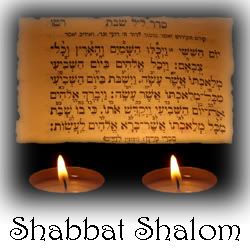
Pagan Candles

An example of "pagan" Jews using wax candles in worship. Perhaps they would be surprised that the Catholic Church gets credit for this "innovation."

Shabbot Pictures, Images and Photos

I think this also begs the question as to what should be used an alternative for church lighting. If electric lights are the Christian thing to use, then I think you'd be showing a pretty recent founding for your church.

Besides, these pagans are using electric lights AND candles in their worship:

Hindu procession


Actually, I visited a Hindu temple once on a field trip, and all of the statues were decorated with electric lights, similar to this:

Hindu Festival

I'm not really sure what lighting alternative we would have left if we ruled out everything that pagans use. After all, they can sit around in the sunlight and moonlight, too.

AddThis Social Bookmark Button

Monday, June 23, 2008

Bible Charts

Bible Charts
There is a post up right now on Candy's Blog that has a link to a "Bible Study Chart" which claims to be a timeline of Catholic Heresies. I would like to go through each one but the list is very long so I might just get to a couple.

The first are prayers for the dead. Here are some links to get us started.
Is Purgatory Biblical?
Prayers for the Dead
The Early Church’s Belief in Purgatory

Next is the Sign of the Cross:
History of a Christian Prayer.
The Sign of the Cross
Sign of the Cross
The Sign of the Cross

The last one I will address is "wax candles introduced in Church". I really do not know why this would be a heresy and would love some insight into this. AHHHHH! after 2 seconds of typing and my trusty Google I have found this:
The Two Babylons Lamps and Wax-Candles Alexander Hislop

You all know how I feel about Alexander Hislop.
Refuting Alexander Hislop & The Two Babylons

Here is a Catholic point of view:
The Wax Candle in the Liturgy
Candles

Well I am off to make breakfast and take care of my family! Have a blessed day!!! Pax Christi, Erika

On A Personal Note . . .


We seem to be having a little lull, and I thought it might be a good time to share some personal information, especially as Elena has been prodding me to do so. My husband and I are expecting a new baby in early January!

This will be my fourth child, and I have had some previous complications in my pregnancies. If you wouldn't mind, please keep me in your prayers for a healthy pregnancy, and a safe vaginal birth.

The above picture is a sample Kelly baby. They all look pretty much alike, but my husband hasn't given up hope for a redhead!

AddThis Social Bookmark Button

Friday, June 20, 2008

If you get a chance folks, please keep my 15-year-old son Sam in your prayers this weekend as he attends the Franciscan University Youth Conference. He will be attending with 2000 Catholic youths, attending mass, going to workshops, going to adoration, staying up too late and goofing off! Sounds great! Here's a little bit of what he will be experiencing this weekend. Witness_Promo.wmv (video/x-ms-wmv Object)

(Tell me again how Catholics aren't Christians?)


AddThis Social Bookmark Button

Common Questions from Protestants

You know how we always say not to pile all of your objections to the Catholic Church in one long comment? Well, Dave Armstrong has answered one of those sorts of comments on his blog. His reply is extremely long, and it is full to other articles he was written with material backing up his response. I'll excerpt a few bits here, but it's worth wandering over with a drink and a good amount of time for reading.

The protestant words are in green, and Dave's words are in black.

Peter was a leader, yes, but I don't see him being a "pope" in Scripture, let alone infallible.
Papal infallibility is exercised in conjunction with the Church as a whole: bishops and councils. Scripture expressly states that a council of the early Church was infallible:
Acts 15:29-30: "For it has seemed good to the Holy Spirit and to us to lay upon you no greater burden than these necessary things: that you abstain from what has been sacrificed to idols and from blood and from what is strangled and from unchastity."
It is not implausible, then, to hold to papal infallibility, in light of the virtual infallibility of both prophets and apostles, that is manifest in Scripture. The great authority of the papacy is seen in how Scripture presents Peter:

50 New Testament Proofs for Petrine Primacy and the Papacy

The Biblical, Primitive Papacy: St. Peter the "Rock": Scholarly Opinion (Mostly Protestant)

The Biblical, Primitive Papacy: St. Peter & the "Keys of the Kingdom of Heaven": Scholarly Opinion (Mostly Protestant) (+ Part II)

The Bible teaches us that "all have sinned and come short of the glory of God."

Sinfulness has no direct relation to infallibility. If it did, then we couldn't have inspired Scripture, since sinners wrote all of it (Moses, David, Paul, Peter). If a sinner can write Scripture that is divinely inspired, then he can be protected from error (infallibility) because the latter (a negative protection) is a lot less of a miracle than the former, which is a positive attribute.
. . .
When the early believer "broke bread," it was a simple memorial and wasn't regarded as His literal body and blood.

All the evidence of early Church belief that we have mitigates against this. Don't take my word for it. You can consult any reputable Protestant historian of that period: History of the Doctrine of the Eucharist: Nine Protestant Scholarly Sources.

This is a fact. I'm not trying to argue it. It is simply factual information.

With all due respect, I don't think you can demonstrate historically that it was a fact. I think what we find is the exact opposite. Since I cited all Protestant scholars in the above survey, it can't be said that they had a Catholic bias and were merely looking to confirm what they already believed (i.e., special pleading).

We have no reason whatsoever (no factual information) to think that the apostles ever turned bread and wine into the body and blood of Jesus.

Again, I must disagree. That's not, I submit, what the Apostle Paul thought, as we saw in 1 Corinthians 10:16 above. In 1 Corinthians 11:27-30 Paul states that partaking of Communion "in an unworthy manner" causes one to be guilty of "profaning the body and blood of the Lord." That is Real Presence. He's not just saying one is "abusing the memory of the Lord" or some such, as we would say if someone spit on a grave or something. No; it is profaning His actual body and blood, because that is what Paul believes was present in the Eucharist.

Martin Luther thought both of these texts were absolutely clear and compelling. He wrote about 1 Corinthians 10:16:
Even if we had no other passage than this we could sufficiently strengthen all consciences and sufficiently overcome all adversaries . . . He could not have spoken more clearly and strongly . . . The bread which is broken or distributed piece by piece is the participation in the body of Christ. It is, it is, it is, he says, the participation in the body of Christ. Wherein does the participation in the body of Christ consist? It cannot be anything else than that as each takes a part of the broken bread he takes therewith the body of Christ . . .

(Against the Heavenly Prophets in the Matter of Images and Sacraments, 1525; Luther's Works, Vol. 40: 177, 181, 178)
And about 1 Corinthians 11:27-30:
It is not sound reasoning arbitrarily to associate the sin which St. Paul attributes to eating with remembrance of Christ, of which Paul does not speak. For he does not say, “Who unworthily holds the Lord in remembrance,” but “Who unworthily eats and drinks.”

(Ibid., 183-184)

If Jesus wanted to teach what Catholics teach on this question, He would have made it very6 clear so there would be no confusion. And the Last Supper was not regarded as an ongoing ritual.

He was absolutely clear at the Last Supper ("This is My Body"). And He was so clear in the discourse in John 6 that it is the only known record of disciples ceasing to follow Jesus, because they couldn't handle the teaching of Real Presence:
John 6:52-66: The Jews then disputed among themselves, saying, "How can this man give us his flesh to eat?" So Jesus said to them, "Truly, truly, I say to you, unless you eat the flesh of the Son of man and drink his blood, you have no life in you; he who eats my flesh and drinks my blood has eternal life, and I will raise him up at the last day. For my flesh is food indeed, and my blood is drink indeed. He who eats my flesh and drinks my blood abides in me, and I in him. As the living Father sent me, and I live because of the Father, so he who eats me will live because of me. This is the bread which came down from heaven, not such as the fathers ate and died; he who eats this bread will live for ever." This he said in the synagogue, as he taught at Caper'na-um. Many of his disciples, when they heard it, said, "This is a hard saying; who can listen to it?" But Jesus, knowing in himself that his disciples murmured at it, said to them, "Do you take offense at this? Then what if you were to see the Son of man ascending where he was before? It is the spirit that gives life, the flesh is of no avail; the words that I have spoken to you are spirit and life. But there are some of you that do not believe." For Jesus knew from the first who those were that did not believe, and who it was that would betray him. And he said, "This is why I told you that no one can come to me unless it is granted him by the Father." After this many of his disciples drew back and no longer went about with him.
. . .

In other words, the transubstantiation wasn't even a twinkle in anybody's eye back then. That whole transubstantiation idea came wayyyy later, my friend. Truly it did.


So what? It's a development of an earlier doctrine that had always been held, just like the Trinity.
ME: The Apostle Paul refers to the "table of the Lord" an "altars" in the context of Christian worship. That only meant one thing: sacrifice, and since there were no more sacrifices of lambs and goats, it referred to Jesus' sacrifice on the cross and the Eucharist:


AddThis Social Bookmark Button

Thursday, June 19, 2008

Catholic Cult Revisited

In our comments, a commenter named Fruit of the Spirit stated that Catholicism is a cult. I referred her to my previous post, where I discuss the criteria for using the term "cult" and concluded that the Catholic Church does not meet that criteria. I asked why she felt we did merit the term. While she did not respond in comments, she did respond on her blog. Fruit of the Spirit has not let me comment on her blog previously, so I decided to respond here.

Here are her criteria:
1: formal religious veneration : worship

2: a system of religious beliefs and ritual; also : its body of adherents

3: a religion regarded as unorthodox or spurious; also : its body of adherents

4: a system for the cure of disease based on dogma set forth by its promulgator cults>

5 a: great devotion to a person, idea, object, movement, or work (as a film or book); especially : such devotion regarded as a literary or intellectual fad b: the object of such devotion c: a usually small group of people characterized by such devotion.


The problem is that these criteria are so vague that all but numbers 3 and 4 could relate to almost any religion.

For example, Baptists gather for formal worship on Sundays(#1), they have a system of religious beliefs and ritual (i.e., baptism and the Lord's Supper) (#2). They have a great devotion to the person of Jesus, and to a book (the Bible)(#5). Some also practice the laying on of hands, as a system for the cure of disease(#4).

Apart from a few small groups of Christians, Catholicism is not considered unorthodox because it does not depart from historic Christianity. We do not believe that Jesus was just a wise prophet, but not God, for example. Nor do we deny the Virgin Birth, or the physical Resurrection of Jesus. These basics of Christianity are what are generally referred to as "orthodox" Christianity. In addition, many of our "unorthodox" beliefs are shared by other branches of Christianity, such as the Orthodox churches, the Anglican church, and some branches of the Lutheran church.

Fruit of the Spirit lists several doctrines or practices that she seems to feel are contrary to Scripture, but which we share with other churches.

bow down to idols in the form of statues - The Orthodox churches contain Icons, and some Anglican and Lutheran churches also contain statues.

infant baptism - This is extremely wide-spread in Christianity.

petition & pray to saints - See the Orthodox churches.

petition & pray to angels - See the Orthodox churches.

say repetitious prayers - I would say this is also extremely wide-spread in Christianity. Besides the "big three" of Orthodox, Anglican, and Lutheran, many churches say the Lord's Prayer every Sunday. I have attended a Methodist church where they said the Doxology and the Nicene Creed every Sunday.

practice of rituals - Again, I think everyone is implicated here. Baptism, the Lord's Supper, and Marriage are all rituals.

believe the catholic holy bible is the true word of God - The Catholic Bible is used by more than the Catholic Church. Even the Amish include those "extra" books. And if you think we have a lot, the Ethiopian Church uses an Old Testament which contains 52 books!

the act of confession - The Orthodox churches also practice confession, and some Anglicans and Lutherans use a form of aural confession, which is what is usually meant by this.

My point here, is that I'm not sure why we are a cult, and the Orthodox, Anglicans, and Lutherans are not. Many of our "unorthodox" beliefs are shared by the majority of Christians.


AddThis Social Bookmark Button

Who Kelly Is

We often say on this blog that we have a lot in common with Candy, and we really only disagree with her on a small amount of what she writes. However, as we tend to only write about the disagreements, I thought the things we have in common might get a bit lost. I was inspired by Candy's Who I Am post to write about some things which I share with Candy.

1. I am a Christian. I put my faith in Jesus Christ, the ONE Mediator, and I love the Church that He founded.

2. I love reading and studying the Bible.

3. I, like Candy, am not fond of the NIV translation. I prefer the RSV, but I love my Navarre Study Bibles, as well. And you can't beat the KJV for poetic translation.

4. I homeschool my children.

5. I don't send my children to Sunday School. Actually, most Catholic Churches do not have Sunday School or church nurseries.

6. I love to read. I can plow through the reading list, just like Candy does.

7. My 7-year-old does laundry, too.

8. I like to cook from scratch for most things.

9. I wear only dresses in the summer, and I like to dress femininely.

10. I admit it. I make kombucha tea. But I prefer Stephanie's recipe.


AddThis Social Bookmark Button

Wednesday, June 18, 2008

Who Candy Is.

Candy's latest article tries to give us more of a feel for her real personality. She explains:

Unless you know me in person, then you probably have certain pictures in your head of who you think I am, and you are probably wrong about some things. I think this is why some of the anti-Candy websites are out there, and I think that is why some of the comments I get are (to me) outrageous. I think when I don't fit the personality that people have assumed I possess, then they get angry, or feel let down. Thus, this article is to tell you a bit more about me, so that some people's miss-conceptions about me have more of a chance of melting away without someone being hurt or angry.

I don't feel that this "anti-Candy website" came about because of a misconception about Candy's personality. It has to do with her misconceptions of what Catholicism is about.

These particular points caught my eye:

6. I am not a legalist Christian. I know we have liberty in Christ, therefore, if I see the need to slip on a pair of blue jeans, I have no problem doing so (except that I don't currently own any).

7. I don't believe that you have to be "dresses only" to be saved.

Candy wrote just last week about modest dressing, and a sort of picture of the Christian mother. These are two topics that I consider myself impartial on, because it really doesn't bother me that Candy is dresses only, or that she homeschools. Yet, after reading the two articles, I came away with a definite impression that she was saying that if you are a Christian, you MUST wear only dresses (if you are a woman), homeschool your child, not let your child attend Sunday school, etc.

So yes, this is informative, and changes my impression of her a bit. Candy does, clearly, have a strong personality. Perhaps she is so forceful when she gives her opinion on matters, that she can give the impression that she feels everyone should follow that opinion. It would be helpful to have a way to understand when she is giving her opinion, and when she is giving a declaration of fact (for lack of a better term).

What I am leading to here, is the next point on her list:

10. I believe what the Bible says about how to go to heaven, and that is this:

That if thou shalt confess with thy mouth the Lord Jesus, and shalt believe in thine heart that God hath raised him from the dead, thou shalt be saved. For with the heart man believeth unto righteousness; and with the mouth confession is made unto salvation. For the scripture saith, Whosoever believeth on him shall not be ashamed. -Romans 10:9-11


What I am more confused about Candy than anything else, is why she feels that Catholics are not Christians. This is a very simple criteria for being saved.

1. Catholics confess with their mouth the Lord Jesus.
2. Catholic believe in their heart that God has raised him from the dead.
3. Therefore, Catholics should be saved.

Yet, Candy wrote to Angie:
Angie, it's nice that you believe in Jesus Christ - whatever that means. I believe in Abraham Lincoln, but that's not getting me into heaven. Also, I already told you that I'm not condemning you, GOD has ALREADY done that, and I gave you scripture which proved it.

Clearly, we are working with a different definition of "to believe" here. I suspect (and again, I'm admitting this is total speculation) that Candy would argue that true belief is followed by actions. What she has mentioned before is that you would have a total change of life, and start reading and studying the Bible. If you study the Bible, you would see the errors of the Catholic Church and leave it.

Therefore, to be saved, a Catholic must leave the Catholic Church in order to have a true faith. If Angie, or whoever, remains in the Church, then whatever they are professing, it isn't a true faith in Jesus.

My concern with this is that it sounds like "works salvation" to me. In order to be saved, you must perform the action of leaving the Catholic Church.

Now, one of the criticisms that we receive is that we take apart posts which don't have anything to do with Catholicism. What this post is about, is just sharing some of my thoughts as I read through what Candy has written. Sometimes, there are so many questions that I wish I could ask her, so I could understand her thought process, and so maybe understand her view of Catholicism a little better.

Plus, this blog is really boring when we don't post for days on end, so we might as well have something to discuss! If we have any readers who have similar theological views of salvation to Candy, please feel free to post your understanding of the topic. I know that you don't represent Candy, but it can still be helpful.


AddThis Social Bookmark Button

Over at Coffee with Candy

Joy has a good article up over in her blog at: Coffee With Candy: What does Candy really think of the Ten Commandments?


Add this blog to my Technorati Favorites!


Please browse my eBay items!
Visit my new Amazon Store!


AddThis Social Bookmark Button

Tuesday, June 17, 2008

Spider bites

A heavy dose of being a catechized Catholic includes following one's conscience. I feel compelled to share this information. Do with it what you will.

Brown Recluse Spider Bite


Add this blog to my Technorati Favorites!


Please browse my eBay items!
Visit my new Amazon Store!


AddThis Social Bookmark Button

One year anniversary of VTC!

So busy over the weekend it slipped my mind! But yes, VTC is one year old. You can read the post that got us started here.


AddThis Social Bookmark Button

just another day of Catholic pondering: Catholic Carnival 177: Wheel of Time

just another day of Catholic pondering: Catholic Carnival 177: Wheel of Time


Add this blog to my Technorati Favorites!


Please browse my eBay items!
Visit my new Amazon Store!


AddThis Social Bookmark Button

Monday, June 16, 2008

Repost: Providing a little perspective

This is a repost of most of an article that I wrote for this blog over six months ago. I thought it might fit in well with our recent discussions. Besides, once we get to over 40 comments on a single post, it's nice to have a new post for comments.

Reading through the comments both on her site, and on this one, I despair that we can ever truly discuss what is involved. On her site, you read about "gossip" and "a website devoted to bashing one person" while here you read about "anti-Catholicism" and "hatred." On this post, I would like to put us on the same page.

First, this blog does not exist to bash Candy. It exists to refute her claims about Catholicism, because she does not allow Catholics to post comments at her page, no matter how polite or well-reasoned. If Candy has concerns about Catholic doctrine, we would like to be able to address them.

Well, you might say, why not just stop going to her page? Why create this page at all? To answer that, let us look at some of the claims of Candy about Catholicism.

In various posts, she has said that the Catholic Church:

* Murders people to keep its secrets and stay in power, even today, and including babies.

* Does not worship God alone, but Mary, the saints, statues, etc.

* Promotes the worship of Satan, and in fact, a Satanic black Mass is more reverent to God than a Catholic Mass

* Knowingly leads millions of souls to Hell

If this is true of Catholicism, then truly, who would not hate such an institution? That is why there is talk of hatred on this site. Candy may not hate Catholics as individuals, but surely, as a Christian, she must hate Catholicism as an institution.

If some told you those things about YOUR church, read it over again and insert Baptist, Lutheran, etc, go ahead . . . if someone told you those things about your church, would you not have a moral obligation to correct them? Catholics believe that the Catholic Church is the one true Church established by God, and if you say those things about the Catholic Church, then you are saying them about God himself. It would be a sin for us to remain silent in face of such accusations. THAT is why we get so upset, not because it is true, but because it is such a serious falsehood.

On the other hand, we as Catholics must understand Candy's reasons for posting as she does. If we take her at her word, she REALLY thinks this is true. Our souls are in danger, and she is trying to save us. If Catholics really did believe that about a particular church, then I think we would have the same obligation to try and help them to understand their error. Our methods might differ, but we would have to try.

That is why so many of the non-Catholic visitors to her site do not see Candy as full of hatred, because they focus on her intention of saving. Likewise, they do not see her as "anti-Catholic" because that, to them, would mean that she hates Catholics as individuals.

Has there been "gossip" or personal attacks on Candy at this site? At times, yes. We do apologize for that. When something as near and dear to your heart as your religion is being discussed, people tend to lose their temper. Catholics are only human, too. But we can only discourage personal comments, apologize, and move on. Because what we are really here to discuss is Catholicism. The concerns and the glory, depending on your perspective.

Respectful comments are welcome. Please let the discussion begin.


AddThis Social Bookmark Button